Menirea vieţii tale e să te cauţi pe tine însuţi.
The purpose of your life is to seek yourself.
Mihai Eminescu
1850 – 1889
During those three weeks in Romania, I began to rediscover a fundamental part of myself that I quite believed had been lost forever.
For many years, “Modern-Day Nomad” was not just part of the tagline on my book, it was my identity. I often suspected that it served in place of a true sense of self, or as a shield against feelings of inferiority stemming from a lack of real achievements. But I don’t suppose it really matters: I was it and it was me and that was that.
And then along came the primal duality of motherhood: both gifting me a small and squishy vessel of genetic inheritance to love and live vicariously through as I usher it gently towards independence, while also robbing me of sleep and health, depleting an already meagre store of self-confidence, and, perhaps most heinous of all, obliterating a fundamental sense of self.
Some women find their accomplishment and purpose in motherhood, proudly wearing “Mother” as a primary identificatory descriptor. But for me – despite the deep love I have for my daughter, the seriousness with which I have undertaken her nurturing, and my admiration for the person she is growing into – it has exacted a fairly pricey toll.
It also put another nail in the Modern-Day Nomad coffin.
Yes, I was still living in Italy (at least for the first 3.5 years), but I was no longer a solo traveller in pursuit of new languages and new experiences. In fact, I was no longer a traveller at all. The right to pack my bags and change direction was forfeit, the relative individuality of my “Modern-Day Nomad” tag subsumed by the indistinguishable mononym of “Mother”.
Aches, nausea, exhaustion, heartburn, frequent urination, and strangers trying to touch your midsection aside, pregnancy has its magical moments. And once you have traversed the horrors of birth, bonding with your newborn and watching your child grow also have their magical moments. But motherhood is a great leveller, and it is only once you leave your magical bubble, that you realise just how prosaic it can be. At the playground or outside the school gates, you are reduced to nothing more than one more Mother in a sea of Mothers.
No longer my own woman, with my own hopes and dreams, an interesting past or meaningful future: I was suddenly unable even to indulge the need to escape into my mind for alone time whenever the world became too noisy. Instead, my life, my identity, my usefulness, were boiled down and condensed into my ability to meet the requirements of a small, needy and permanently sticky human.
(which is all Real Mothers desire, because they are selfless)
I found myself trapped in the purgatory of faking normality in order to pretend enjoyment in exchanges with the sea of Other Mothers on repetitive topics of so little interest – at least to me – that I could feel the pressure of my brain trying to escape its bony confines.
(which was fine, because Real Mothers are selfless)
And thus passed twelve years: joyful moments, sad moments, beautiful moments, ugly moments, fascinating moments, boring moments, depression, frustration, exhaustion, laughter, tears, and inescapable love… and through it all I tried my hardest not to drown.
(it was the least I could do, because Real Mothers are selfless)
The constant, bone-deep exhaustion was simply proof of my readiness for the scrap heap, as opposed to the result of trying to contort myself into shapes I was not built for.
(a worthy sacrifice, because Real Mothers are selfless)
The feeling of becoming increasingly untethered from myself, was merely proof of being somehow “less” than other women, as opposed to a sign that my life was not supplying me with what I needed in order to thrive.
(but it was not about me, because Real Mothers are selfless)
Perhaps it would have been easier to remain tethered (Real Mother or not) had I possessed a stronger sense of identity pre-baby, or had I been a woman who found her purpose while sweating at the gym or forging her way up a mountain, or with a violin on her shoulder or piano at her fingertips. A woman able to find herself in a glass of wine with friends, a salute to the sun or a downward-facing dog, in a well-written book or an absorbing Netflix genre, in a meaningful career, or even when leaping from a plane for that brief sensation of freedom when parachuting slowly earthwards.
But my psyche, as I have discovered time and again, sneeringly eschews attainable routes to self-fulfilment, in its mysterious quest for complication.
Stepping more decisively into the world of translation was probably the first rung of the ladder back to myself. I still Mothered. I still Wifed. I still tried to find a sense of accomplishment in managing my husband’s customers, accounts and inability to remember important things. But a career in translation was the first “me” choice in well over a decade. It was also a choice that reintroduced some of the component strands of the woman who had been Modern-Day Nomad long before she became Wife and then Mother.
But it was in Iași that I once again came face to face with that woman, the one I had believed long-buried by those twin appellations of domesticity.
It transpired that *all* my hard-to-please psyche needed, was solitude and the heady allure of an unknown that can only be found in an unfamiliar place with a new(ish) language yet to be conquered. And so it was at that point, and with an almost audible sigh of relief, that it finally relented, and brought “me” back.
For the remaining time not filled with language lessons, translation or the remote managment of my husband’s customers, accounts and inability to remember important things, it was a newly-reunified triumvirate of me, myself and I that wandered Iași, lonely as a cloud (cheers, Wordsworth) as I slowly knitted back together.
And what could be more healing, than cultural activities for one.
Living in the wilds of the Northamptonshire countryside as someone allergic to outings (especially when they might involve other people, and even more especially when they might occur beyond late afternoon – pyjama time moves forward an hour with every year that passes), it had been a while since I had done anything even vaguely cultured. But staying in the beating heart of a cosmopolitan city a mere 3-minute walk from the theatre door, and having only myself to organise and please, a solo visit to the opera was a thrilling prospect.
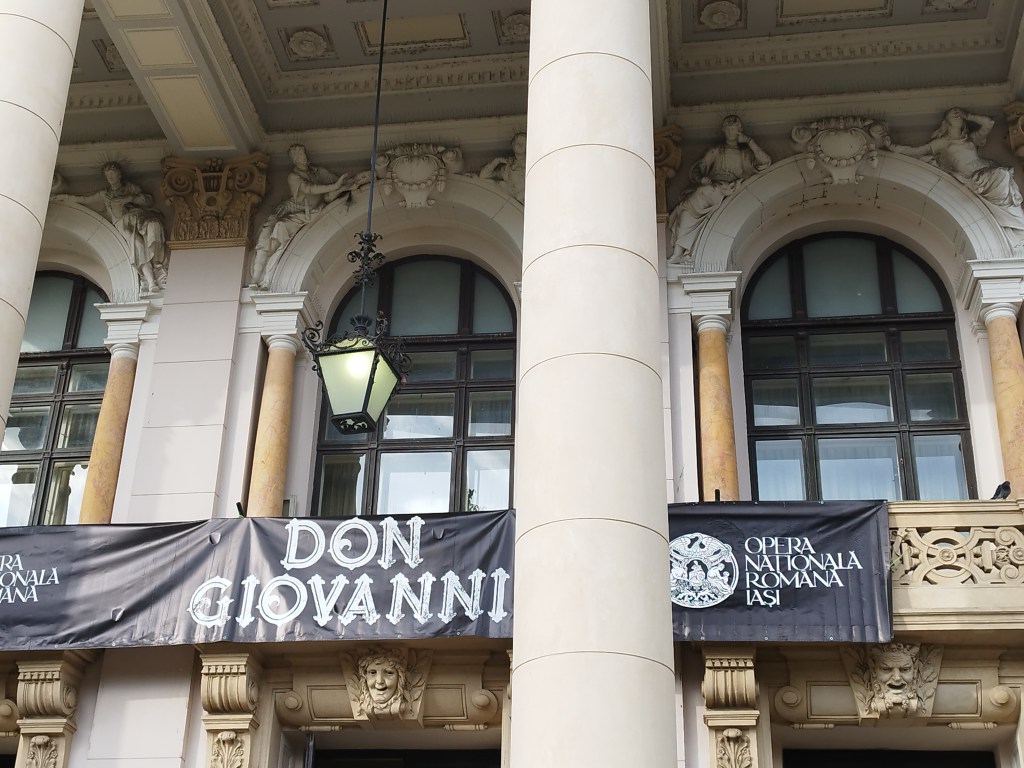
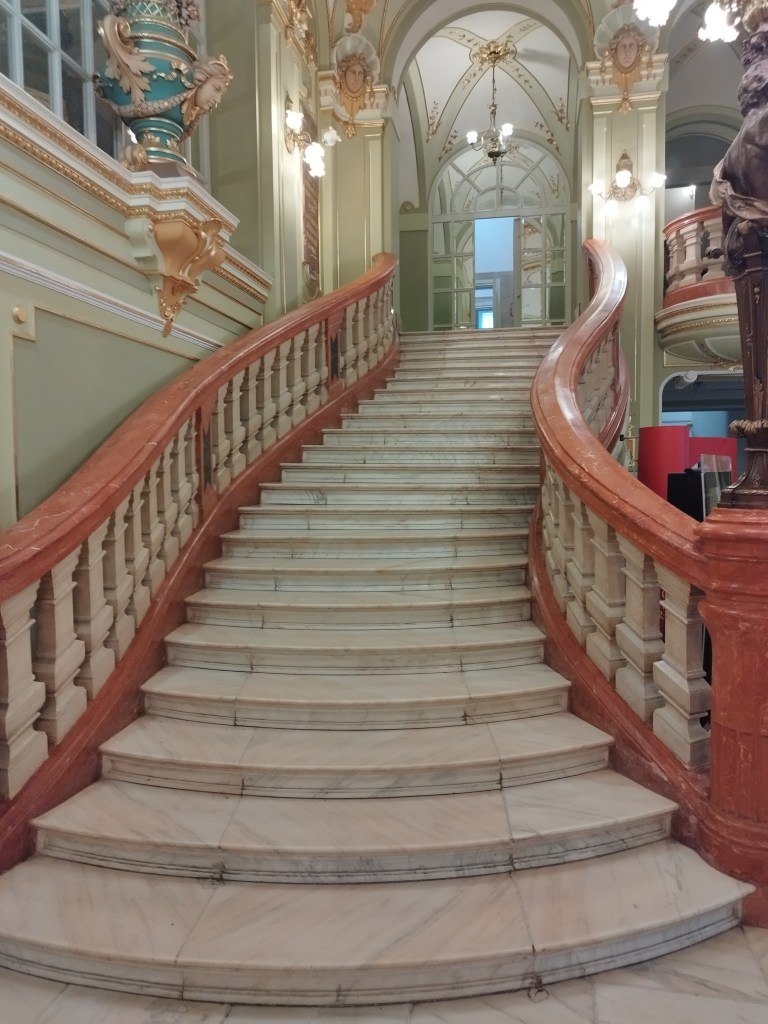
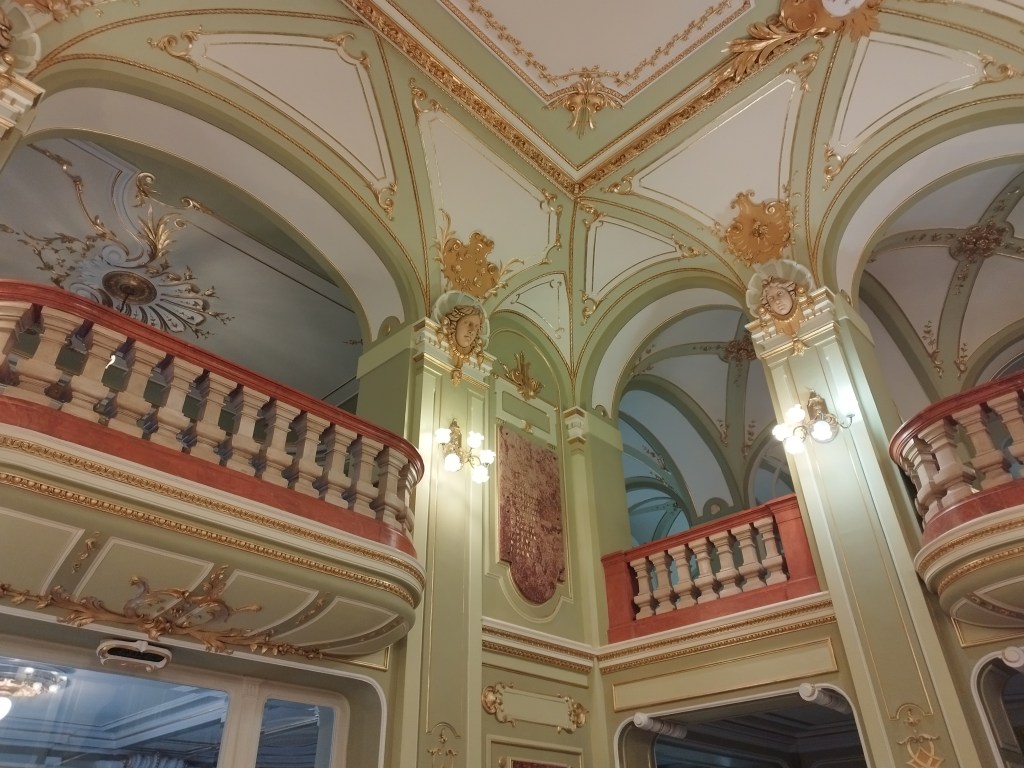
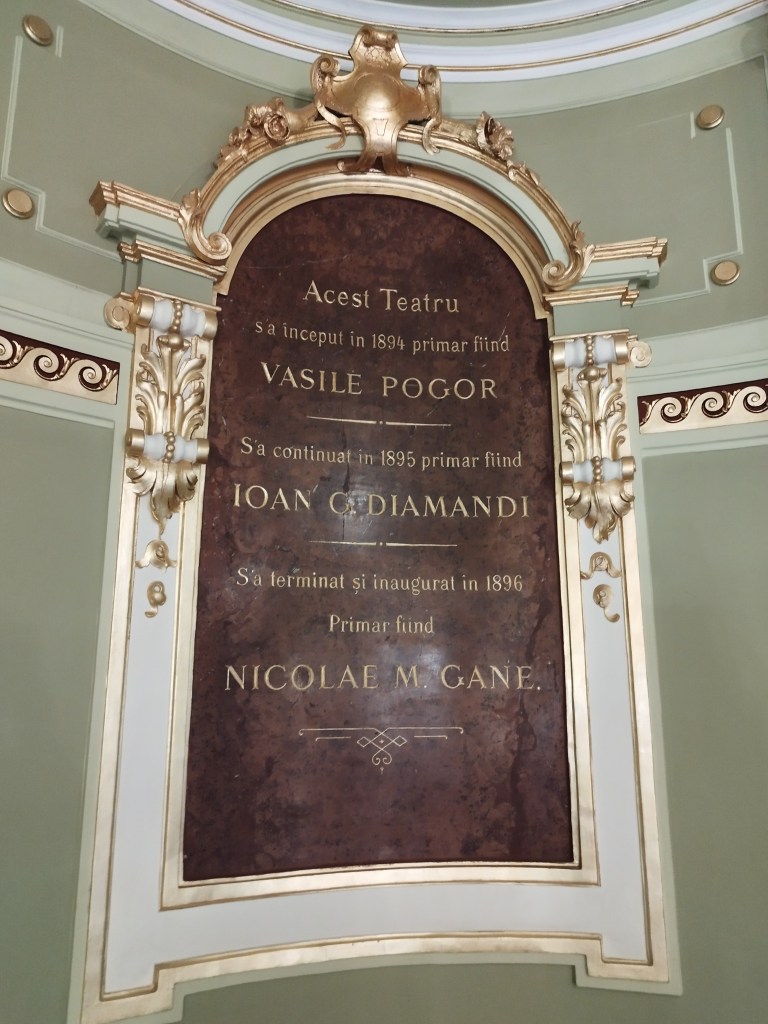
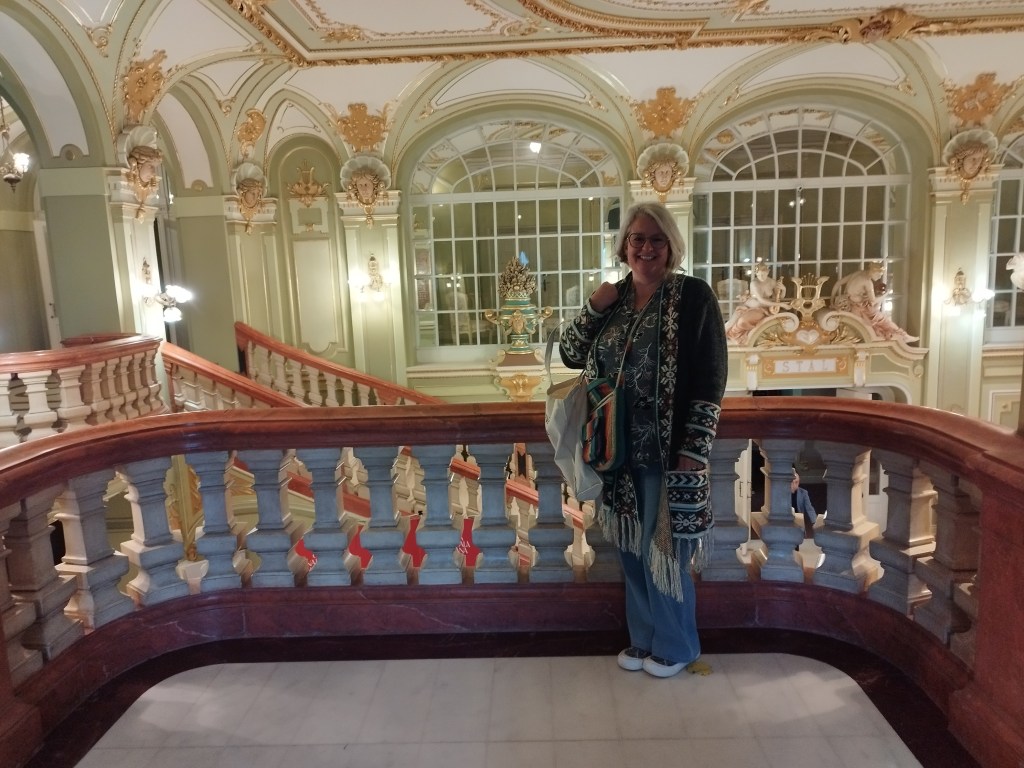
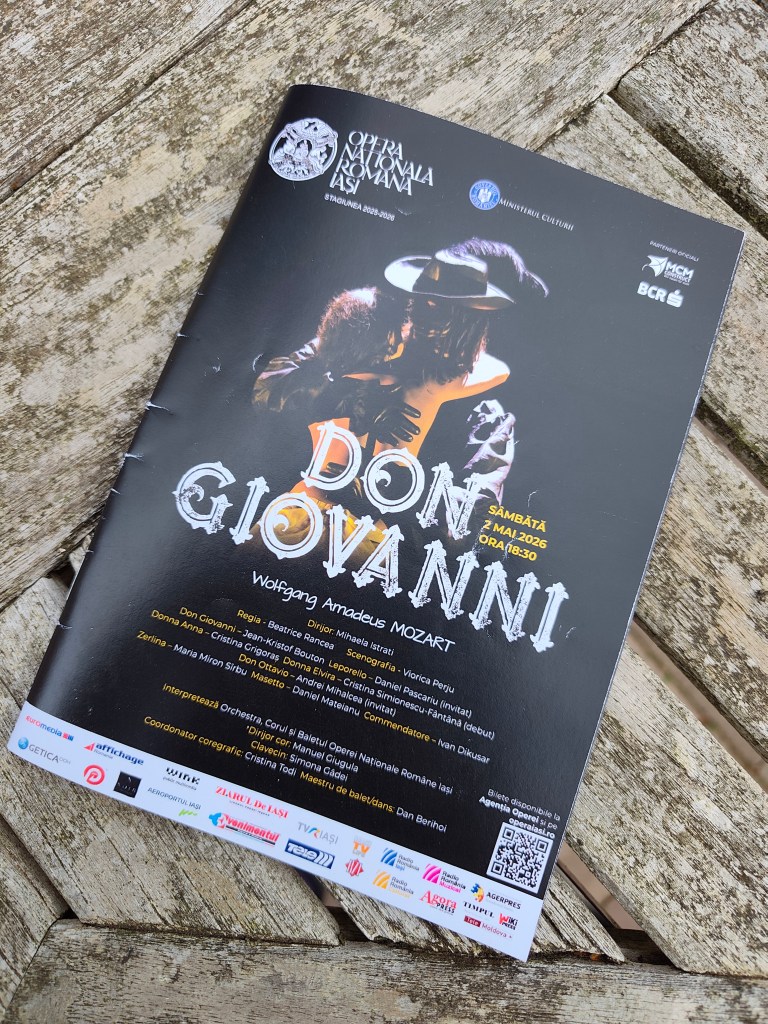
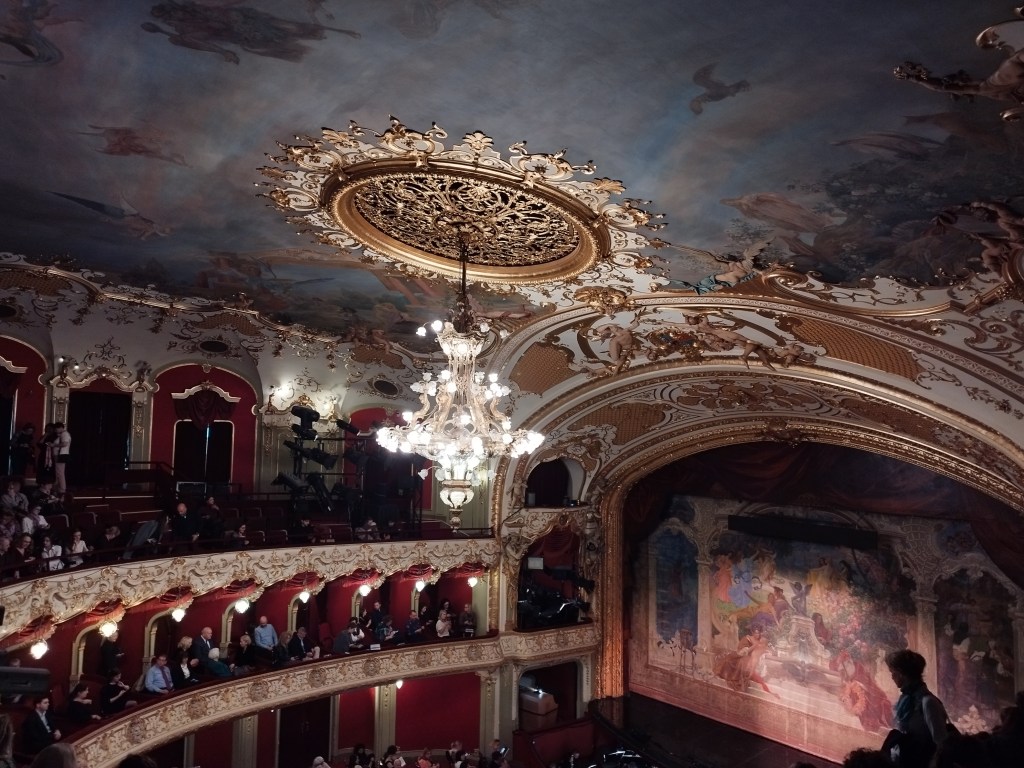
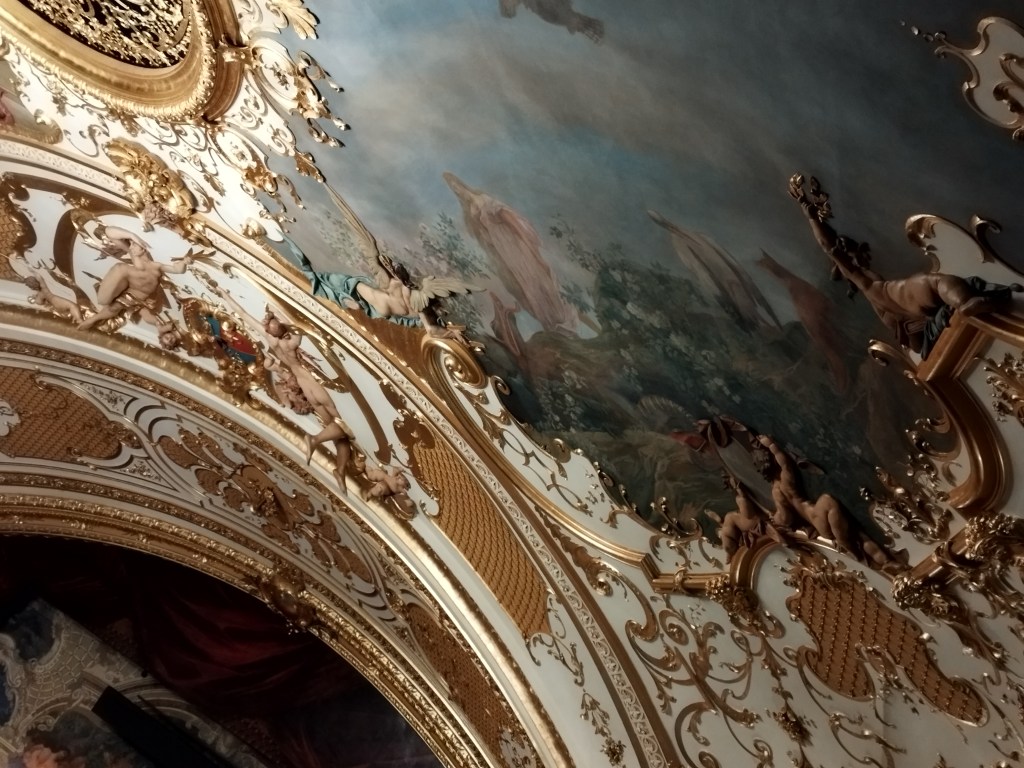
With nobody to worry about losing but myself, I weaved my dreamy way through an eclectic crowd of opera-goers: perfumed and powdered ladies in full evening dress, teenagers in ripped jeans and hi-tops, and a comforting range of everything in between. Programme duly purchased, there was time to roam before finding my seat. And so I did, while taking pictures of anything I felt would appreciate sitting in my cloud alongside the approximately 90,000 other photos I would almost certainly never look at again.
Spotting two older women taking glamorously-posed shots of each other on one of the balconies overlooking the foyer, I put my newly confident Romanian to use by offering to immortalise them together. They were delighted to accept and entirely too complimentary about my spoken Romanian, declaring themselves astonished that anyone would choose to learn the language at all.
Once framed and snapped a number of times to their satisfaction, the duo became loudly insistent that I allow them to return the photographic favour. My usual demur of not particularly enjoying appearing in pictures could have been respected or even brushed aside, but, in typically blunt Romanian style, the two women opted to delve into it instead.
Why on earth did I not enjoy appearing in photos? They wanted to know.
You know, I replied, the usual: looking old, too overweight, feeling unattractive…
They were horrified: I was not old and I was not fat. I was an attractive, adventurous woman who spoke languages in the plural, and who should be proud to show herself off in photographs.
My unexpected fairy godmothers ended up getting their way, but they also firmed up my conviction that radical change needed to be enacted if I had any intention of living my life to its fullest extent.
The performance of Don Giovanni – not an opera I had seen before – was absolutely spellbinding. But making my way home afterwards, in the warmth of the May night – cutting through the theatre gardens, ducking under the carpark barrier, strolling casually along the street as if I had lived there all my life – might actually have been even better.


Leave a Reply