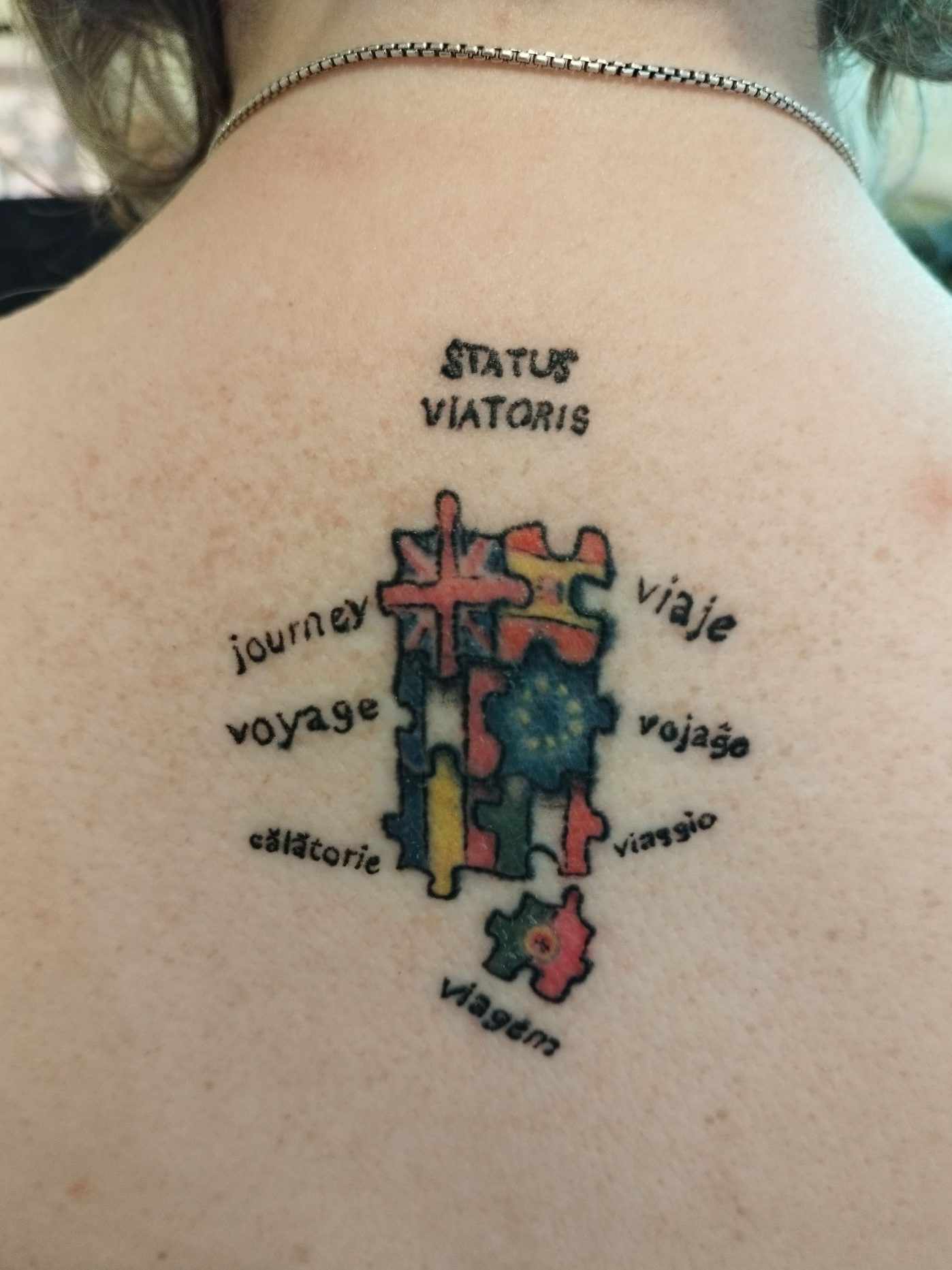
There are various pathways that lead to becoming a translator. In my case, translation was merely the logical conclusion to a thirty-year obsession with languages. As mentioned in other posts, there is no university degree in my past, nor even a single A-level. But on returning to the UK after twenty-two years, with three foreign languages very firmly under the belt and a passion for expressing myself writing in my own language, turning those skills into a translation career felt like it was meant to be.
Not all translators prioritise maintaining fluency in their spoken source languages – it is not a prerequisite for translation. Comprehension of the written source language(s) – nuance and all – is. Yet more essential, is a mothertongue-level mastery of the target language. Even then, understanding and writing like a regular native is not necessarily enough: translators must be highly proficient in their target language.
Of course many more elements, hard work, and skill go into becoming a truly excellent translator. It is therefore even more galling that those infamous Tech Bros, having trained their cheat machines on the purloined texts of professionals, then proceeded to persuade the world that human translators (and artists and illustrators and writers…) can be seamlessly replaced by insentient objects. In doing so, they also managed to cheapen the profession to such an extent that many of the remaining expert human wordsmiths are expected to work for considerably inferior rates than they were a mere handful of years ago.
But I digress… So, while we have established that speaking source languages fluently is not necessarily a requirement of the translation profession, I very strongly require it of myself. The entire reason for acquiring them, in fact: the capacity to then translate them into English really a secondary consideration.
To the three languages I returned with, Romanian has since been added. Initially purely to better communicate with my in-laws, it soon became apparent that there was a gap in the translation market for Romanian to native English translators that made improving my skills in the language an imperative.
But of all my source languages, Romanian is the one that has remained stubbornly unbending to my efforts at true verbal proficiency. It is by far the trickiest of the Romance languages: complex grammar with endless exceptions, and a lexicon that is influenced by Slavic, Balkan Sprachbund, Vulgar Latin, Dacian, French, Italian, and a growing selection of buzzwords lifted directly from English.
As I said: tricky.
All of the above is only compounded by the fact that I have never lived in Romania. Eight years in Spain, six years in France and a further eight years in Italy, versus a Romanian husband who speaks a Hungarian dialect with his family and Italian with me, a handful of holidays in the country, and twelve years listening to husband and daughter use the language to communicate limited and repetive themes involving: foodstuffs, bed times, toileting, teeth-cleaning, homework, room-tidying, hair-brushing and the necessity or otherwise of wearing shoes and a coat.
My lack of confidence in spoken Romanian has not only added to the ever-present Inferiority Complex, (and its pesky sidekick: Imposter Syndrome) it has also been a constant, frustrating and shameful personal niggle. So, on the 19th of April this year, I abdicated wifely, motherly, daughterly and dog-owing responsabilities, in order to travel to the northeastern city of Iași for three weeks – negotiated down from a month by a disgruntled twelve year old, but still, better than nothing.
As is often the way with our more passive languages – they have a frustrating propensity for secreting their active verbal components in hidden corners of the brain until a particular set of circumstances (known only to them and stubbonly resistent to circumstantial need) lures them to the surface – all it took was the prospect of an extended visit to the country, for my spoken Romanian to suddenly burst onto the scene like slugs after a downpour.
Newly-unearthed language skills notwithstanding, I approached the departure date with some trepidation. Shamefully, in my fifteen-year relationship with Romania, Romanians and Romanian, I have not yet managed to find a comfortable common ground. So while the trip was important to me, it did not inspire my usual breathless excitement at the prospect of solo time in an unknown place, working on an as yet unfluent language.
Despite visiting most years, my husband’s childhood stomping ground close to the city of Bacau, has never offered an environment into which I felt able to hurl myself for language immersion. The village residents tend to stare at me with suspicion whenever I venture outside my mother-in-law’s gate, and I am hard-pressed to get a ‘Buna ziua’ out of most of the shopkeepers, let alone any constructive conversation.
The nearest urban jungle is not much of an improvement. One of Romania’s less attractive offerings, Bacau is a city of distressed concrete buildings still redolent of its communist past, and appears neither loved nor cared for. A previous mayor apparently made great strides in prettying the place up: parks and other areas for leisure and pleasure, but as soon as his term was up it was all allowed to fall back into neglect, where it has remained.
I am no doubt being very unfair when I say that many of the residents also seem to reflect Bacau’s dour exterior. But all in all, it has never been a city I feel comfortable ambling around, as I have ambled around so many others when absorbing a new language, stopping for coffee here and there while making conversation with whoever is open to it.
Both Bacau and Iași are situated in the northeastern region of Moldavia (Ro. Moldova – not to be confused with the Republic of Moldova), in north-eastern Romania. The region borders both Ukraine and the Republic of Moldova, and also includes the counties (Ro. județele) of Vaslui, Galați, Vrancea, Botoșani, Neamț, and Suceava. Confusingly, Suceava is also part of the historical region ofBukovina (Ro. Bucovina) which is divided between Romanian and Ukraine.
Only about two hours from Bacau, I had been assured that Iași, Romania’s third largest city, was nevertheless a very different prospect. A vibrant university city with cosmopolitan residents who were hopefully more open-minded about the prospect of being strongarmed into conversation by a strange English woman awaited.
It sounded absolutely perfect.
I already had one contact in the city: Magda, the eternally patient Preply tutor who has spent the last eighteen months or so trying to tempt me into more grammar exercises and less chatting. But given I only had three weeks at my disposal, maximum exposure had to be assured. So began what initially seemed like a fruitless hunt for a language school.
Joining the local ex-pat (horrible term) Facebook group, did not bear any language school fruit. It did, however, stir an internet troll into life to insult my Romanian language skills and denigrate my mission. There’s always one. But once this particular troll had retreated back under his bridge, I also received a couple of messages from locals offering private lessons, one of whom was absolutely perfect.
Magda even managed to run a language school to ground: Lektor, despite usually catering more for Romanian students of English and German, declared itself perfectly capable of assisting an English dunce in the acquisition of the language of Eminescu, and so I booked myself in there as well.
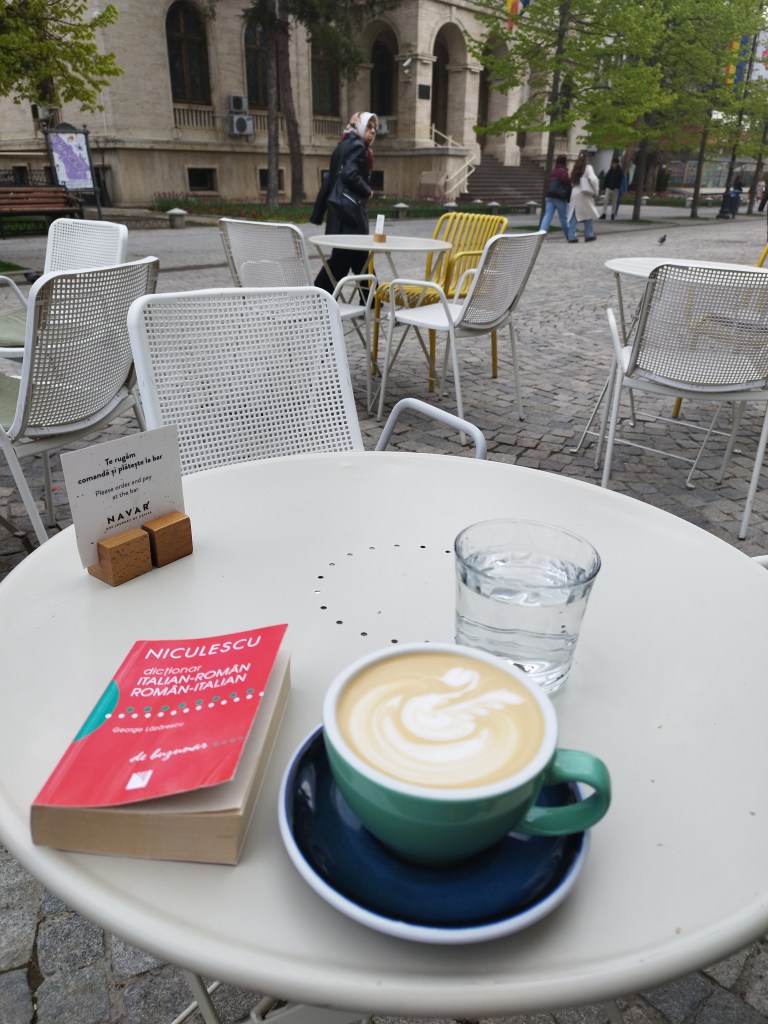
The time not taken up by formal language lessons, would be dedicated to visiting all that Iași had to offer, with regular stops for cafea, gustări (covrigi!) și conversație.
So having packed a large suitcase, I crept from the house in the middle of the night (at least it meant that the aforementioned daughter was not awake to make me feel guilty), and departed for Luton Airport.
My first solo voyage of exploration for almost sixteen years – it was time to reclaim my status as a Modern-Day Nomad.


Leave a Reply