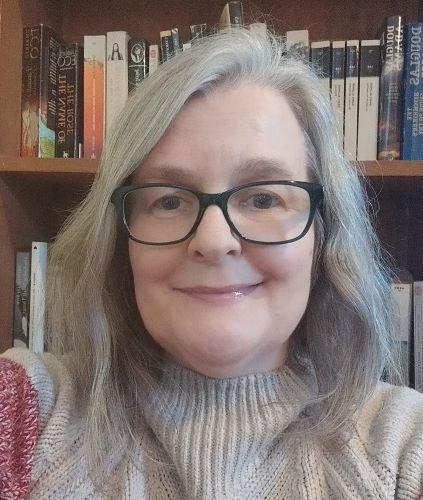
Kirsty Lowe
Romanian, Italian, French and Spanish to English translator
General Medical, Real Estate, General Translator
Based in Northamptonshire, UK
As of today I am relaunching “Meet the Translator Mondays”, where kind, well-established colleagues volunteer to share their thoughts, tips and personal experience with fledging counterparts.
I shall start the ball rolling with an exercise in egocentricity: by interviewing myself! With the proviso that, despite having worked in translation on and off for several decades, I do not (yet) consider myself a fully established translator in today’s fast-paced industry.
Could you start by telling us about your language combinations?
I translate from Romanian, French, Italian and Spanish into English.
How did you learn your source languages?
I moved to Spain from the UK when I was 18, living, studying and working there for 8 years, until I moved to France in late 2003. I repeated the process in France, before moving to Italy in 2010. My husband is Romanian, and although we speak Italian together, I wanted to learn Romanian in order to better communicate with his family.
What are your specialisms, and why?
I have translated a wide variety of different topics over the last 20+ years, but the bulk of my translation over the last decade has been real estate, with general medical fast catching up. I also do a fair amount of “general” translation that would be hard to categorise.
I did not choose my specialisms, they chose me: I began translating for a real estate agency and their collaborating notary over 10 years ago when I lived in Italy, having been approached while on maternity leave. Over the years I have been asked to do a fair bit of medical translation for private clients: consultants’ letters, medical reports, medical records and test results among other things. One of the agencies I work with soon realised that I don’t run at the sight of doctors’ scrawl (although I do fuss a bit a lot) and subsequently my medical knowledge is now growing apace.
If I could choose, I, like many of my colleagues, would love to turn my hand to literary translation. However it is not an easy field to join, and it requires more confidence and self-promotional skills than I currently possess. I dearly hope that will change. Another field I would love to work in would be nature and wildlife conservation, a subject that has been central to my worldview since childhood.
When did you decide to become a translator, and why?
I decided to become a translator, as opposed to a linguist who translates, a few years after moving back to the UK. My first independent holiday abroad in the mid 90s awoke a passion for foreign languages, and the joy of unpeeling different cultures by immersing myself in their language has never left me. This fascination found a well-suited bedfellow in my lifelong obsession with both the reading and crafting of my own language. Becoming a qualified translator via DipTrans was a way of condensing all my experiences of last three decades into a career that made sense of them, while allowing me to spend my days indulging my passion for words.
Another aspect of translation that has always appealed, is the scope for learning new things. I enjoy the privilege of getting a behind-the-scenes look at a wide variety of topics. I thrive on the research that goes into running specialised lexicon to ground, and the need to get a good understanding of the subject matter in order to ensure the correct terminology.
What CPD activities do you undertake?
I keep my languages up to date with online native tutors. I have an hour of Romanian every week – not having ever lived there, it is the language that needs the most work. Italian, French and Spanish get an hour and a half every three weeks to keep them fresh, although I also speak Italian every day at home. I watch far too much television in my source languages, as well as listening to the occasional podcast, and reading.
Last year I attended Bristol Translates, Spanish to English strand, and the BCLT summer school, Italian to English strand. I have done courses on proofreading, copyediting and fiction copyediting with the CIEP, both to keep my written English on its toes as well as to give me another skill to offer as a freelancer. I attend translation webinars on occasion, although I need to become more organised in that respect as I miss more than I attend.
How do you market yourself?
Marketing myself is what I am worst at, but I began by creating this rather rustic (but very “me”) website: www.lovelanguages.uk. The only aspect of the website I actively share is the blog, which is posted on my LinkedIn account whenever I publish something new.
Which brings me onto the LinkedIn account: a tool I am sure I should be wielding to far better effect, but which also requires a level of confidence and a set of self-promotional skills not yet attained.
Lastly I have approached those agencies on the Association of Translation Companies website that seem to match my skill set, and I try to follow up with an updated Cv or news when applicable. Which reminds me: they are overdue a little nudge to remind them of my existence!
Which groups or organisations are you a member of, and which do you find most beneficial?
I am an associate member of ITI, a member of CIOL, an entry-level member of CIEP and a member of the SOA. Within ITI I am a member of the East Midlands Regional Group, the French, Italian and Spanish groups as well as the ITI Medical and Pharmaceutical Network (MedNet). ITI itself, and the individual ITI groups, are an endless source of information. The groups are extremely supportive. For anyone dabbling in literary translation, I can’t recommend the SOA highly enough for information on navigating literary translation contracts and more.
How would you like your career to develop over the next five years?
I would like to have more work, certainly, although translation work tends to follow the bus analogy, so I try to resign myself to the thought that feast interspersed with famine might always be my lot.
I would like to build on my medical translation knowledge, as well as dipping several toes into the two previously-mentioned fields of translation: literary and conservation.
Do you have any Dos or Don’t for new translators?
As I still consider myself a new translator, I am not sure I am qualified to answer this, but I will give it a go:
- Be very, very patient
- Don’t spend too much time on LinkedIn if you are someone who is lacking in confidence
- If you do spend time on LinkedIn, remember that it is a job market and that all freelancer posts are crafted to present the poster in the best possible light. It is not real life as we know it
- Network as much as you can cope with
- Do take on board other translators’ advice, but also remember that we all have different strengths, weaknesses, experiences and goals
- Try not to pin hopes anywhere, just take a deep breath, go with the flow and again, be very, very patient
What are your impressions of the industry as it is today?
I battle daily with the realisation that I probably could not have chosen a worse time to make translation my career, although perhaps starting at this point will make me more resilient than those who knew it as its best? We shall see.
I am not one of those who thinks we should simply be adapting our working practices to AI. If humans “adapt” to AI encroaching on our creative industries, then the very thing that makes being human worth it – language, art, music, literature, poetry – will become meaningless.
We should be digging our heels in and fighting back.
What would you do if you were not a translator?
I have already done it all: carer, medical receptionist, waitress, hotel receptionist, marketing assistant, marketing manager, office administrator, language teacher, yacht insurance administrator, language school administrator, shopkeeper… Becoming a full-time translator is simply the logical conclusion of years spent accumulating both languages and experiences. It is the end of the road for me, but hopefully in the best possible way.
God that was hard! I will definitely have more sympathy for my interviewees in future.
So please, if you feel up to revisiting the whys and wherefores of your career in order to both assist newbies and offer my readers a taste of your skillset, please contact me via LinkedIn. Thank you!


 Love Languages
Leave a reply to Love Languages Cancel reply