(Or to those out of this particular loop “British Centre for Literary Translation – summer school 2024” run by the University of East Anglia – online this year)
As mind-spinning as it has been attending the BCLT summer school so soon after Bristol Translates, it has also given me a wonderful opportunity to compare the two while they are still fresh in my mind.
That green BT2024 attendee was a different creature from the rather calmer BCLT2024 one: no nights’ sleep were lost wondering what to expect this time round, nor was I quite as panicked about being unmasked as not “good” enough – not just because I now knew I was attending to learn and not to be judged, but, as I was reminded by my lovely new literary translator friend as a confidence boost, because “it’s a selective course – you have been chosen to be there!”
Its very selectivity meant that the profile of the attendees was quite different from Bristol, unrelated to the change in language from Spanish to Italian. BCLT is the summer school for established language professionals, translators and writers. Dare I say it felt more creatively uplifting, made richer by the sheer quality of all that experience being brought to the table. That is not to denigrate Bristol in any way, but they are certainly different beasts and as such, fulfil different functions. Taking the courses in the order I did, even if it was unintentional, enabled me to get the very best out of both and I would encourage anyone else faced with that choice to do the same.
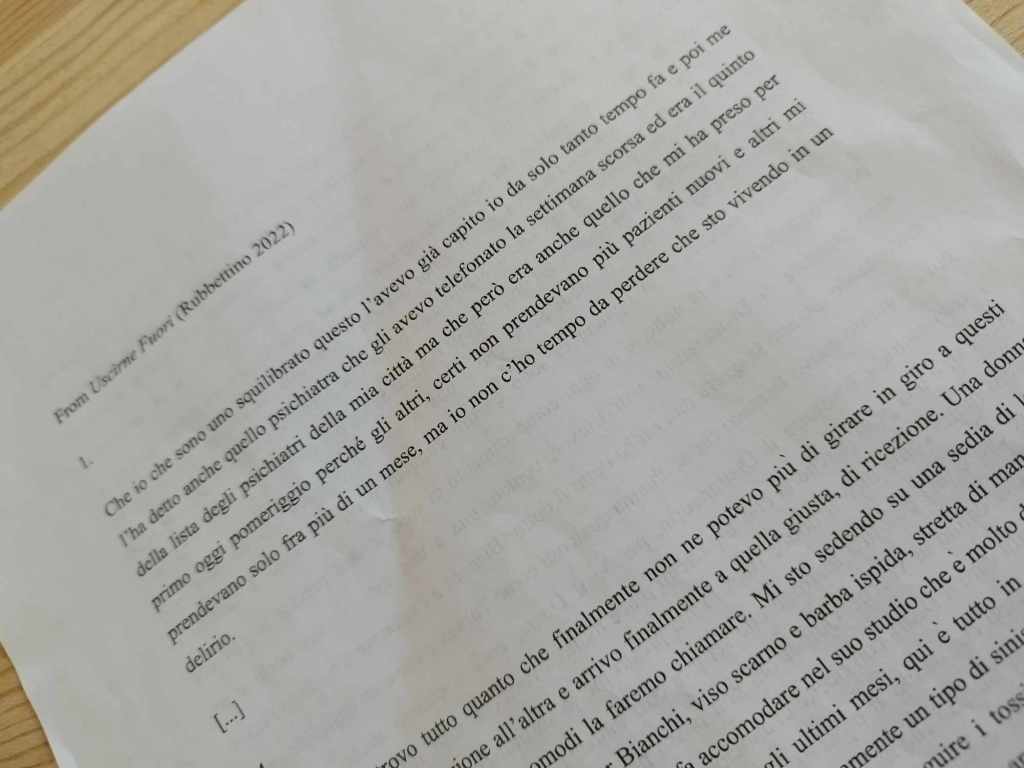
Another difference was the regular input from the author of the text we were translating. Which in the case of our Italian group, was Swiss-Italian author, Fabio Andina. The privilege of being able to ask him his intention behind his use of this or that particular word or phrase, and to get a deeper understanding of the character we needed to breathe credible life into despite only having a couple of chapters of the novel (Uscirne Fuori) in which to do so, was invaluable. Hearing him talk about his creative process, not just when writing a book but also when turning one into a radio or screen play, enabled us to translate his words with more confidence. In turn, Fabio got a ringside seat to the creative nitty gritty of our craft, the time spent on each individual idea to ensure it not only transmits his intentions, but that it does it in a way that is both comprehensible and a thing of beauty for a reader from a different cultural background. Not translation, but transcreation.
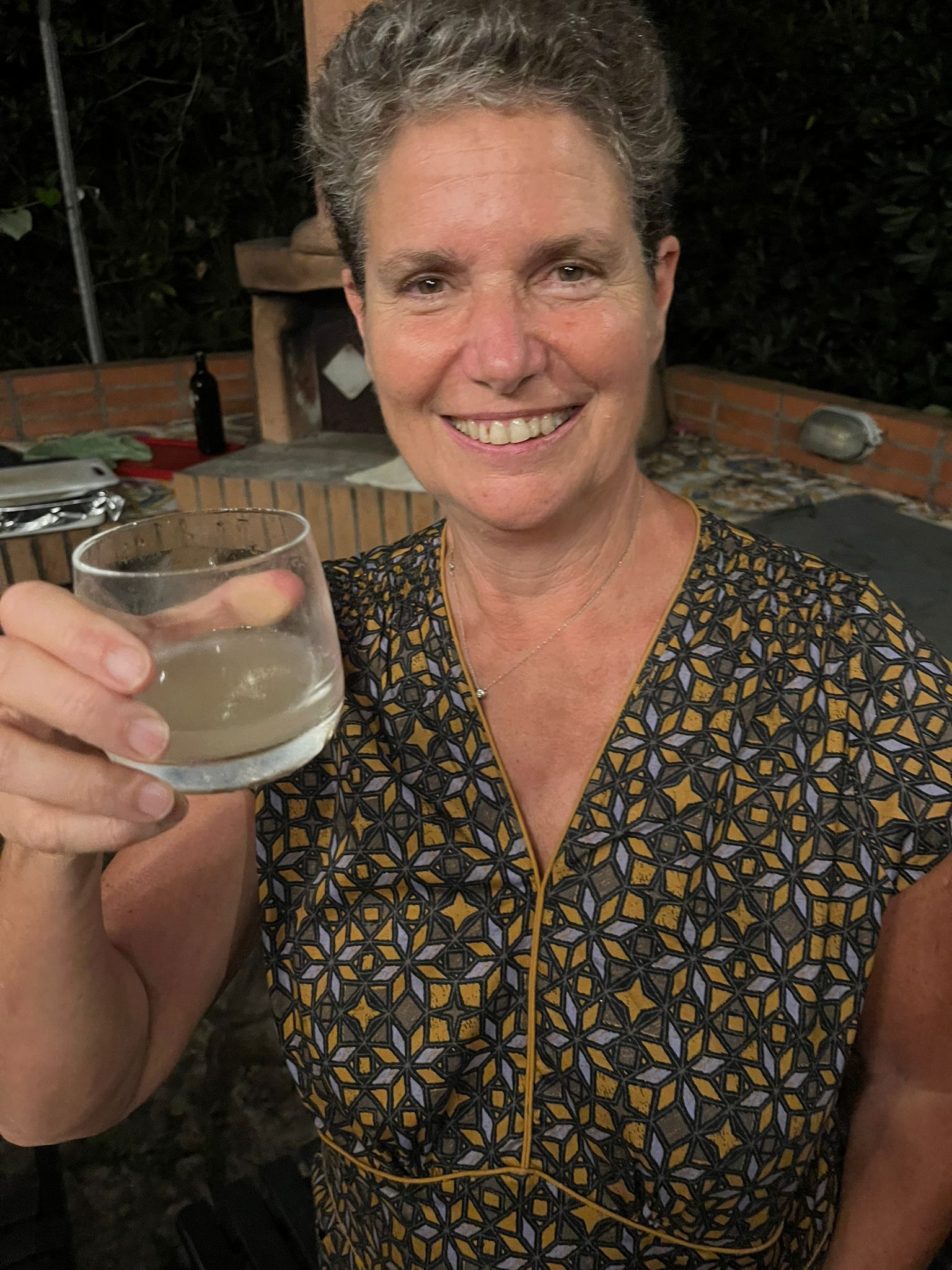
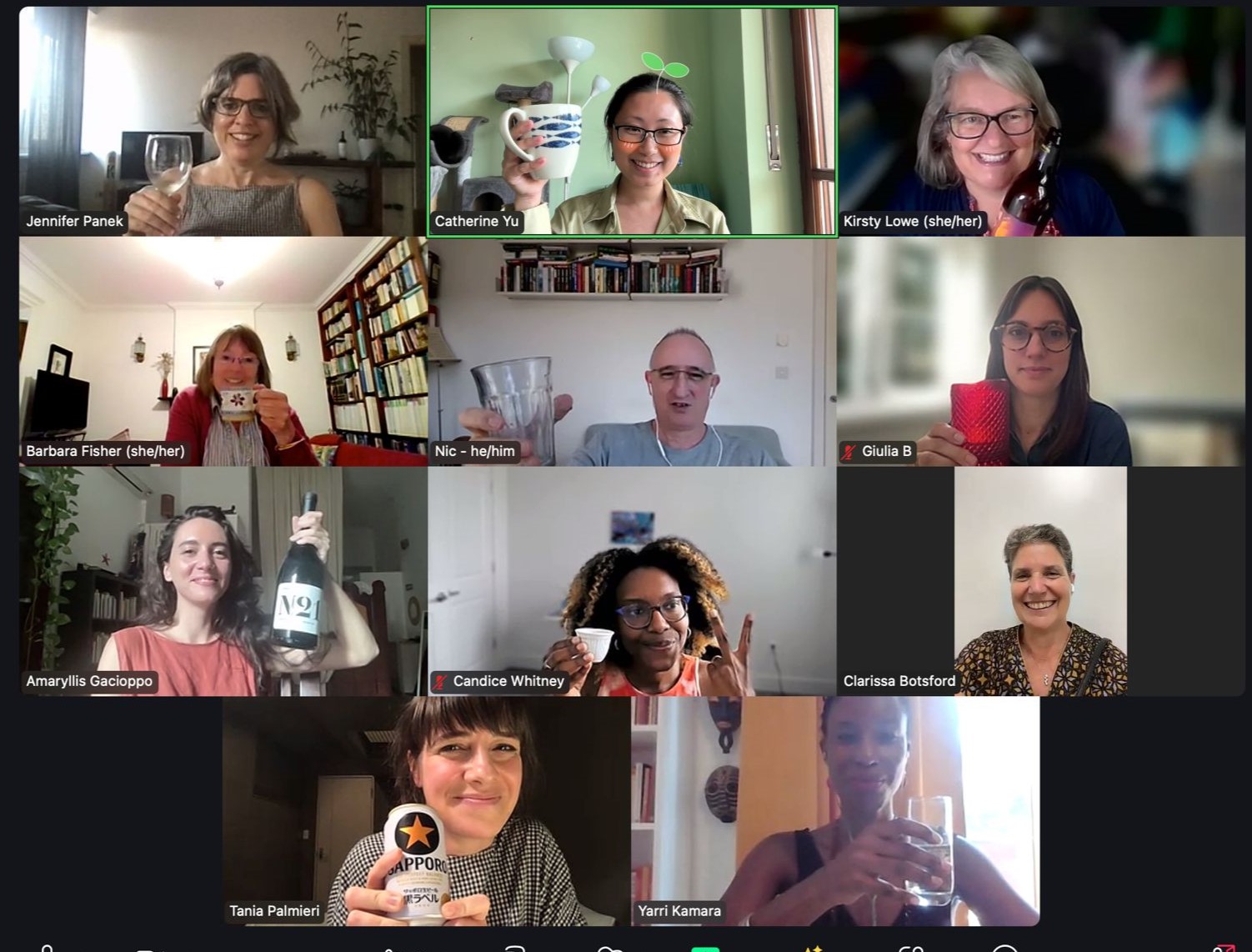
Leading our group was the wonderful Clarissa Botsford. As I pondered when the group asked me about my experiences at Bristol, while it had no impact on the nature of the course, I do think there is a difference between learners of Spanish and learners of Italian. In the UK at least, Spanish is one of the common second-language offerings at school (alongside French and German), presumably why it often subsequently becomes a university choice too. Those who choose Italian tend to do so, it appears to me, for two reasons: either they have a connection to Italy through their own roots or their partner, or they simply nourish a lifelong passion for the country. Given that Clarissa moved there after university, and is still there over 40 years later, I suspect she is in the latter category – but what better way to get under the skin of a language and its culture, and transmit that knowledge to others.
The group was an interesting mixture, originally from seven different countries (if I’ve done my sums correctly) now living in six different countries – only a few of us in the country in which we originally started. We never touched in any depth on what everyone actually “does” but as we are now the proud members of a BCLT2024 Italian Whatsapp group, and have all swapped email addresses, I am hoping I will eventually find out.
The non-Italian activities on the course included the authors from every group reading their work in its original language on the first day. We had our own Swiss-Italian Fabio, plus Portuguese, Korean, Japanese, Arabic, Flemish and German writers. I may have left a few out, and we did in fact hear many more languages from the multi-lingual groups reading their work on the last day. There was a creative writing workshop with the Irish poet and translator Keith Payne, an exercise on rhythm and sound. He played us an excerpt in a language none of us knew (Swedish), and ask us to write our own interpretation of what might be going on, having only given us the first four words in English. My language brain could not stop trying to translate the spoken words, exactly what we had been told not to do, and my page stayed embarrassingly blank.
I attended a lecture by the Palestinian author, academic and translator Shadi Rohana: Translating Don Quixote into Arabic. Sadly I couldn’t hear all of it, but I very much enjoyed the references to Al Andalus. It brought back memories of my years in Granada, working in a hotel in the Alhambra and guiding tours of the Albaicín. Living and working among the relics of that golden era of scientific, medical and agrarian progress where poetry, music and architecture thrived, and where the three Abrahamic religions co-existed in almost relative peace before the Catholic Kings re-took that last bastion of Al Andalus, and destroyed almost everything that was not Catholic.
We had: Meet the World, which celebrated the translation anthology River in an Ocean with Yasmine Haj, Nedra Rodrigo and Lisa Ndejuru in conversation with publisher Nuzhat Abbas.
A panel discussion entitled “Translators as Labour Organisers” with Kira Josefsson, Alex Zucker and Mayada Ibrahim which stirred the blood by discussing ways in which all sorts of groups, not just translators, can mobilise and advocate against injustice. It was one of the many moments during the week where I felt I had at last found my “village”.
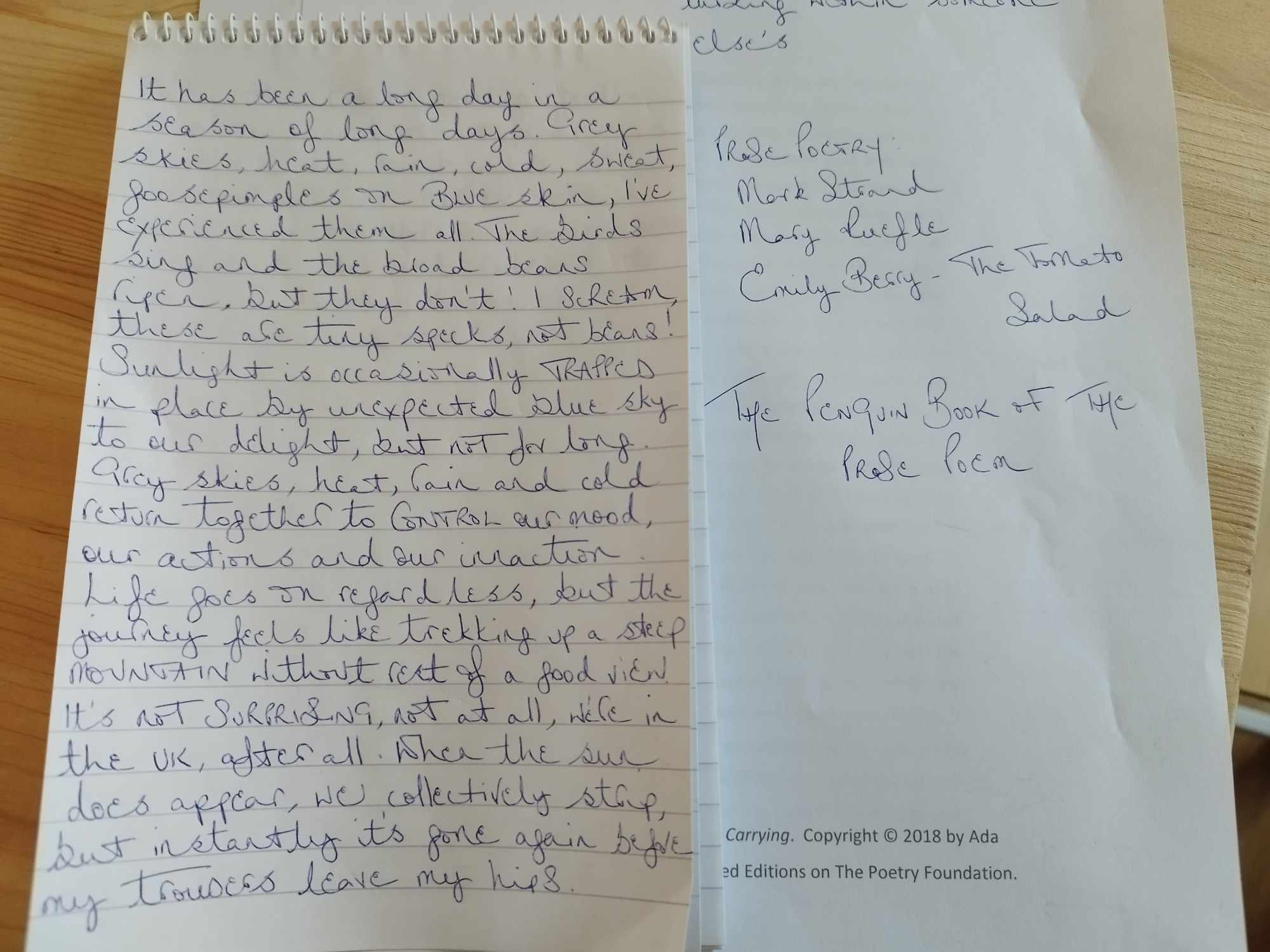
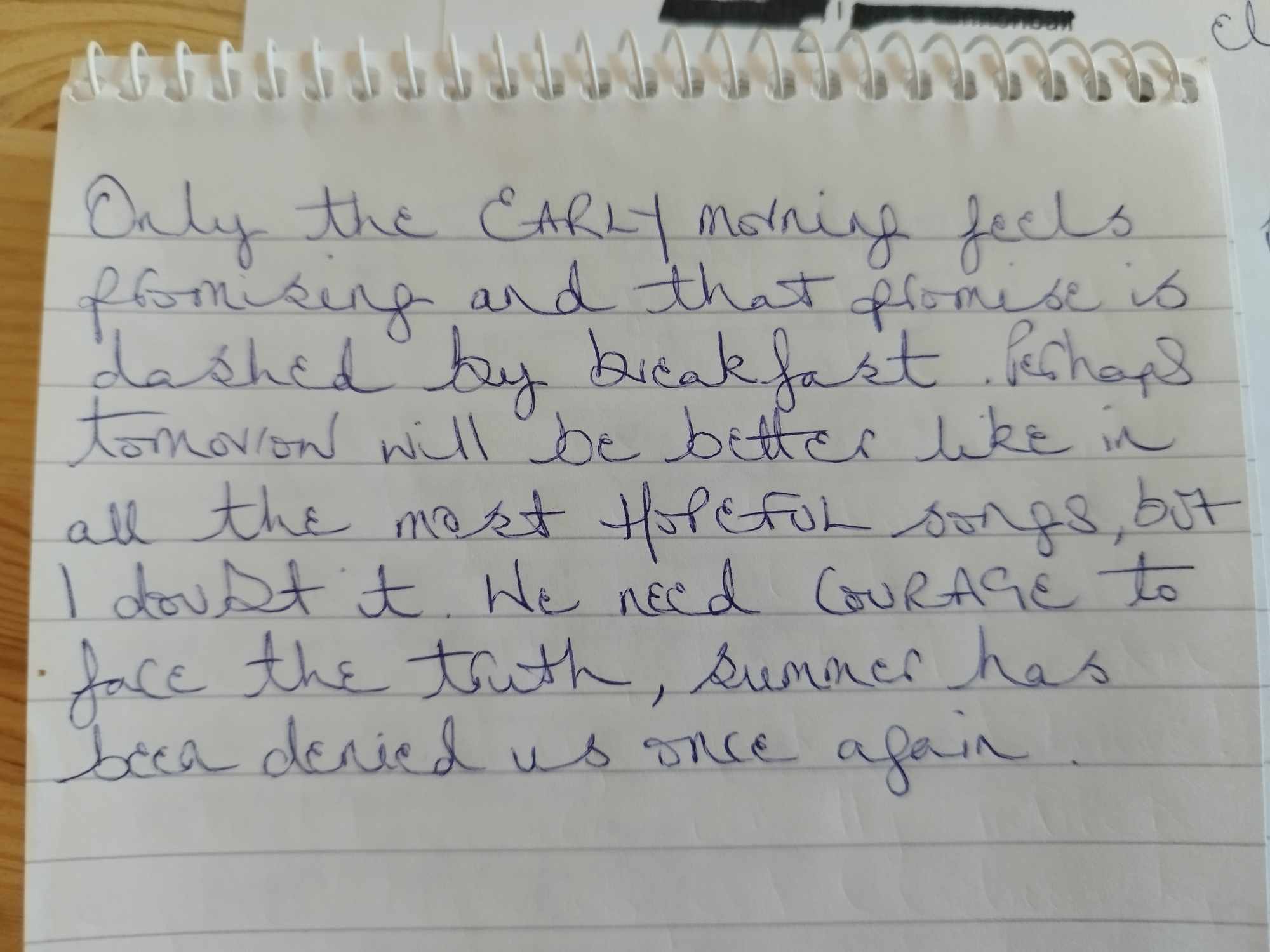
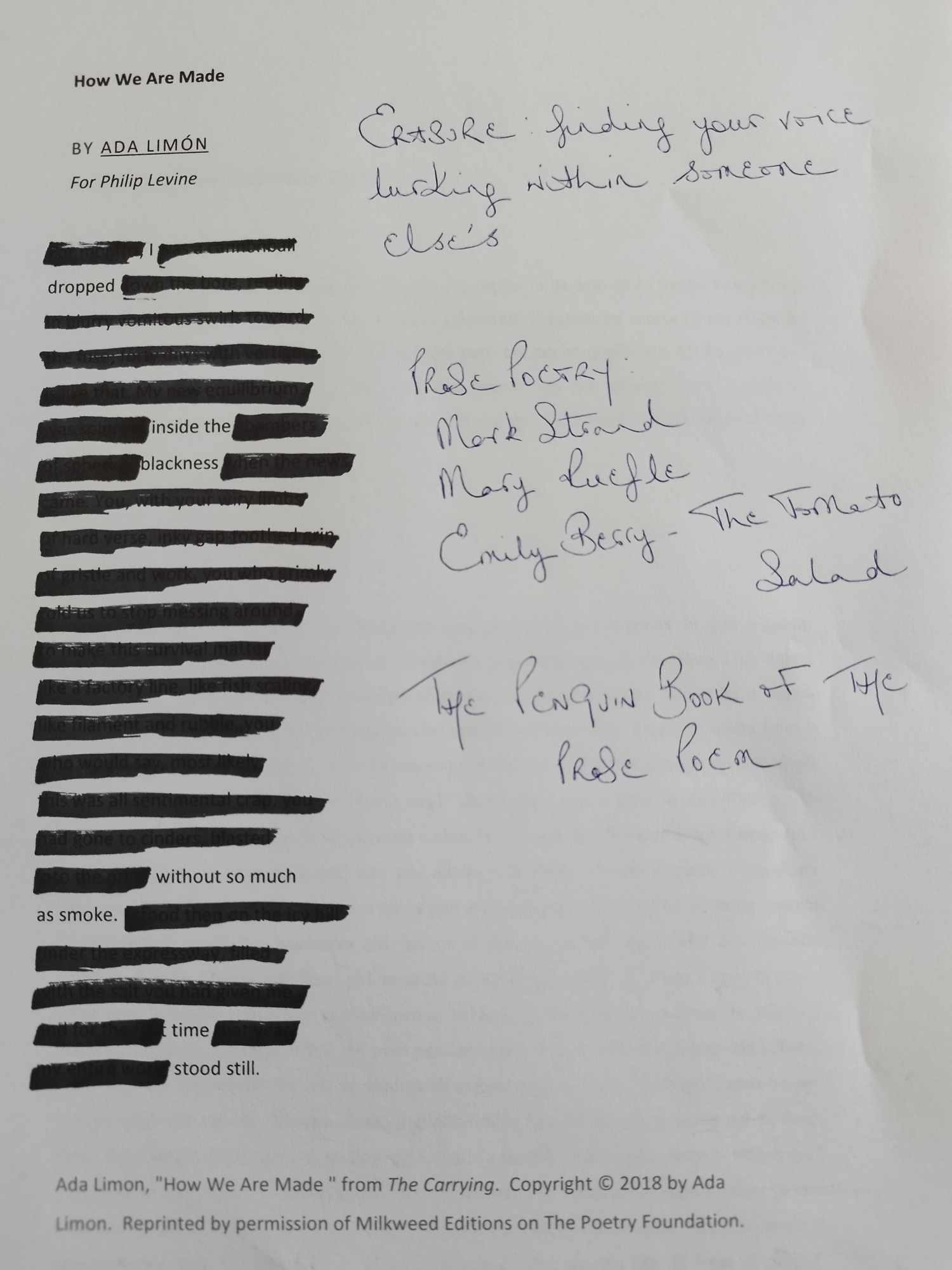
There was another creative writing session, this time with Nashwa Nasreldin where we explored Erasure Poetry, something I had never heard of, but which involves getting a page of text, either poetry or prose, and blacking out everything but the words you wish to keep to create a new piece of writing all your own. With Nashwa we also looked at Prose Poetry, and were encouraged to create some of our own, incorporating words she gave us at intervals during the process. These are both writing exercises that can help with creativity, and I have to say that I enjoyed every minute.
The final panel was the Publisher’s Panel: The Place of Digital Publishing with Eric M. B. Becker (Digital Director and Senior Editor, Words Without Borders), Andrew Felsher (Founder and Editor, 128 Lit), and Sohini Basak (Freelance Editor, previously at Asymptote and WWB). They talked about publishing writing or translations through digital as opposed to print channels as a way to break into the industry.
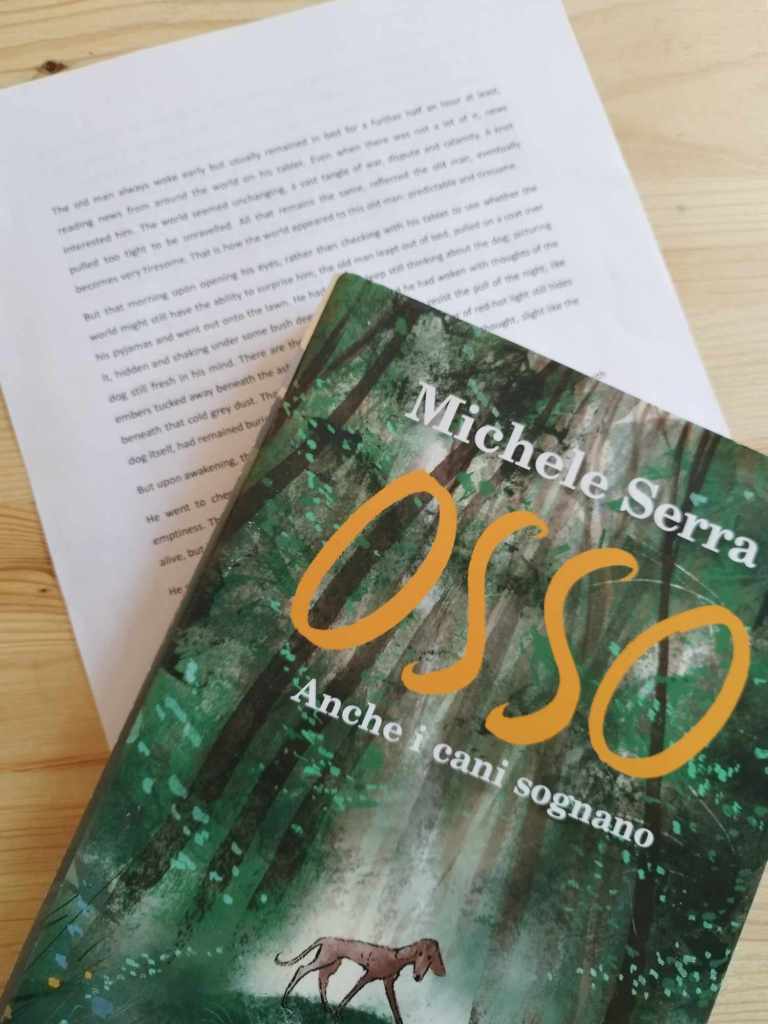
On Thursday evening I behaved in very un-me fashion by volunteering to participate in the open-mic night (Zoom-style: I’m not sure I would have been as brave in person) with a reading from the book by Italian journalist and author, Michele Serra – Osso. Anche i cani sognano. His first children’s book, which I have translated but which has not (yet, hopefully) found its UK publisher. Others also read: prose and poetry, their own writing or a translation, and one even sang a hauntingly beautiful song in an Indian dialect.
The week finished with each group reading their work aloud, and explaining the solutions they had found to a myriad of translation issues, different for every language. Or, as another of the tutors so aptly noted: with “the ecstasy of professional introverts coming together!” the ultimate happy ending.


Leave a Reply