Before I had my daughter, who somewhat astonishingly is now ten entire years and some months old, my husband and I agreed a few basic ground rules:
no television, no computer games, no mobile phones, no plastic toys, no toys with batteries, no sugar, a strict bedtime routine, nary a trip to McDonalds, educational activities from dawn to dusk and we would never ever ignore her in favour of our smartphones (I exaggerate, although it is heart-warming to remember what excellent parents we were prior to landing ourselves with an actual child).
But it is our linguistic ground rule that I remember most, not least because it is the one we have most tenaciously stuck to. And like many pre-parenthood parenting affirmations, we based it on our disapproving observation of “certain” others. We were determined not to be the sort of parents who would deprive their daughter of her heritage languages, not us, and so the ground rule was that we would follow OPOL or One Parent, One Language. My husband would speak to her solely in Romanian, and I would speak to her solely in English.
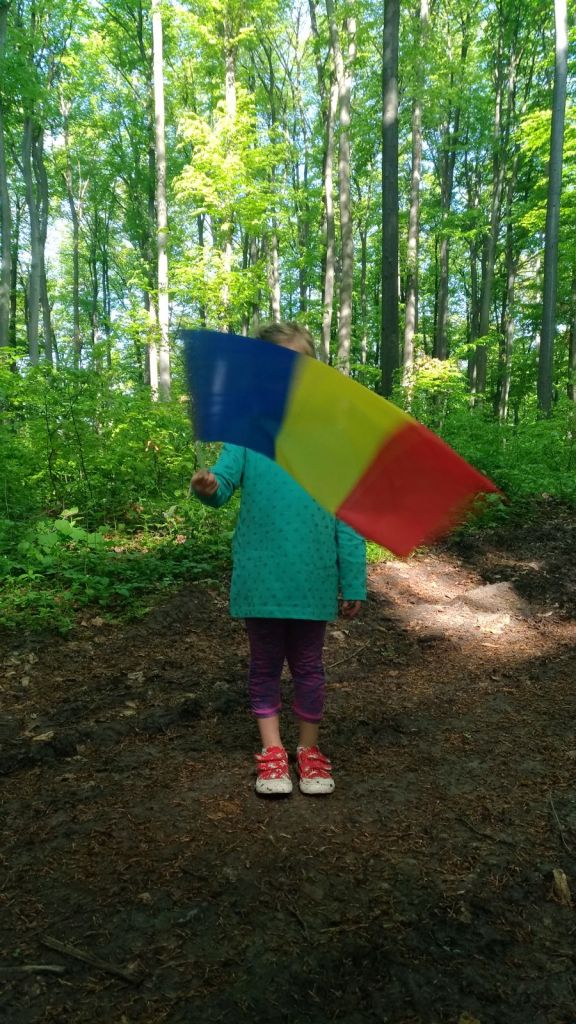
It wasn’t without its issues, certainly in the early days. For despite his Romanian passport, my husband is more specifically Csángó. Csángós being an ethnic Hungarian people hailing primarily from the Moldavia region of Romania. For most Csángós of his generation and older (less so today’s youngsters) their mother tongue is a Hungarian dialect known also as Csángó. He only began learning Romanian when he started school at the age of seven, and still speaks only Csángó with his family. Nevertheless, he pushed on through until speaking Romanian to his daughter became second nature, and I love him all the more for it.
While speaking English came as naturally to me as you might imagine, the issues I faced originated outside the home in the form of an entire village of disapproving Italians. “Why are you speaking to her in English? You’re in Italy, you should speak Italian or she’ll never learn it!” they insisted, despite my protestations that one lone English mother vs 1000+ child-obsessed Italian villagers meant pretty good odds in their favour. Plus, in the multilingual parenting community, we are encouraged to speak our “heart language” to our offspring. Plus plus, with the greatest possible respect to Italian’s obvious linguistic superiority, English is…. quite useful.
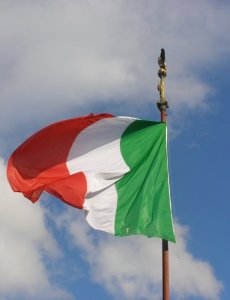
Despite our neighbours’ frequently-voiced concerns, by the time she left Italy at three and a half years old, our daughter spoke both English and Italian fluently, her English tinged with a delightful sing-song musicality and some quirky turns of phrase that made for interesting misunderstandings at her UK pre-school.
Once in the UK, it was the turn of spoken Romanian to come on leaps and bounds. Removed from the heavy Italian influence, she began using it far more, as opposed to responding to her father almost exclusively in Italian. She now speaks it at native level – the happiest of OPOL outcomes.
But what would the UK mean for Italian, given that neither of her parents was actually Italian? All we knew was that we (I) badly did not want her to lose it, and given we had a small child who confidently informed whomsoever cared to ask that she was “half English, half Italian, and half Romanian” we (I) felt a responsibility not to deprive her of this unconsciously adopted part of her heritage.

My husband and I had always spoken to each other in Italian, so she would still hear it every day albeit imperfectly. When it was my turn to read, I swapped her English bedtime story for an Italian one – between pre-school and my mother, with whom we lived, I was quietly hopeful that her English would not suffer too much as a result. We only provided Italian and Romanian television channels at our end of the house – she could retreat to her grandmother’s sofa for her CBeebies sessions. I spoke to her more frequently in Italian, especially when we were together as a family – it had the added advantage of silencing my husband’s incessant queries of “What? What did you say? What did she say? What are you talking about?”.
When she had made some progress learning to read in English, I made sure I stocked up on Italian easy readers – yes you, La Mucca Moka. Romanian was of course her father’s responsibility, so I made sure I stocked up on Romanian easy readers too and bullied him incessantly until he put them to use. The Italian (and Romanian) friendships we have made since moving back have also played their part in keeping the languages alive and purposeful for her.
And after a few false starts trying to find some more expert input, by the time she was 8 or 9 she was having regular on-line lessons. Nothing excessive: 30 minutes a week in Romanian, 45 minutes a week in Italian. She grumbles, of course she grumbles: she’s ten entire years and some months old, but she speaks three languages fluently and two of them at native level. She reads in all three languages, if slightly more fluidly in English, and her spelling is almost equally atrocious in all three.
Thus it is my greatest hope that she will eventually forget how annoying our insistence on all these matters has been, and simply be pleased (and rightfully proud) of her status as a polyglot.
My secret hope is that it might even award us a parenting brownie point or two when she looks fondly back on her childhood, although I suppose it might just as easily become fodder for her therapist and confirmation of Philip Larkin’s infamous take on parenthood.
Time will tell.


 Love Languages
Leave a reply to nuttygodwit Cancel reply