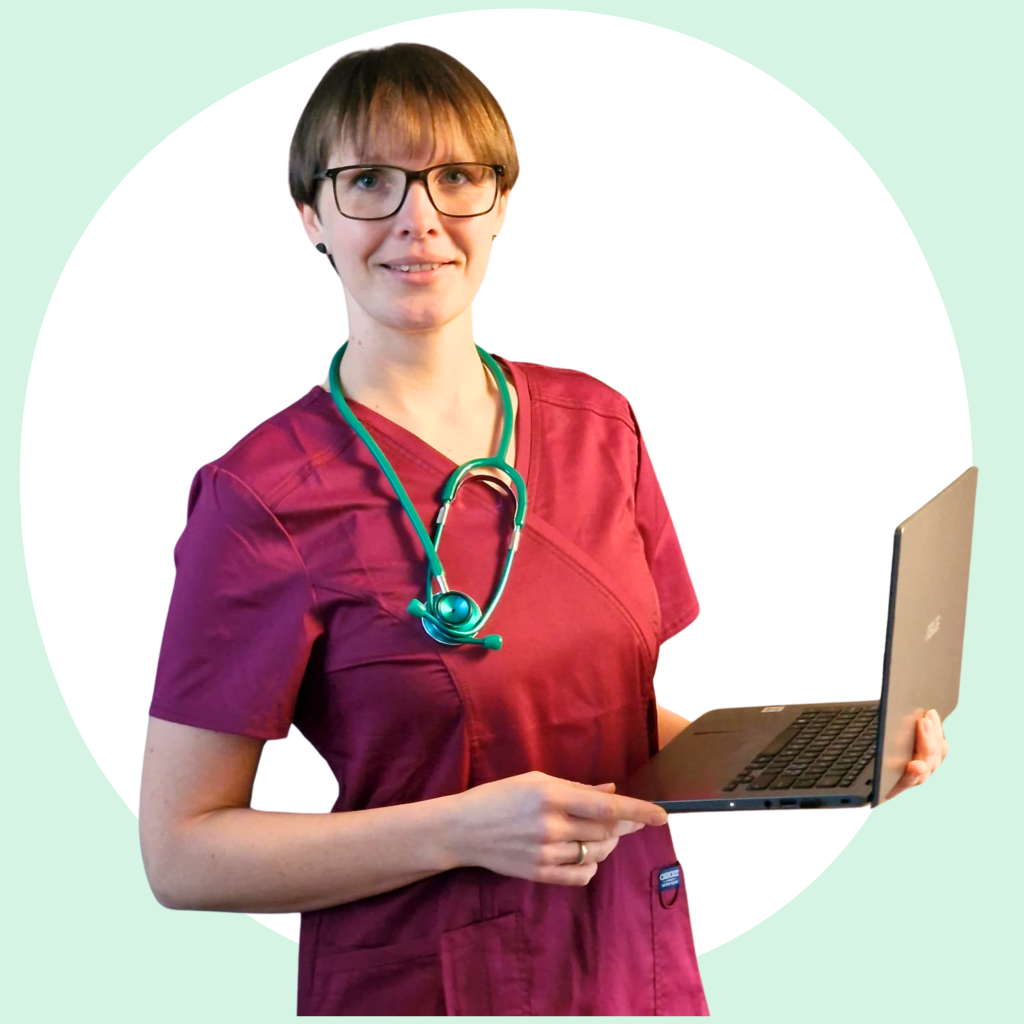
Kathrin Kunze
English, Swedish and Latin to German
Medical Translator
Today, on Meet the Translator Monday, we meet former nurse and current medical translator, Kathrin Kunze. I have particular enjoyed working on this interview as my interests lie with medical translation, but I think it contains a little something for everyone.
What are your source and target languages, and how did you learn your source languages?
My source languages are English, Swedish and Latin. My target language is German. I learned English at school but deepened my skills whilst living and working in healthcare in Oceania for 2 years. As I live in Sweden I wanted to learn this language, too, to respect the culture and history of this beautiful country. Even though everyone speaks English here, we still wanted to become 100% included. You only feel that way if you speak the native language. Besides that, I love Swedish and actually all kinds of languages.
I also translate Latin medical terms into German – Something I dare to do as medical language has been part of me ever since I can think. My medical career started very early, at the age of 6, when I joined the youth department of the Red Cross in Germany.
Tell us a bit about the career in medicine that led to you becoming a medical translator.
As I mentioned before, I started very early with “practicing” medicine. At the age of 6 I started at the Red Cross and learned all about first aid, environment and social care. When I was done with high school I went to a nursing school and studied nursing. Once I finished those studies I prepared for an overseas period and studied medical English. That was 20 years ago. Lucky enough I could use those skills whilst working in New Zealand and Australia, working in aged care homes. I even took a course in New Zealand about Aged Care Education and graduated. When I was back in Germany, besides becoming a mom of three, I focused on becoming an emergency specialised nurse and rescue assistant. I always LOVED my job and taking care of people. Unfortunately in my mid thirties my own medical conditions did not allow me to keep working as such. This was around the time when we decided to move to Sweden.
When did you first consider becoming a translator, and why?
As you can imagine, I was devastated and completely lost. Medicine was ALL I could, all I was! But life continued and I realized that it was very easy for me to pick up the Swedish language. So I thought of working with my linguistic skills and combined this with my passion for healthcare and medicine. I took courses on translation and writing and started off as a full-time medical translator.
I went all in and made it happen, just because I wanted it to happen! And it worked!
Did you undertake formal training to become a translator, and if so, what?
I studied the course – become a Freelance Translator – by The Translator Agency.
How did you launch your translation career?
I just started through. In the beginning I worked for free or low pay (I know – shame on me!), but it earned me my first testimonials which I later used for my marketing. In the beginning I did not use my background as nurse in marketing myself but wanted to keep it broad. Once a colleague encouraged me, I decided to make this my unique selling point and niche down. This was the biggest game changer and clients started coming to me.
Since qualifying as a translator, have you undertaken further studies to hone your specialisms and/or languages, and if so, which?
I am a learnaholic and keep my studies at all costs. I never stop learning and am happy to show you a selection of my greatest achievements:
Regulatory Medical Writing (08/2025)
GCP- ICH Guidelines E6 R2 (08/2025)
Clinical Data Management (04/2025)
Digital Marketing (05/2025)
SEO Writing (02/2025)
Medical Writing (11/2024)
Freelance Translation (09/2023)
Rescue Assistant Training (2020)
Cast Course (2018)
Emergency Simulation Training (2017+2018)
Emergency Specialist Training (2017)
Medical Devices Act/Medical Devices Operators Ordinance Training Germany (2013)
Ophthalmology Training (2013)
Fibroscan Training (2010)
Informed Consent Training NZ (2007)
Nursing studies (2003-2006)
Red Cross Germany Training as Member in the Youth Department (1992-2003)
What other CPD do you regularly undertake and recommend?
All kinds that are related to medical language, writing, SEO, translation, patient voice and clinical trials. I stay connected in groups discussing those topics, especially on LinkedIn.
What other services do you offer/work with?
Translation is only half of my professional life. I enjoy creating content for lay audiences and upcoming medical communicators. I love this term as it combines translators, writers and authors and even HCPs. In the end that is what we are doing. We communicate!
My mission is: Make medical language accessible for ALL!
As author of the book How to Speak Cancer I bring this mission to life. At the moment I am translating the book into German and I am already working on a second book idea.
Besides that I offer mentoring and give speeches and workshops at conferences and for TranslaStars.
And as if that wouldn’t be enough, I host MedTalks with Kathrin, a webinar series with peers from the industry on all kinds of medical and linguistic topics.
There are so many more projects I would like to start with, but even my days have only 24 hours 😆. So I need to be patient, but writing and patient education will be a big part. This is where I am going to pivot to.
How do you promote yourself and find clients?
I post regularly on LinkedIn. This way my clients find me. I haven’t written cold emails for a while now. But it worked well in the beginning. I just got tired of it. SEO-optimizing my website helps too, to gain trust and lead possible clients into the right direction. I believe that MedTalks also helps me to connect with the right people.
If you work with agencies, how do you make a good first impression, and do you send them professional updates to keep yourself relevant to them?
I am not just a translator for my clients, no matter if that is an agency or a direct client. I am a problem solver, always thinking further and giving comments along the way. Tight deadline? Sometimes a must to get a project running. For me it is important to be working as a part of their team and not just as a number of 1000 translators. So I introduce myself properly and send updates from time to time. I found it most helpful to be a people’s person with good soft skills. Keep it human, kind and show them that you are willing to help! Ask how their holiday was, send a Christmas card or just ask how the PM you are working with feels today, wish them a lovely day, whatever feels comfortable for you!
What does a normal working day look like for you?
I usually start with answering emails and LinkedIn messages. Then I will check LI for a few minutes or post something. If I have a translation planned for the day, I will start with this. Otherwise I start with whatever is on my plan for the day. Writing, marketing, … 10 am I will have a coffee and work until I pick my daughter up from school. I try to pack my high concentration tasks in the morning hours between 8 am and 1 pm, as this is the best time for me.
What is the most satisfying project that you have worked on recently?
My book How to Speak Cancer, as it gives me the power to really fight for something that is super important to me. Making medical language understandable for lay folk!
I understand you co-host Med Talks, please tell us more about that.
MedTalks was founded in May 2024 – together with Doris – with the mission of connecting healthcare professionals, organisations, and medical linguists. Today, we are a thriving and growing community of medical interpreters, translators, and writers.
In August 2025, Doris stepped down from her role at MedTalks, and leadership passed to me.
Whether you are a medical linguist seeking a professional network or a company searching for specialised language expertise, MedTalks is here to connect you with the right people and resources.
For medical linguists, I provide training opportunities, educational materials, and a supportive environment where members can share knowledge and learn from each other. I believe in mutual growth and value the opportunity to learn from our community as much as we contribute to it.
I host free monthly webinars on topics relevant to medical linguistic services, open to all who wish to expand their expertise and engage in professional discussions. Every member is encouraged to participate and contribute their insights.
How would you like your career to progress over the next 5 years?
I want to focus on writing more books, which are aimed at helping patients understanding their conditions. Also, I would like to pivot more into linguistic validation and patient voice research. Being part of conferences and speaking for those who deserve a louder voice in the healthcare sectors – patients AND caregivers!
In addition, I would love to raise awareness about the trauma healthcare professionals experience while caring for their patients. This work demands immense strength and resilience, and I wish more people could truly appreciate the dedication and sacrifices these everyday heroes make. My former colleagues, myself, and countless others endure the difficult aspects of the job to achieve the best possible outcomes, yet political and systemic constraints often limit what we are able to do, and the patients who suffer blame the professionals who can only do so much, because even they are just human beings!
What are your thoughts on the future of the translation industry since the advent of AI?
I am not concerned. As many others say, it is a tool and you must be wise enough to learn working with it and not against it. I use it and it helps me be very efficient, but never without my human perspective, experience and input.
What are your Dos and Don’ts for new translators just starting out?
Dos
- Specialize and keep learning: Build expertise in a specific field and stay updated on terminology and industry standards.
- Prioritize accuracy and clarity: Make sure the meaning is faithfully conveyed and that the text is understandable to the target audience.
- Use resources and proofread: Leverage glossaries, style guides, and translation tools, and always review your work carefully.
Don’ts
- Don’t translate word-for-word: Focus on meaning and context, not just literal words.
- Don’t skip research: Never assume you know technical or specialized terms.
- Don’t ignore feedback: Learn from corrections and client comments to improve your skills.
Thank you very much for participating in MTTM, Kathrin. You are certainly a force of nature – I would love to have even half of your energy! Wishing you all the best for the future.
 Love Languages
Leave a comment