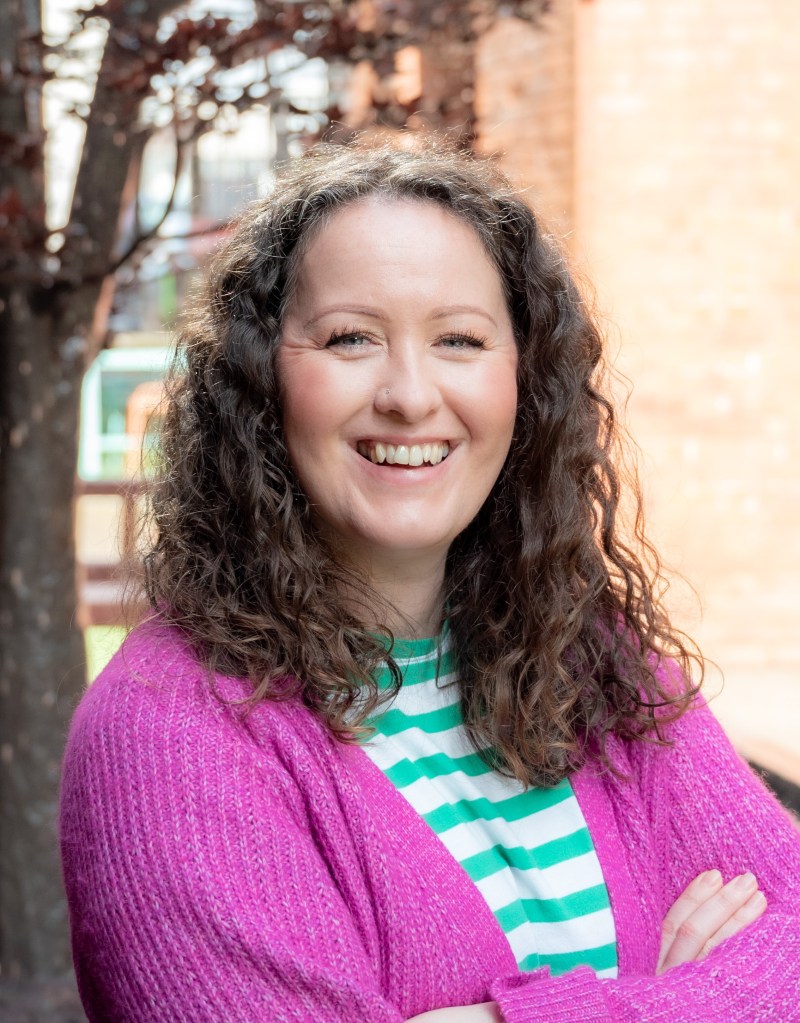
Laura Jones, Translator
French, Spanish, Welsh into English
English into Welsh
Website: Beauty and Lifestyle translator
This week on MTTM I am featuring the lovely Laura Jones, a beauty and lifestyle translator working with French, Spanish, Welsh and English.
What are your source and target languages, and how did you learn your source languages?
I translate from French and Spanish into English and between English and Welsh in both directions. I guess I could also translate from French or Spanish into Welsh, but there doesn’t seem to be much demand for that! Neither of my parents speaks Welsh, but they chose to send me and my brother to a Welsh-medium school, so I’ve spoken it fluently since the age of 5. I started learning French in secondary school, followed by German, and attended an evening class to learn Spanish. I then went on to study all three languages for GCSE and A Level, before continuing with French and Spanish for my degree (I had to drop German after the first year, sadly, but I still remember ein bisschen Deutsch).
When did you first consider becoming a translator, and why?
After graduating, I was determined to find a job using my languages and looked for translator roles; however, at that point, it was nigh-on impossible to find a translation job without experience or a qualification. So, I found a job at a school travel agency, where I worked as a tour organiser for ten years. There, I used my languages every day, whether communicating with European suppliers or translating documents into and out of English. In 2014, I felt ready for a new challenge, so I decided to return to Cardiff University for a Masters in Translation Studies. After graduating in 2017, I went part-time and started dabbling in translation, and by January 2019, I had built up enough of a client base to take the plunge and freelance full-time. I haven’t looked back since!
What are your specialisms, and how did you choose them?
It wasn’t a case of me choosing my specialisms; they chose me! One of my first major clients was a Spanish translation agency that worked with several well-known beauty brands and a Spanish hotel chain, so I gained a lot of experience in translating beauty, tourism, and food and drink texts through them. Through other agency clients, I have also gained expertise in the fashion, interior design and luxury areas, so I now market myself as a beauty and lifestyle translator, to try to cover all these bases. Over the last few years, I’ve started working with direct clients in these industries, which is an absolute pleasure, as I’m learning new concepts and terminology all the time. If I had to choose a favourite translation niche, though, it would probably be fragrance or jewellery. The downside to translating about all these lovely products and places is that I haven’t got deep enough pockets to try them all for myself!
What other CPD do you regularly undertake and recommend?
It’s so important not to stagnate as a freelance translator, especially given the rate of change in our profession, so I undertake regular CPD to continue to learn, stay up to date and hone my skills and languages. Living in the UK, I don’t get much opportunity to practise my French or Spanish, so I’ve become rusty and lost confidence. For the last couple of years, I’ve been having weekly calls with a colleague, so that she can practise her English and me, my Spanish. I’m not sure if I’m making much of an improvement TBH, but it’s keeping my Spanish ticking over and I learn new vocabulary every week. I also attend webinars on a range of subjects, from my specialisms to translation to more business-related topics. The ITI and CIOL both run regular webinars, which I either attend live or watch on catch-up. I also coordinate the ITI Beauty, Fashion and Luxury Network, and we also run monthly webinars covering all manner of things from portfolios and copywriting to champagne and luxury yachts! Going forward, I’d like to learn more about SEO and improve my IT skills, as I’m a complete technophobe.
Which translation associations or groups are you a member of? Which are most helpful for offering support, and which (if any) are a good source of work leads?
I’m an associate member of the ITI and a member of the CIOL. I’m also a member of several ITI Networks, including ITI Cymru Wales, ITI French Network, ITI Spanish Network, and ITI Beauty Fashion and Luxury Network. I’m a big advocate for professional associations, as they’re great for networking, support, learning, and, sometimes, finding work. If you have a profile on a professional translation association’s directory, it gives you credibility. It also takes the loneliness out of freelancing if you have a supportive network of colleagues. Speaking of which, the #TeamTranslator Slack group set up by Kelsey Frick and Anikó Petó-Mordovski is a great place to be, whether you’re just starting out or a seasoned translator. Here, colleagues share jobs and tips, celebrate their wins and let it all out when they’re having a bad day — it’s our safe space.
Which translation tools do you use the most?
My CAT tool of choice is Trados — when I started out, most agencies called for it, so I’ve just stuck with it. I love the Read Aloud function in Word when I’m proofreading my work — it has saved my bacon more times than I can think of. In terms of bilingual dictionaries, I tend to use online resources such as Reverso Dictionnaire and Word Reference, and for monolingual, it’s Collins or Merriam Webster (depending on the English variant), Larousse and RAE. I also have a range of go-to online dictionaries for Welsh. Depending on the project, I’ll always check the client’s website for reference materials. This is particularly useful for product descriptions when I don’t have visuals from the client, or to check the official English name for a face cream or serum, for example, as they often translate those in-house.
How do you promote yourself and find clients?
I post regularly on LinkedIn, but I know I should be more proactive in contacting prospects! When you’re starting out, I think it’s important to put yourself out there and shout about what you do, so that colleagues and contacts associate you with a particular niche or service. I’ve received many colleague referrals this way. LinkedIn or other social media platforms are also great if you don’t have a website yet, as they allow people to find you and get to know you. In terms of finding clients, I connect with beauty and lifestyle brand owners and businesses I’d like to work with on LinkedIn and interact with their posts. Hopefully, they’ll see mine too and contact me if and when they need me!
If you work with agencies, how do you make a good first impression, and do you send them professional updates to keep yourself relevant to them?
Registering and working with agencies can be tricky because they often have a database of existing translators (especially for the major language combinations) and might be reluctant to take on new or less experienced translators. The best way to make a good first impression is to personalise your message and make sure you contact them by their preferred communication method (whether by email or contact form — they usually specify on their website). Don’t just send a dry, impersonal cover message — agencies receive hundreds of these, so stand out by adding some personality, whether it’s sharing a joke or anecdote, a picture of your pet or a cake you’ve baked recently, a photo of you at a sports or fashion event if that’s your area, or referring to some news or an update about the agency itself. Show that you’ve taken the time to research their agency, and you’re more likely to get a reply. Also, address it to a person, if you can (not just Dear Sir/Madam) — find out who’s in charge of recruitment and contact them direct. Finally, read and reread your message to avoid any typos, and if you mention an attachment, make sure you’ve attached the file!
To stay in your agency’s good books, be as helpful and responsive as possible, deliver on time (early if possible), and just make the project managers’ lives as pain-free as possible. If you don’t hear from them in a while, check in with your availability, and of course, if you offer a new service, tell them!
What does a normal working day look like for you?
No two days are the same, but I generally work 9-5, Monday to Friday, and if I’m not doing client work, I’ll fill my time with CPD, marketing tasks, like writing LinkedIn posts, and other business-related admin. There’s always plenty on my to-do list. Recently, I’ve been going to morning exercise classes at the local gym, which takes some time out of my work day, but I need to stay fit and healthy, for the sake of my business. I try not to work evenings or weekends, but sometimes it can’t be helped, if a project takes longer than anticipated, or if a valued client has an urgent project. That’s the beauty of freelancing, though, isn’t it? Getting to pick your own hours and work when it suits you.
What is the most satisfying translation project that you have worked on recently?
There have been a few over the past few months, but perhaps the one that stands out most was a fascinating project for the Vultures and Fireflies exhibition at Marres Maastricht, on which I collaborated with Victoria Porter-Burns. This is an exhibition by Mexican artist Alejandro Galván, whose fantastical, dreamlike artworks depict life in the suburbs of Mexico City. The museum commissioned a book of poems, essays, and prose to accompany the exhibition, which Vicky and I translated from Spanish into English — totally different from the beauty, fashion and lifestyle marketing texts I usually work on. It was an eye-opening, challenging and rewarding project, which I won’t forget in a hurry.
How would you like your translation career to progress over the next 5 years?
I’ve achieved a lot over the last six years, but there’s still a long way to go! I truly hope that I’m still happy doing what I do in five years’ time, and able to make a sustainable living from translation. In an ideal world, I’d have a base of regular, well-paying direct and agency clients who share my values in the beauty, fashion, travel, luxury and lifestyle industries. It would be wonderful not to have to worry about where the next project is coming from or having to justify my rate ever again. A girl can dream!
Have you diversified, or do you plan to diversify, into another career?
I’ve diversified in as much as I now translate into Welsh, as well as English. I put it off for a long time (hello, impostor syndrome!), as Welsh isn’t my first language, and I don’t use it as much as English. But little by little, I’ve been working on Welsh translation projects and gaining confidence in my writing skills, although I have to admit, it does take me longer than translating into English. Going forward, I’d love to learn subtitling, develop my copywriting and SEO knowledge to be able to offer these services in the future, and perhaps even go into language tutoring.
What are your Dos and Don’ts for new translators just starting out?
- Network! Connect with other translators on LinkedIn, TeamTranslator and through professional networks — this is the best way to learn about the profession, training opportunities, upcoming events, find work, etc.
- Don’t be afraid to ask for advice — translators are generally very helpful and happy to share their expertise.
- Find a mentor, ideally someone working in your language pair(s) and area of interest/expertise. Professional networks are often able to facilitate a mentorship if you don’t know where to begin.
- Get a LinkedIn profile and keep it up to date. Make it clear what you offer potential clients: your tagline could be something like XXX to XXX translator specialising in XXX. Your profile shouldn’t read like you’re a student, starting out, or lacking experience. Avoid words like “aspiring”.
- Join a professional translation network in your source/target countries (ITI or CIOL in the UK). You get so much from it in terms of networking and CPD, plus it helps make you look more professional!
- Keep learning — whether that’s about the translation profession, AI, your areas of specialisation, your languages, or new skills. Don’t stagnate, stay relevant.
- Build a portfolio — a great way to show what you can do and gain clients. If you haven’t had any translation work yet or are bound by NDAs, create case studies that don’t give away any sensitive information, or take some texts off the internet and translate those.
- Don’t be afraid to set boundaries and say no. If a project is beyond your abilities, it’s better to turn it down than to accept it and do a poor job. Explain to the client why you can’t take it on and make it clear what you can do. Equally, if a client is proposing a tight deadline or a low rate, don’t be afraid to push back and ask for an extension or more money. Work out your minimum rate and never accept any less.
- Take baby steps so you don’t get overwhelmed. Rome wasn’t built in a day, and neither is a translation business. Do a little bit every day and use your time productively, but remember to rest, otherwise you’ll burn out.
Thank you so much for volunteering your time to share you experiences and advice with us, Laura. This makes for a great read, with lots of useful advice. Wishing you all the best going forward!
 Love Languages
Leave a comment