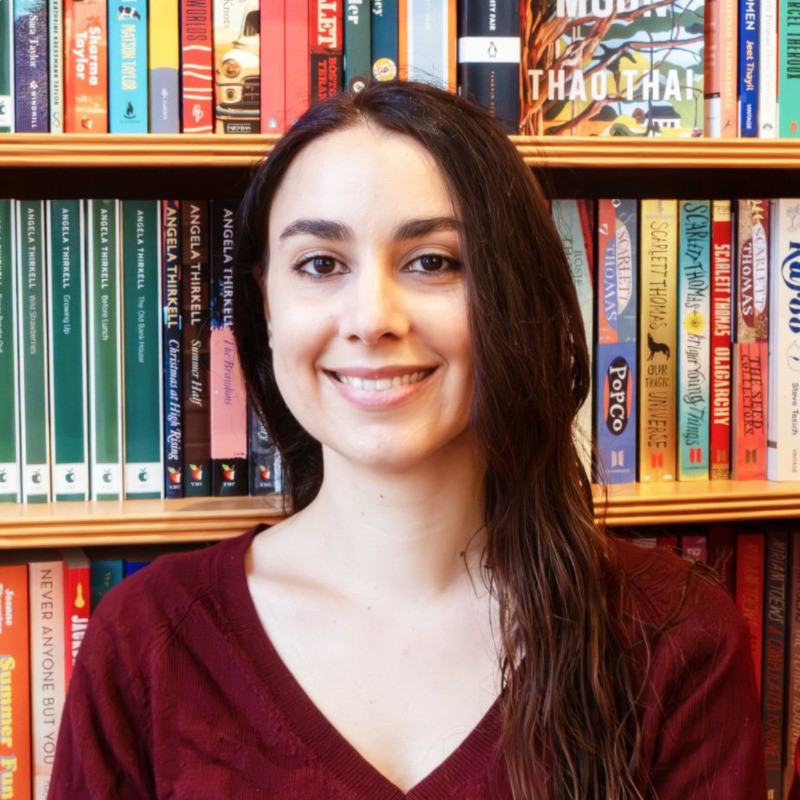
Welcome back to Meet the Translator Monday! MTTM is back with the lovely Silvia Martinelli. Silvia very kindly agreed to translate and answer the questions in her native Italian, and I have then translated her answers into English. I have done so with some trepidation, given her impeccable English skills, so I can only hope she is happy with the result!
Quali sono le tue combinazioni linguistiche e come hai appreso le tue lingue straniere?
Lavoro principalmente dall’inglese e dal francese verso l’italiano. Anche dallo spagnolo, ma non tanto quanto vorrei, considerando quanto lo amo! Ho imparato l’inglese leggendo libri, ascoltando musica e guardando film. In breve, l’ho assorbito come una spugna. Il francese l’ho imparato a scuola, in modo più formale. E infine lo spagnolo, prima all’università e poi vivendo a Madrid. Bei ricordi!
What are your language combinations, and how did you learn your source languages?
I mainly work from English and French into Italian. I also work from Spanish, but not as much as I would like, given how much I love the language! I learnt English through reading, listening to music and watching films – essentially absorbing it like a sponge. I learnt French more formally, at school. Spanish I studied at university level, before moving to Madrid. Great times!
Quando hai deciso di tradurre professionalmente e perché?
L’ho sempre considerata un’opzione, dato che la mia è una famiglia multilingue. Tutti quanti amiamo le lingue straniere, parlarle, caprile, leggerle, e comprendere l’esatta sfumatura del significato delle parole… ma la spinta finale è arrivata quando lavoravo per una ONG a Madrid e le mie competenze linguistiche venivano spesso utilizzate all’interno dell’organizzazione. È stato allora che ho deciso di seguire un corso di formazione apposito.
When did you decide to become a translator, and why?
I always had it in the back of my mind as a possibility, given that I come from a multilingual family. We all love foreign languages: speaking, understanding and reading them, as well as familiarising ourselves with the nuances. The final push came while I was working for an NGO in Madrid. My linguistic skills were frequently put to use by the organisation, and it was at that point I decided to undertake formal translation training.
Che formazione hai seguito per diventare traduttrice?
Dopo la laurea in Scienze Politiche all’Università di Pisa, ho deciso di frequentare anche un master in Translation Studies.
What did you study in order to become a translator?
Having graduated in Political Science from the University of Pisa, I decided to undertake a Masters in Translation Studies.
Quali sono le tue specializzazioni e come le hai scelte?
Le mie principali specializzazioni sono le mie passioni: salute, salute mentale e psicologia, turismo e viaggi. Ma mi piace mettermi alla prova in altri campi (con moderazione) quando si presentano opportunità allettanti.
What are your specialisms, and how did you choose them?
My primary specialisms are my personal interests: health, mental health, psychology, tourism and travel. However, I do enjoy challenging myself in other fields (in moderation) when a tempting opportunity presents itself.
Come hai iniziato la tua carriera nel mondo della traduzione?
Ho iniziato lavorando sia con agenzie che con clienti diretti, ma soprattutto con clienti diretti. Non sono mai stata in-house, ma ho avuto la fortuna di ottenere molto lavoro tramite referenze!
How did you begin your translation career?
I began by working with both translation agencies and private clients, but primarily private clients. I have never worked in-house, but I have been lucky enough to get a lot of work through referrals!
Dall’inizio della tua carriera professionale come traduttrice a oggi, hai intrapreso ulteriori studi per affinare le tue specializzazioni e/o le lingue di lavoro?
Vivendo nel Regno Unito, ogni conversazione contribuisce ad affinare le mie competenze in una delle mie seconde lingue. Inoltre, parlo ogni giorno con la mia famiglia e i miei amici italiani (anche se, diciamocelo, sono soprattutto amiche), cosa che mantiene il mio italiano fresco e aggiornato. Anche se a volte non mi piace quello che sento (sì, sto parlando di te, caterva di parole inglesi a caso quando abbiamo bellissime parole italiane per esprimere gli stessi concetti). Inoltre, leggo quasi quotidianamente libri e articoli sui miei argomenti preferiti e a volte seguo corsi di formazione più formali, tipo webinar.
Have you undertaken further studies in your specialisms or languages during your translation career?
Living in the UK, every conversation contributes to the fine-tuning of at least one of my second languages. I talk to my family and to Italian friends (especially my BFFs!) every day, which keeps my Italian fresh and up to date, even if I frequently don’t like what I am hearing: yes, I’m referring to you, bunch of random English terms thrown into conversation despite the existence of beautiful Italian words to express the same concepts. I read books and articles on my favourite subjects pretty much on a daily basis. I also periodically undertake more formal training, such as webinars.
Quali altre attività di aggiornamento professionale svolgi regolarmente e consigli a chi è agli inizi?
Consiglio di prendere molto sul serio le competenze di marketing e business. In quanto traduttori e traduttrici freelance, non siamo solo esperti di lingua e cultura, ma anche piccoli imprenditori, ed è fondamentale non dimenticarlo. Personalmente, mi sono divertita molto partecipando alla March Marketing Madness di Corinne McKay e lavorando con Sarah Silva nel suo Expedition Group, ma sono certa che ci siano molte altre risorse preziose tra cui scegliere! Per una bella risorsa gratuita, date un’occhiata al sito web e al gruppo Slack di Team Translator.
What other CPD do you regularly undertake and would recommend to colleagues who are starting out?
My advice would be to invest in marketing and business skills. As freelance translators, we are not only linguistic and cultural experts, but also businesspeople. It is vital that we do not forget the latter. Personally, I really enjoyed Corinne McKay’s March Marketing Madness, as well as working with Sarah Silva on her Expedition Group, but I am sure there are many other precious resources out there to choose from! A wonderful (free) source of information is the Team Translator website and Slack group.
Di quali associazioni o gruppi di traduttori fai parte? Quali sono più utili?
Faccio parte dell’ITI e dell’ITI Scottish Network. Sono una grande opportunità per entrare in contatto con colleghi e colleghe che vivono in zona e che hanno combinazioni linguistiche o specializzazioni simili.
Which translation associations or groups are you a member of? And which are most useful?
I am a member of the ITI and of the Scottish Network of the ITI. They both offer a fantastic opportunity to connect with colleagues in your area, or that have similar language combinations or specialism in common.
Come promuovi la tua attività? Come trovi clienti?
Principalmente, utilizzo LinkedIn facendo rete sia con altri professionisti della traduzione che potenziali clienti. È sorprendentemente efficace!
How do you promote your business, and how do you find clients?
I mainly use LinkedIn for networking, both with other translation professionals as well as with potential clients. It is surprisingly effective!
Se lavori con le agenzie, come fai a fare una buona prima impressione? Invii regolarmente aggiornamenti professionali per mantenerti rilevante ai loro occhi?
I consigli che si sentono più spesso funzionano, come dare informazioni chiare sulla propria disponibilità e su quanto siano realistiche le scadenze. Cercate di non promettere più di quello che potete mantenere, anzi fare l’opposto! Ma chiedetevi anche se le specifiche agenzie facciano al caso vostro. Il lavoro è in linea con i vostri interessi? La retribuzione è adeguata? Vi sentite apprezzati dal punto di vista professionale?
If you work with translation agencies, how do you ensure you make a good first impression? Do you send them regular career updates in order to stay relevant?
The most oft-repeated advice works, such as being clear about your availability and how realistic the deadlines are. Try not to promise more than you can deliver; in fact, do the opposite! But also ask yourself whether specific agencies are the right fit for you. Does the work align with your interests? Does the agency pay adequate rates? Do you feel valued professionally?
Come si svolge la tua normale giornata lavorativa?
Sono religiosa nel seguire la mia routine mattutina: mi alzo, faccio yoga, leggo un libro bevendo il mio tè e solo allora inizio ad affrontare i miei compiti quotidiani, che variano molto di giorno in giorno. L’unica certezza è la tonnellata di e-mail quotidiane a cui rispondere! Se il tempo è bello, cerco anche di fare una passeggiata anche dopo pranzo. Cerco di godermi sempre il sole, quando c’è… Altrimenti, che senso ha essere freelance?
What does a normal working day look like for you?
I stick to my morning routine religiously: get up, enjoy a yoga session, read a book while drinking a cup of tea. Only then do I begin my work tasks, which can differ greatly from day to day; the only certainty being the inbox full of emails requiring a reply! If the weather is nice, I do my best to fit in a walk after lunch: I always aim to make the most of the sun when it appears – otherwise what is the point of working freelance?!
Qual è il progetto di traduzione più soddisfacente a cui hai lavorato di recente?
Due dei miei progetti di traduzione preferiti sono stati nel campo del turismo: uno sul turismo accessibile, l’altro sulla traduzione di una serie di audioguide per un castello. Molto creativi e divertenti!
What is the most satisfying translation project you have undertaken recently?
Two of my favourite projects have been in the field of tourism: one talked about accessible tourism; the other was a series of audio-guides for a castle. Both were creative and fun!
Come vorresti che progredisse la tua carriera di traduttrice nei prossimi 5 anni?
Ottima domanda! La verità è che non ho ancora deciso, quindi dovrò aggiornarvi in futuro. Mi vedo ancora a lavorare come freelance, se tutto va secondo i piani! Credo che in futuro mi piacerebbe molto tradurre un libro in una delle mie specializzazioni in modo da poterlo mettere sulla mia libreria, guardarlo e sentirmi soddisfatta di me.
How would you like your translation career to progress over the next 5 years?
Good question! The truth is that I have not yet made up my mind, so I will have to get back to you on that at a later date. I can see myself continuing to freelance, if everything goes to plan! One day I would love to translate a book on one of my specialist subjects: it would sit on my bookshelf and enable me to feel proud of the accomplishment every time I looked at it.
Cosa pensi del futuro dell’industria della traduzione dopo l’avvento dell’intelligenza artificiale?
Di recente ho fatto un incubo proprio sull’IA, per cui mi scuso di non poter rispondere a questa domanda per salvaguardare la mia salute mentale! Ci sono persone più adatte di me a dare un parere, ma non dimentichiamo che nessuno sa cosa ci riserva il futuro, in questo come in altri campi.
What do you think the future holds for the translation industry with the advent of AI?
I recently had a nightmare on the subject of AI, so for the good of my mental health I will bow out of answering this one! There are people more equipped than me to give an opinion, but we should not forget that nobody can know what the future holds, and not just with regards to this industry.
Quali sono i tuoi consigli sulle cose da fare e da evitare per chi è agli inizi?
Consiglio di fare rete, collaborare con colleghi fidati, cercare clienti diretti, e idealmente avere dei risparmi o un’altra fonte di reddito per affrontare gli alti e bassi che sono quasi inevitabili all’inizio della carriera.
E di non accettare tariffe terribili per ottenere esperienza. Ti meriti di meglio!
In bocca al lupo o, come diciamo qua, “break a leg”!
What are your dos and don’t for new translators?
I would advise them to build a network, collaborate with trusted colleagues, look for private clients and ideally have either savings or another source of revenue in order to cope with the inevitable feast and famine that comes at the beginning of a career.
And do not accept appalling rates in order to get experience. You deserve better!
Break a leg! Or as we say in Italy, “in bocca al lupo”!
Thank you so much for your participation in MTTM, Silvia. I have greatly enjoyed translating your experiences and advice into English, and I am sure that our colleagues will enjoy reading about them. In bocca al lupo per quei prossimi 5 anni!
 Love Languages
Leave a comment