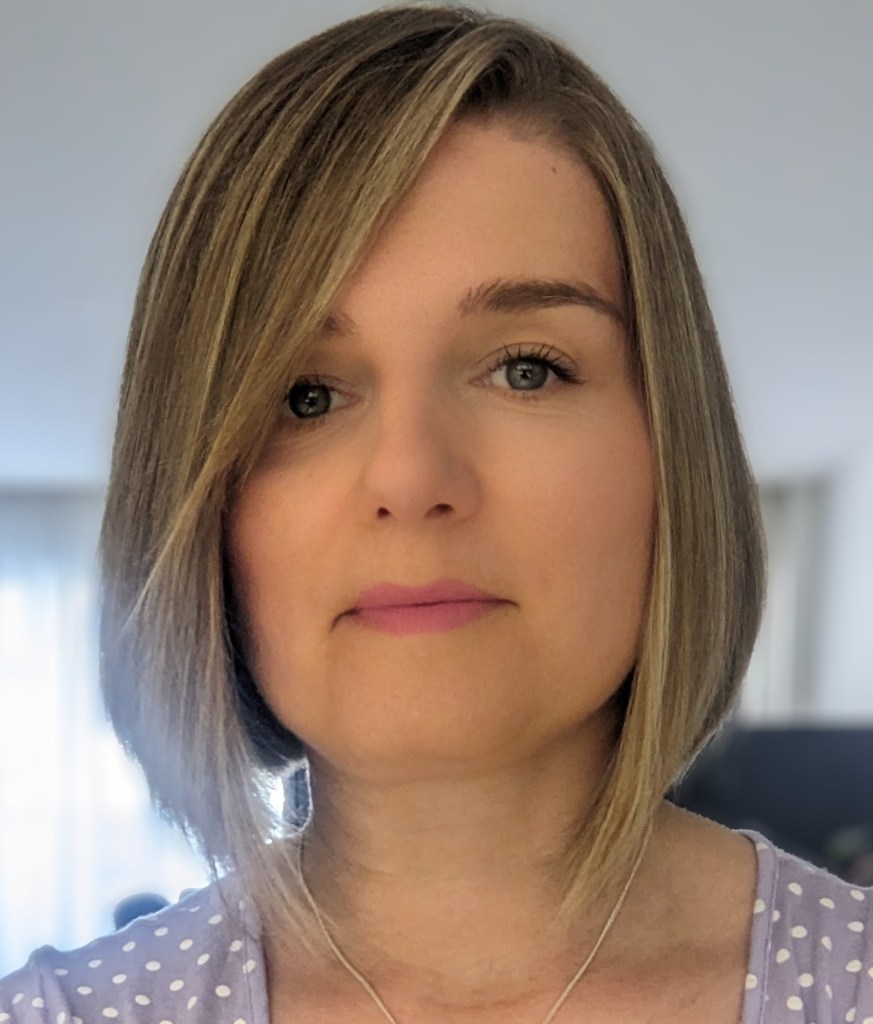
Chloë McQuarrie
Freelance Translator, Editor, Project Manager
Spanish, French, Portuguese, Italian to English
This week I am featuring Chloë McQuarrie, a linguist who wears many hats and who boasts the squiggliest of careers!
How did you learn your source languages?
I can’t remember a time when I wasn’t obsessed with languages. I have made it my life’s mission to learn as many as possible. Having said that, I currently translate from Spanish and French – as they are my strongest languages – into English, and I would like to add more source languages soon.
My first contact with languages came at a very early age, 3 years old, to be exact. My great-grandmother was Spanish, and Spain and Spanish have always been a big part of my life. When my mum went back to work after having my younger brother, she employed a Spanish au pair to look after us both.
Belen was a polyglot. She taught me my first three Spanish words (ajo, ojo, hoja). She inspired me to learn as many languages as possible. I travelled to Spain on my own at the tender age of 11 to visit Belen in Spain and spent the summer at her family home in Palencia. I spent time with the local village kids and was thrown right into the deep end linguistically, as they didn’t speak any English. Sadly, my school didn’t offer Spanish, so I didn’t start formally learning Spanish until uni. I had a home tutor for GCSE and A-level, and I had to sit my exams at a different school in my town.
I started learning French at primary school and found it came naturally to me. I knew right from the beginning of secondary school that I would go on to study languages at university. I studied French, German, and Spanish at GCSE and A Level. When it came to my language degree, I made sure to choose a course that allowed me to study as many different languages as possible. I wanted pure languages and zero literary content, which now tickles me as I am such a voracious reader.
I studied French, Spanish and Italian in my first year. I won an Italian essay-writing competition and won a month-long trip to Florence, where I attended Italian language lessons every morning and stayed with an Italian family. In my second year, the university discontinued the Italian course, so I picked up Portuguese and spent the summer in Lisbon learning Portuguese at a language school. I split my year abroad between Lyons, France, where I picked up Japanese (taught in French!), and Valencia, Spain, where I built on my decent passive understanding of valencià that I had picked up during my family holidays.
I have had a very squiggly career and have used my French much more than any other language throughout my 20+ years in the corporate world. Although Spanish will always be my favourite as it is in my blood. I lived in Brussels for two years, and through general immersion, I have developed a decent understanding of Flemish.
When did you first consider becoming a translator?
I never wanted to be a translator! When I graduated I (naively) thought that translation was all just boring technical manuals and translators were stuck in a room with a load of books and no interaction with anyone else. I had no idea of the scope of the profession. I half-heartedly attended an MA in Translation open day a couple of years after graduating but never went through with it.
I’ve used languages in almost all of my jobs. I have worked for the Probation Service – where I had to interpret for a Portuguese speaker, I’ve worked in accounts payable, recruitment, in-flight entertainment, bid management, language qualifications and development, and project management. I was always searching for a job that allowed me to work directly with the language, and all the jobs I had felt weren’t ‘language-y’ enough.
Following a relocation, I took a temp job that didn’t require any languages. I thought I’d use the time to find a languages job but never did. The job became permanent, and then kids came along. Coming out the other side of parenting young children I felt I had lost my identity and was working in a job that didn’t require me to use my languages. I was looking for something that could be flexible around family life and would allow me to work directly on and with languages, as opposed to them being a handy extra in my career.
I revisited the idea of languages and went back to basics. As a child, I dreamed of being an interpreter at the European Parliament, but I felt that interpreting would not fit into family life. Additionally, my active language skills had faded, and I thought translation would work best, as I would only be using my language skills passively.
Looking at translation through wiser (older!) eyes, I realised just how vast the possibilities for work were. I realised that the more ‘language-y’ job I had been searching for was the one that I had rejected all those years ago. I was so excited about being able to work ‘on’ the language again.
Did you undertake formal training to become a translator?
I completed the Translation Conversion Course with the Translator’s Studio, and, boy, did it open my eyes! I had zero idea what went into a translation! I went on to do their Advanced Course, initially to prepare for the DipTrans. Shortly after starting the Advanced Course, the Chartered Institute of Linguists launched its Certificate in Translation, and I was in the first cohort of Spanish-to-English translation candidates.
What are your specialisms, and how did you choose them?
When I first started out I thought it would make sense to specialise in finance because I had just spent ten years working within financial services. However, numbers are my nemesis, and I realised that I now had the power to choose what I worked on, so I decided to ditch finance for good.
Initially, I was a general translator, accepting any and all jobs that agencies sent my way. Due to my corporate background, I began working on press releases and corporate communications. Then, I was approached by a company in the US to translate the subtitles of a very dramatic Brazilian Portuguese reality TV show. From there, I fell into translating film credits, scripts, and audiovisual-related documents, although I have not revisited subtitling since.
How did you launch your translation career?
My first translation job came from my sister-in-law. She is a voiceover artist, and one of her clients had been using machine translation for his scripts. She was so fed up of having to voice terribly written English that she referred me to him. This then led to translating scripts for audio guides for tourist offices. Subsequently, I began working with an agency to translate police-camera footage from Spanish to English.
I started out approaching agencies and took every job that was thrown at me. I contacted ten agencies a day and learnt very quickly that the response rate is very low!
I soon learnt that networking is key. I approached seasoned translators on LinkedIn and asked for their advice, which they gave generously. There is so much helpful content on LinkedIn provided by the wonderful community of linguists, all keen to see other people get on within the industry. Coming from corporate life, where I felt pitted against my colleagues, this was such a refreshing change.
Since qualifying as a translator, have you undertaken further studies to hone your specialisms and/or languages?
Not working with languages for so long meant my language skills had dipped, and my confidence had taken a massive hit. Three years ago, I reached out on LinkedIn, asking for tips on how to revive my rusty language skills, sharing the tale of a disastrous interview in French that I had stumbled through. A French translator, Isabelle Cottenet, reached out to me and suggested a language exchange. In the beginning, I was hesitant and lacked confidence, but now I happily prattle along to Isabelle, and I look forward to our weekly chats.
Reading in my source languages helps to drag the unused-but-once-studied vocabulary from the depths of my brain where it had been stored for years. I have recently joined a French book club, and I am looking forward to the first session, where I will have to discuss French literature in French – the very thing I tried to avoid decades ago at university.
I also wanted to get my spoken Spanish back to where it was immediately post-graduation, so I have started one-to-one Spanish lessons with a fantastic native-speaker teacher who is preparing me for life in Spain with tailor-made classes that challenge me to speak and write in Spanish. I absolutely love having homework again!
What other CPD do you regularly undertake and recommend?
I love the webinars offered by CIOL; there is always something interesting and innovative, and all the speakers have such a wide range of knowledge and experience.
I watch Spanish TV a couple of times a week. I have my phone and computer set to Spanish, and I listen to French radio while doing the dishes. It helps to keep my knowledge of my source languages up to date.
Which translation associations or groups are you a member of?
I am a member of the Chartered Institute of Linguists and the Society of Authors. I really enjoy the CioL’s The Linguist magazine, and the Society of Authors provides fantastic support through personalised advice through email. There are also forums where the languages community once again demonstrates its incredible generosity.
Which translation tools do you use the most?
I use TRADOS and, for research, I love me an internet research deep-dive. I was working on a translation of the end credits of a French film and had the usual million tabs open to cross-reference every piece of terminology. Towards the very end of the project I stumbled across www.lecinedico.com, a multilingual cinematographic and audiovisual lexicon. It wasn’t much help at that point, but it has been very helpful in subsequent projects.
Proz.com terminology database is really extensive, and people are happy to help answer questions.
I have a well-thumbed copy of Hart’s Rules by my side, and I love poring over physical dictionaries. One favourite I have had since 1996 is the Oxford-Duden Pictorial Spanish & English Dictionary. It contains pictures for absolutely anything you can imagine, labelled in both English and Spanish. For example, it has terminology for the dairy industry, offset printing, the circus, and prehistory!
How do you promote yourself and find clients?
I love writing about my experience; it’s a great antidote to imposter syndrome, so I try to post regularly on LinkedIn. Sometimes, I schedule posts, and sometimes, I post spontaneously; it depends on how organised I am that week.
Building a great rapport with clients is what has led to the most interesting work. For example, I was chatting with a client I have worked closely with for 2.5 years, and I mentioned that I was quiet; she offered to speak to someone in another team. This led to me being asked to co-author a book! It really is about building solid relationships with the right people and being in the right place at the right time.
Another tip is to comment, comment and comment some more on other people’s posts. I landed a dream client through a single comment on a post that I had made three months prior. You never know who is watching!
If you work with agencies, how do you make a good first impression, and do you send them professional updates to keep yourself relevant to them?
I rarely work with agencies now, as my translation work sadly forms a small part of what I do. I keep in touch with clients on LinkedIn or via email and check in with them to let them know my availability. I have been working on some long-term projects, which means I have built up a good rapport, and we are on good informal terms, which makes it easier to drop into someone’s mailbox with a quick update or to let them know about my availability.
What does a normal working day look like for you?
No two days are ever the same! I have diversified my services to offer multilingual editorial services and project management, working on redeveloping language qualifications, so I’m usually wearing many different hats each day.
I love having a mix of tasks each day. Today saw me marking Spanish exam papers, refining some French exam papers I have written and revising a Spanish-to-English translation of police body-camera footage. Alongside this, there is the usual admin, accounting, and marketing planning.
What is the most satisfying translation project that you have worked on recently?
I really enjoyed translating the French script for a tourist information audio guide all about the ancient city of Dinia. I learnt so much about Roman technology and architecture, and doing the research was a lot of fun.
How would you like your career to progress over the next 5 years?
Translation work has not made up much of my work recently, and I have been more focussed on editorial and project management projects.
However, I’m toying with the idea of literary translation. I am an avid reader, and I think it would be great to combine these two passions. I have a non-fiction book in mind that I would like to bring to the English-speaking market, as it’s on a subject that’s very close to my heart.
I would also like to connect with more neurodivergent authors who would like their words translated into English.
What are your thoughts on the future of the translation industry since the advent of AI?
There has definitely been a significant reduction in the amount of work available, and the race to the bottom with rates is simply appalling. However, I think that, like any technological advance, there will be a way to harness it to our advantage. Nevertheless, I cannot see how AI could ever replicate the nuance and humanity that translators bring to translation.
Have you diversified, or do you plan to diversify, into another career?
Since becoming a translator, I have once again pivoted into something else. I love juggling different projects and don’t like to pigeonhole myself. This keeps me from getting bored and spreads the financial risk.
Lots of my work now is in the MFL educational resources space. I have co-authored a French IGCSE coursebook (due to be published in 2026), worked as a Developmental Editor on digital MFL resources for Pearson, and proof edited an English-language coursebook for French students for Hachette Education.
I also work with Cambridge International, holding two roles: assessment specialist and development manager. As an assessment specialist, I write French Listening exam papers and mark Spanish Writing papers. As a development manager, I am a freelance member of the internal team. I provide consultancy services to the languages qualifications team and work closely with them to redevelop language assessments.
Projects tend to last approximately two years. I am currently managing the redevelopment of four language qualifications. I love this work because I collaborate with Cambridge staff, other freelancers and language experts from all around the world. A typical ‘Cambridge’ day could see me hosting an all-day online meeting with 10 attendees from around the world, where we get right into the nitty-gritty of the language, to working on formatting exam papers, researching French texts for my exam papers or meeting with my colleagues to plan next steps of the project.
What are your Dos and Don’ts for new translators just starting out?
‘Done is better than none’ is one of my favourite sayings. You don’t need to go all out on a fancy website at the beginning (if at all!). A simple one-page landing page with a bit about you, your qualifications and your experience will suffice. You can expand this when you have more to add to your portfolio or have the time and money to invest in a more sophisticated website.
Don’t say you are an ‘aspiring translator’ in your LI headline – you are a translator even if you have only done volunteer jobs. These all count!
Consider volunteering for jobs to build your portfolio. These are less likely to have an NDA, and you can use them to showcase your skills.
Network within the translation community but also make sure you are visible to your potential clients. Post content that is relevant to them and their issues. Post content about how you have helped solve problems.
Don’t accept insulting rates just because you need the work.
Don’t get disheartened. It’s not easy, but it’s fun once you have cracked the code of finding direct clients.
Thank you very much for sharing your journey and your wisdom with us, Chloë. I hope your career continues to take you in the directions you wish to travel!
 Love Languages
Leave a comment