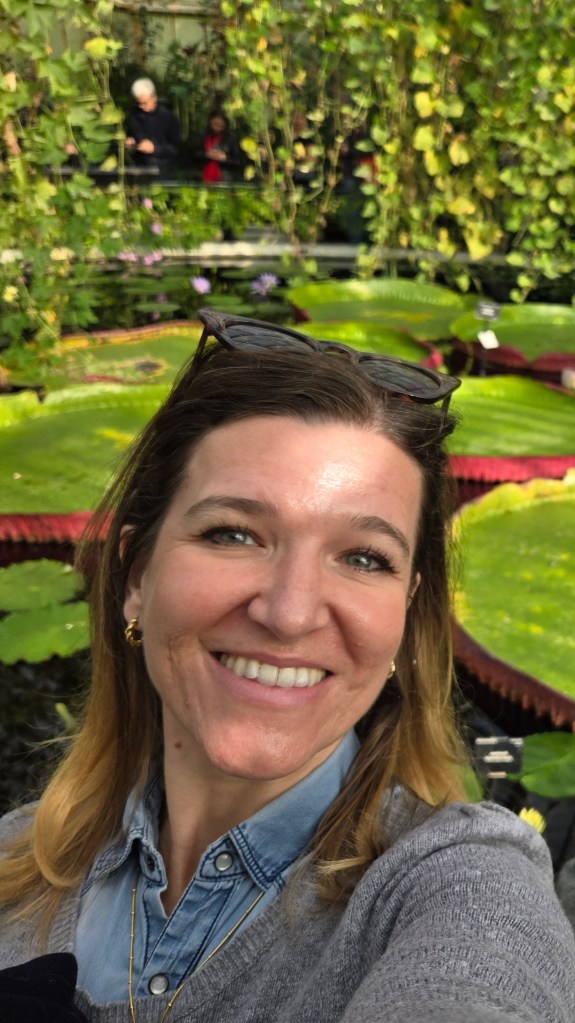
On this week’s Meet the Translator Monday, we talk to Federica Gentilini, an English <> Italian translator who has also seen the industry from the other side while working for LSPs. So lots of insights for us to learn from.
What are your source and target languages, and how did you learn your source languages?
My source language is English and my target is Italian, which is my mother tongue. I have been studying English ever since nursery school! My next-door neighbour growing up in Rome was from London and she was also my first English teacher! I went on to study English in school and then to do a BA in language mediation and intercultural communication, mainly in English. I have lived in the UK for almost 10 years and have an MA in conference interpreting from London Metropolitan University. I do work into English, as well.
When did you first consider becoming a translator, and why?
Despite my studies being very focused on written translation, I strongly wanted to become an interpreter. However, after a Uni visit to the EU institutions, I understood that it wasn’t the environment for me and started to work for LSPs (language service providers) as a Project Manager. As I was growing in my career, I felt that something was missing, and I decided to put my education and passion to work (literally), leaping into a career freelancing as a translator.
Did you undertake formal training to become a translator, and if so, what?
My BA studies heavily focused on written translation, and a lot of final exams consisted of translating from one language to another. During my MA, I mainly focused on interpreting, but had a side job as a translator. The techniques learnt and in-depth research carried out during my MA proved quite useful in performing written translations as well, and made me start to love it more and more.
What are your specialisms, and how did you choose them?
Before starting my language studies, I was accepted into Med School in Italy. After a couple of years though, I realised I was too empathetic with the patients’ journey and wasn’t able to detach emotionally, so I quit! In my career as a PM, I have worked for a post-production company, creating, editing and QAing subtitles and scripts, and I have worked in the healthcare departments of 2 translation agencies. For one of those companies, I was in charge of creating a sub-department for Pharmacovigilance translation. So my first specialism was healthcare. The LSP I used to work for is specialised in market research and as such I started to specialise in that too, I also now translate a lot of it, in many different subject areas. I love skincare (which in a way ties in with the medical theme) and cosmetics, and product descriptions are my thing! Luckily for me, the LSP I used to work for was also expanding into the retail industry and I was able to jump on the wagon as the world market grew! I’ve been loving it so far.
How did you launch your translation career?
Having worked for LSPs helped me, because I moved from being the one to assigning the projects to being the person the projects were assigned to; and the PMs who were in charge of assigning the projects had either been my colleagues and had trained with me on the LSP internal processes and expectations, or I had trained them! This definitely helped establishing myself as a point of reference because work and workflows didn’t have to be explained to me, I didn’t have to be trained, I already knew how things were done! I am also a very detail-orientated, attentive gal, who knows the importance of early communication with the PMs, so I think this helped them trust that I know what I’m doing and that they can rely on me!
Since qualifying as a translator, have you undertaken further studies to hone your specialisms and/or languages, and if so, which?
I have been on top on CPD, webinars, events, and have expanded my pool of services, including AD (audio description), which I’m really enjoying!
What other CPD do you regularly undertake and recommend?
I have become a member of the BFL group, and they offer an array of CPD and events that have really helped. I would recommend following the ITI, finding a group that speaks to you and your passions and let yourself be inspired. An event I never miss is the Translating Europe Forum, which takes place in Brussels, and streams online, and is always topical and relevant.
Which translation associations or groups are you a member of? Which are most helpful for offering support, and which (if any) are a good source of work leads?
I am a member of the ITI subgroup for BFL (Beauty, Fashion and Luxury) and find it superb. I subscribe to the ITI non-member newsletter and receive useful updates on their courses, CPD and initiatives, which I find super useful. I find LinkedIn to be the best source of work leads and connections.
Which translation tools do you use the most?
I manly work with LPS own or access CAT tools (XTM, MediaNext, MemoQ). I have worked with free versions of new CAT tools, which I found quite useful, i.e. WordScope and Doc3. I use a lot of online dictionaries and community based resources, such as Linguee, Proz.com, a lot of official EU sources, like EURLEX and IATE.
How do you promote yourself and find clients?
Expanding my client base has been a bit tricky so far, but I’ve kept busy by registering with LSPs that I have not worked with as a PM, thanks to PMs (who are friends) with whom I have worked before and who referred me to be tested. I have forwarded my CV to agencies via LinkedIn and their job postings. Private clients have reached out to me but so far, I’ve found it tricky to strike a balance between offering a reasonable rate that also allows me to live comfortably and offering competitive rates (London cost of living lol).
If you work with agencies, how do you make a good first impression, and do you send them professional updates to keep yourself relevant to them?
Having worked internally for LSPs, I know what I looked for in a linguist to establish if they were reliable and could be trusted to confidently send them work. So for me, first is reading thoroughly and following all instructions. Then being proactive and showing initiative, don’t shy away from asking questions but make them clear and concise and include information that shows what you do understand. Don’t overshare, be efficient but show who you are.
What does a normal working day look like for you?
First things first, coffee! I don’t really function without it! Then I normally work on the jobs I have and, as the day goes by, I’ll probably receive more. I accept or decline new projects based on my workload. I try to stay on top of my projects, so I schedule my day and week accordingly, but I also like to dedicate time to mindfulness, which means I make time for Pilates sessions every other day. I have recently been diagnosed with fibromyalgia, which is a chronic pain syndrome, so movement and staying positive really help to keep it under control. My partner is also a freelancer, so our working days are normally quite synced. This means that when we’re not working, we like to make time to plan activities together and with friends; this includes some nice cooking sessions and having our friends over for dinner, going on nice, long walks (that normally end up with a nice gelato – my fave!) and watch our favourite shows! I also allocate part of my day to continuous professional development, either by following courses I’m interested in, or webinars and conferences.
What is the most satisfying translation project that you have worked on recently?
AD for episodes of an animated kids TV programme. I felt I was having an impact and making a difference. The PMs were lovely to work with and shared their appreciation of my work, recommending me to other departments.
How would you like your translation career to progress over the next 5 years?
I would like to think that I will be able to leave my mark somehow. I would like to contribute to work that lasts and has an impact on people. Maybe this dream of mine doesn’t have a clear form yet, but I think it might take shape in the next 5 years! Watch this space. 😊
What are your thoughts on the future of the translation industry since the advent of AI?
I see AI as a tool that helps human being more efficient, not as a substitute for humans, and why would you want to substitute humans anyway?! In my opinion, AI is being sold as something it is not, but people are buying it believing it is the cheaper option. This is misleading as it’s been confirmed that even just saying “thank you” to an AI chatbot is costing billions in water consumption. My partner made a great observation, i.e. that in the 1st industrial revolution manual labour was replaced by machines and all our efforts over the past 100-odd years have been to move towards using even more machines. Now that this AI revolution is upon us, it seems that more and more people are going back to manual jobs, and work in arts and crafts. So, maybe this cycle will lead us to slowing down and reclaiming art as a human process, which also includes translation for me!
Have you diversified, or do you plan to diversify, into another career? If you have, please elaborate.
Fashion, jewellery and cosmetics/skincare are fields I love and am passionate about. I would love to explore a career in one of those industries.
What are your Dos and Don’ts for new translators just starting out?
Do
- Reach out to peers, other traders or people you admire and don’t be afraid to ask questions
- Reflect on yourself and your unique selling points (your passions, interests, skills) and make sure you communicate them
- Always double check your work and be sure that you can back your decisions up
Don’t
- Think that if you have a degree or a certification your journey is finished
- Stop investing in yourself and your future
Thank you for an information-packed interview, Fede! As a long-term pain sufferer, you have my utmost sympathies for the Fibromyalgia diagnosis. A diagnosis of any sort is good when it enables you to know your options, but I know that sometimes it does not lead to an immediate solution. It does not seem to have dimmed your passion for your craft, though, which comes through loud and clear in this interview. Best of luck going forward.
 Love Languages
Leave a comment