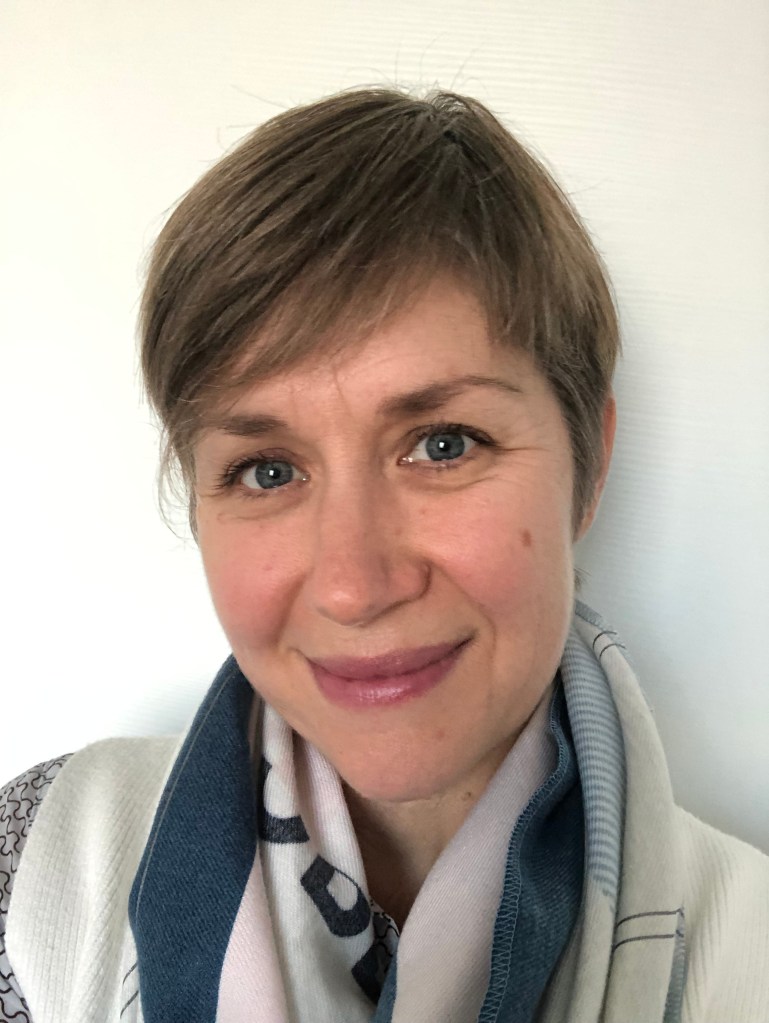
Jennifer Engle
Italian to English translator
Financial and ESG translations
Based in Vicenza, Italy
Good morning, Jennifer. Thank you for agreeing to be interviewed for Meet the Translator Monday as my very first US interviewee – although I suspect you feel more Italian than American after so many years there!
Could you start by telling us about your language combinations?
I translate from Italian into English. I used to offer French-to-English translation services but I haven’t kept my French up enough to continue doing that.
How did you learn your source languages?
I started learning French in high school in the U.S. and was a foreign exchange student in France my junior year. The summer before college, I travelled around Europe with a French-Italian friend I’d met in France. We ended up spending most of our time in Italy and I was completely blown away by the architecture, art, culture and history. I’d briefly lived in England as a child and France for a year in high school, but nothing could prepare me for the revelation of discovering Florence, and then Rome. The decision to major in Romance Languages (French & Italian) came naturally after that.
I was able to study a semester each in Paris and Florence, and I moved to Northern Italy after graduating from college in 2000. I’ve been here ever since.
What are your specialisms, and why?
I specialize in financial and non-financial (ESG – environmental, social and governance) reporting, contracts and other legal documents. But I also do a lot of marketing translations for my beloved long-time clients.
I started out as an in-house translator at a translation agency in Milan. There was a lot of demand for English translations of financial statements, and the translation manager at the agency was well-versed in financial translations, so she helped train me. From there I went to the Milan offices of one of the big four international audit & advisory firms, where I worked on financial statements, accounting manuals, due diligence reports, transfer pricing policies, etc. for the firm’s clients, as well as memos and reports for the firm. I loved working there! I had access to training and could consult with my boss, as well as the accountants, auditors and consultants whenever I was unsure of anything. I learned so much.
I got into legal translations after taking a course offered by AITI, the Italian Association of Translators and Interpreters, ages ago. Most of my legal work is translating contracts for three direct clients, but I have seen a little bit of everything over the years!
When I went freelance, the audit firm was my top client and continued to provide training. In the past few years we have focused on non-financial reporting, and it has been interesting to work on ESG reporting over time. I’ve been along for the ride as reporting standards like the GRI have developed and changed and when the EU came out with the Taxonomy. Each year, I translate the sustainability reports of the same companies, so I get to see how their reporting practices develop and change over time in response to changes in standards, legislation and, especially, societal views.
My other specialisms came about as a result of long-term relationships with direct clients. I don’t have a lot of clients, but the ones I have tend to stick around and end up giving me more and more types of work over time. For example, after decades together, I have a client in the fashion industry that frequently sends me an email chain and asks me to craft a diplomatic response in English saying x, y and z. I guess that’s not really translation, but I enjoy it! I have another client in the food industry, a big Italian brand, that has me translate all their online content, marketing brochures, product packaging, videos, etc. So through the work I do for them and all the research it entails, I have specialized in their field as well.
When did you decide to become a translator, and why?
I always wanted to be a writer as a kid. I have always loved language, and when I discovered foreign languages in my teens, I realized I loved languages too, so it was pretty obvious that this is what I would do.
Can you talk us through the courses and qualifications you have taken over the years, and which have been most beneficial for your translation career?
I am a fervent believer in life-long learning, but it has got to be combined with hands-on experience. Experience is what has been most beneficial for my career – not only translation experience, but experience in figuring out what a client really wants when they send a request and what they really mean when they write something a certain way in Italian. Experience has taught me which questions to ask, how to go about researching something and where to find the right resources.
How do you find clients?
I was extremely lucky in that my first client was my former employer. That got me started, then I reached out to a handful of agencies to gain experience in other fields and to fill in the gaps between big jobs. I’ll admit that I am not very good at marketing. All my direct clients found me through word of mouth.
Which groups or organisations are you a member of, and which do you find most beneficial?
I am a proud member of AITI, which like I said, is the Italian Association of Translators and Interpreters. They offer great courses and I love meeting other AITI translators.
How would you like your career to develop over the next five years?
I hope to continue working with my direct clients. There is one in particular I think I could do more for. They are expanding, and I would love to put together an English language style guide for their group as it becomes more international. I hope to work more closely with their marketing team to create and maintain a distinctive, compelling and consistent voice in English for their brands.
Last year I enrolled in the English Studies master’s program at the University of Padua. It’s very exciting to be learning so many new things halfway through my career, and while I have a feeling it might end up taking me in new directions, I’m not quite sure exactly what those will be, not yet anyway. See? It’s very exciting.
Do you have any Dos or Don’t for new translators?
Years ago I read an article by a freelancer (not a translator) who said to make sure that every project you do is your very best work. Even when the client says they only need something “fit for purpose”, always deliver top quality output because you never know who might see it and what it might lead to. I think of this every time I deliver a translation. Now, more than thinking about what it might lead to, I think of how my work represents me as a professional. If someone were to see only that translation, what would it say to them about the quality of my work? This frame of mind pushes you to make every translation count.
What have you been working on recently?
Lots of LinkedIn posts and sustainability reports. February/March and July seem to be my ESG months.
I love the enthusiasm for your work and for the acquisition of knowledge that comes through in your interview, and I could not agree more with your tips for new translators. That is certainly how I address all of my translations and the research that goes into them. I would say that there is never an occasion where a “fit for purpose” translation would leave me anything other than disappointed in myself!
If anybody would like to showcase their talents on MTTM, please feel free to contact me, either via LinkedIn, or by email: kirstylowe@lovelanguages.uk. I would also be interested in hearing from people who have transitioned from translation to another related career, or who have a separate career alongside translation.
 Love Languages
Leave a comment