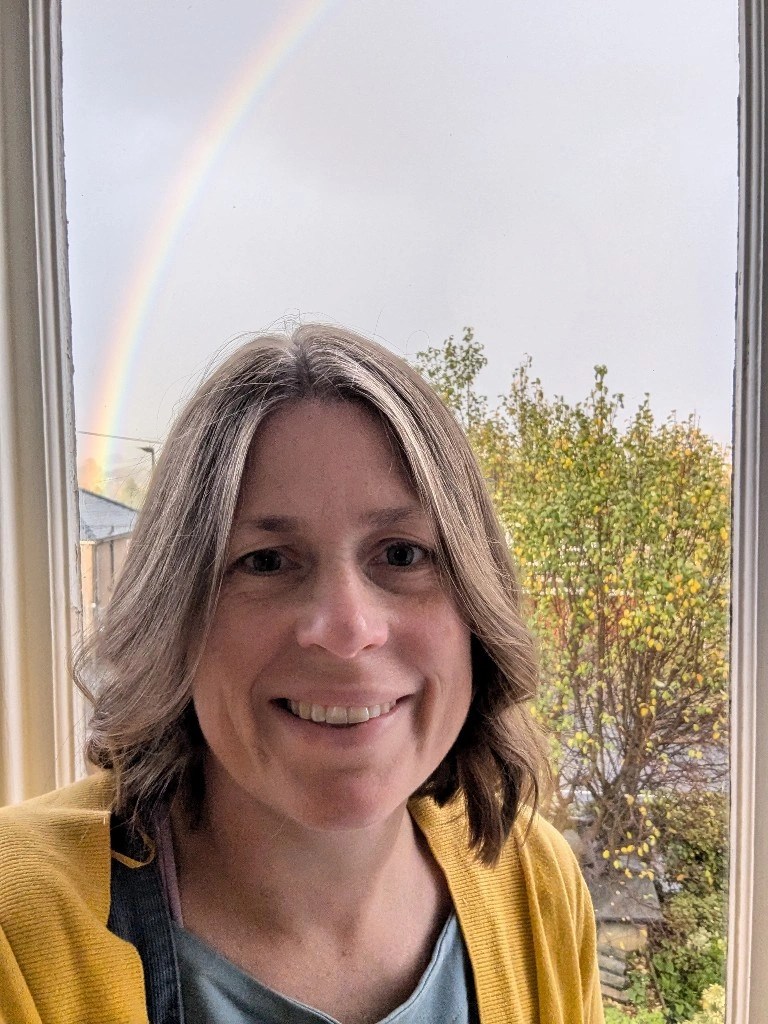
Hello Jo! Thank you for volunteering for this week’s Meet the Translator Monday. Could you start by telling us about your language combinations?
Swedish and German into English
How did you learn your source languages?
I was born in Germany (Army baby) and although I went to Forces school, I always wanted to order my broetchen and the like by myself. Then I learnt German at secondary school and continue to a Modern Languages degree at Sheffield University. After a disastrous experience with Beginners’ Spanish in first year which has clouded my feelings about Spanish ever since (!), I changed tack to a German Studies degree, picked up Swedish and graduated after a year as an English Assistant in a primary school in Stralsund. I then spent a year in Sveg, northern Sweden on a Svenska Institutet scholarship and returned to Sheffield to pursue a research MA after another year teaching English in Poland.
Your experience with Spanish sounds rather like my experience with Beginners’ German! What are your specialisms, and why?
Sport/Outdoors – because that’s how we spend most of our free time as a family. Running, hiking, climbing, camping, canoeing and more.
Education and social sciences – thanks to my careers as a teacher and academic and enduring love of politics and history especially.
Sustainability – because I was brought up in a frugal, low-impact way and have continued to live that way, mending clothes, cooking with leftovers, consuming less.
When did you decide to become a translator, and why?
I’ve done bits and bobs since I was a student, translating for postgraduate students and the occasional project from friends who didn’t have capacity, Then when I left the classroom after experiencing workplace bullying, I decided to give it a go properly.
I’m very sorry to hear about the bullying. Funnily enough I was talking to some fellow mums at my daughter’s primary school this morning, and it seems that there is some workplace bullying going on there as well. Utterly depressing to know that people don’t grow out of such behaviour. Can you talk us through the courses and qualifications you have taken over the years, and which have been most beneficial for your translation career?
My BA and MA in German Studies – these have given me the knowledge of specialisms and understanding of German and Swedish cultures. My Translation MA improved my understanding of professional practice and networking.
What CPD activities do you undertake?
Webinars and conferences with the ITI and CIOL. Maintaining source languages through visits abroad, reading and radio/podcasts. Business and marketing with Sarah Silva’s Expedition Group.
How do you market yourself?
Not as well/much as I should but mainly through LinkedIn and I am recently listed on the SFÖ as a full member.
Which groups or organisations are you a member of, and which do you find most beneficial?
ITI, CIOL SFÖ. They are all beneficial in their own way whether for CPD opportunities, translator listings or networking.
How would you like your career to develop over the next five years?
I’d like to continue to expand my portfolio of clients and target some more ideal customers in my specialisms. I’d love to do more literary translation and develop other offerings such as copywriting. I hope to still be combining my lecturing and translation but be working a little less and travelling with my family a little more.
Do you have any Dos or Don’t for new translators?
Do network
Don’t worry about other people’s rates – only worry about your own
Do get a great desk and monitor setup
Don’t feel you need to buy all the different software – I issue my own invoices, use a spreadsheet to track income and expenses and use a gmail address with no problems
Do take much of what you read on LinkedIn with a pinch of salt
What are your impressions of the industry as it is today?
There’s a lot of negativity and pessimism but I’m happy enough personally – I have a steady flow of work and have worked on some interesting projects recently. I am happy to offer MTPE and while it does form more of my work now than it did a few years ago, there’s still plenty of translation ‘proper’ too. I do enjoy having a part-time lecturing job as well though. On the one hand, I have a reliable income which makes freelancing a little less worrisome, but I also love the variety I have and how the two roles complement and support each other.
Do you have a message of hope for translators trying to break into the industry?
Make your voice heard, keep knocking on the door and it will happen! I set an earning’s target for year 5 of freelancing during my MA which I met in year 2 and have far exceeded ever since.
Can you tell me about one of your favourite projects you’ve worked on to date?
Last year, I translated Dr Marion Rink’s PhD thesis for publication in English. This was a study of the Inverted Classroom approach to teaching and learning at a German University and was the perfect combination of my two careers. I’ve also enjoyed working on projects about the outdoors – camping, caravanning and regional tourist magazines.
How do you deal with the – inevitable – lulls?
I don’t really worry about them because I have made sure I have a financial buffer so I tend to enjoy them by pursuing hobbies more and up my marketing a bit.
What would you do if you were not a translator?
Well I am already a teacher as well as a translator, but if I were not to do either, I think I would be an academic.
Thank you so much for taking part, Jo, and I wish you all the best going forward not least when it comes to working less and travelling with your family more!
 Love Languages
Leave a comment