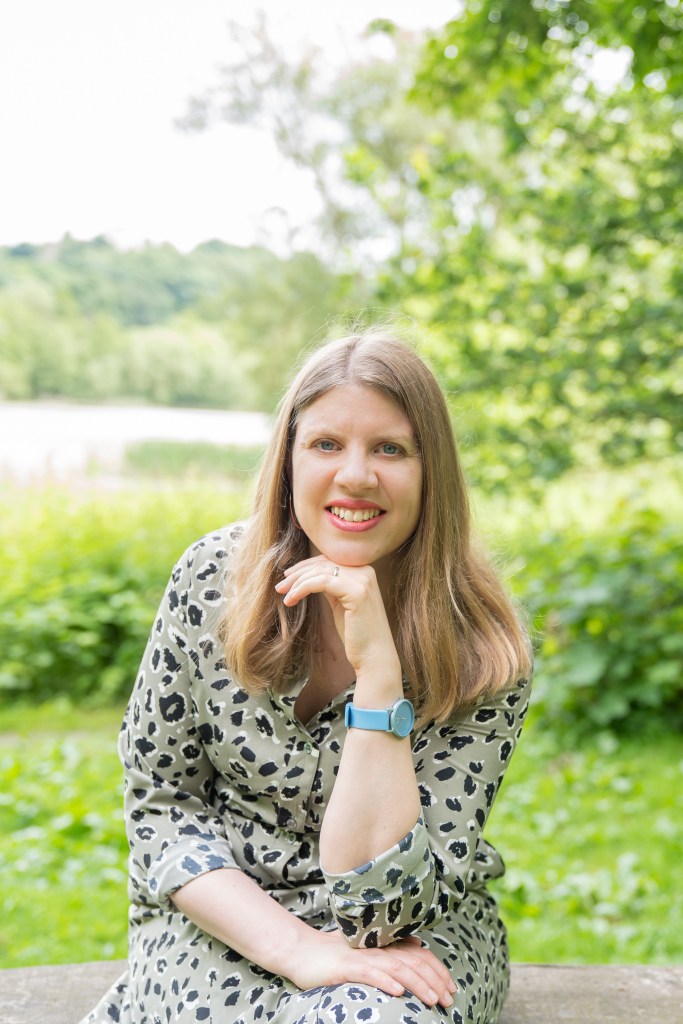
Lindsay Jones
German, Swedish, French to English translator
Specialising in general commercial communications, medical/healthcare content, and anything to do with arts, culture, history and design.
Based in Chesterfield, UK.
Hello Lindsay. Thank you very much for agreeing to be interviewed for this series. Could you start by telling us about your language combinations?
I work from German, Swedish and French into English – a bit of an eclectic mix, but I wouldn’t have it any other way! There have been times when I’ve considered streamlining down to just one or two language pairs, but ultimately I couldn’t bear to part with any of them.
I understand that feeling only too well – losing a language is like losing part of your identity! How did you learn your source languages?
My French and German date back to my school days. I started learning French first and it helped that my family used to go on holiday to France quite often, so I was already familiar with a few words. German came later, as I picked that up at high school when I was 13 or 14 and found I really loved discovering a Germanic language. Then I decided I wanted to continue studying languages at university and didn’t want to drop either French or German, but I was keen to take the opportunity to learn a new one too. So I enrolled on a three-language combined honours “Modern Languages” degree course at the University of Sheffield and picked Swedish as my third language. Why Swedish? Partly because it was another Germanic language, so not a huge leap from German (or English, for that matter). And partly because I was interested in Scandinavian and Nordic culture and wanted to find out more.
What are your specialisms, and why?
Well, as you can probably tell from my mix of languages, I tend to prefer variety to focusing on one thing at a time. I also spent many years working at an agency as an in-house translator, where we covered a wide range of subject areas and text types. So for those reasons I’m quite a generalist. However, since going freelance I’ve tried to niche down a bit and now have some core specialist areas: general commercial and financial communications – thanks largely to the experience I gained in this field as an in-house translator – and some areas that are based more on my personal interests: patient- or public-facing medical and healthcare texts, and arts, culture, history and design.
When did you decide to become a translator, and why?
I always enjoyed the translation-related elements of my language studies – I like the problem-solving aspect of it, and the creative challenges. But it wasn’t really until I finished my degree and was wondering what to do next that I considered translation as a career. In the end, I realised that I actually love writing in English too, and this would be a way to forge a career that allowed me to do that and keep up the language skills I’d worked so hard to develop.
Can you talk us through the courses and qualifications you have taken over the years, and which have been most beneficial for your translation career?
I did an MA in Translation Studies, really as a way of narrowing down my quite general BA modern languages qualification into something more specific and applied. I enjoyed it and did learn some useful stuff, but there’s really nothing like actually doing translations in practice to build up your skills and expertise as a translator. Some clients like the fact that I have an MA in translation as proof that I’m qualified to do my job. I also benefited from working in-house, where I could learn from more experienced internal colleagues and external freelancers. I also do a lot of proofreading and am interested in developing my editing skills more, so I’m considering doing a course in Plain English, for example, so I’ve got a certificate to show for that too.
What CPD activities do you undertake?
These days, I tend to focus my CPD on my subject specialisms (e.g. courses and webinars on medical topics, business reporting standards, transcreation for more creative arts-related content) or on advice on running a business (like how to market my services), which I think is particularly important for a freelancer. Networking is also a big part of my CPD, whether that’s online or in person. There is such a great community of freelance linguists out there and it’s wonderful to be part of that and learn from my peers. I make sure to tell my clients about recent CPD activities too – usually through periodic newsletters I send out to them to catch up and keep in touch. If they know I’ve recently done some training on a specific topic, they might remember that if they ever have a relevant project to place.
How do you market yourself?
My marketing is definitely a work in progress. I’ve only been freelancing for just under two years, so I’ve had a lot to learn about marketing myself. At the moment, I use a mix of “putting myself out there” techniques – like posting regularly on LinkedIn – and more targeted, client-specific marketing like sending newsletters to new/prospective clients and contacting potential clients directly. I’m working on getting my website set up and developing a more coherent marketing strategy.
Which groups or organisations are you a member of, and which do you find most beneficial?
I’m an associate member of the ITI, which is great for networking and CPD opportunities and I think it looks good as an indication that you work to a certain standard. It also gives me an opportunity to get involved in how the industry is developing, at least in the UK. I’ve also recently joined the Swedish version – the SFÖ – as a full member, so I’m now listed in their directory and I’m hoping that will help me attract more Swedish clients. I’m also a member of the Nordic Editors and Translators (NEaT) network, which is for people who work with English and any of the Nordic languages – that’s a smaller setup, but I have made a couple of good contacts since joining.
How would you like your career to develop over the next five years?
I’ve had a good, solid start to freelance life and would like to consolidate and build on that – basically, keep things going but also look for areas to enhance and develop. This includes working on building up the Swedish>English side of my business more, as I think there is scope for more work there as a more niche language combination, and working on the editing side too. Eventually I’d like to start a sideline to my business involving offering English-only editing and proofreading services to local small business customers.
Do you have any Dos or Don’t for new translators?
Do engage with other translators (LinkedIn is good for this) and see what they are doing that’s effective, but don’t try to do everything their way or do it all at once – pick up ideas, play with them and find what works for you. Do try to build up some experience if you can, as that can be a bit of a hurdle when you’re starting out. But there may be internship or work experience opportunities out that at agencies, or voluntary translation opportunities – everything counts, and it soon builds up.
What are your impressions of the industry as it is today?
There is quite a bit of trepidation surrounding AI. Views are mixed – I’ve seen some claiming it’s going to kill our industry, while others are more positive. I think we have to keep moving with the times and adapt to what the markets need and want – as has happened in the past, with every new technological development. I tend to be optimistic anyway, but I think there will always be a place for human translators and the unique skills we offer. But we have to shout about it and show the value we offer.
Do you have a message of hope for translators trying to break into the industry?
I’d just say that there are opportunities out there for you. You might have to overcome a few hurdles or have a few goes before you find the right one, but have faith in yourself and your abilities and persevere, and it will come. There’s a whole community of translators out there and all of us have had to start somewhere.
Can you tell me about one of your favourite projects you’ve worked on to date?
Earlier this year I had the opportunity to translate a book (from German) about a series of public art sculptures by a collective of artists. I got the job through a series of happy circumstances – a translator who I had connected with on LinkedIn and had occasionally outsourced some work to me happened to be friends with one of the artists, so he put my name forward when they said they were looking for an English translator. The book itself was so much fun to work on. It is basically a series of short, whimsical, very imaginative short stories based around each art installation – almost like translating a work of fiction. It required a lot of creativity, but that’s what I love doing best! It was also great to have my work actually published as a physical book.
Thank you so much for taking time out to share with us, Lindsay. I wish you lycka till with the Swedish side of your business! For anyone who would like to connect with Lindsay either for work or as a fellow translator, she can be found on LinkedIn by clicking here.
 Love Languages
Leave a comment