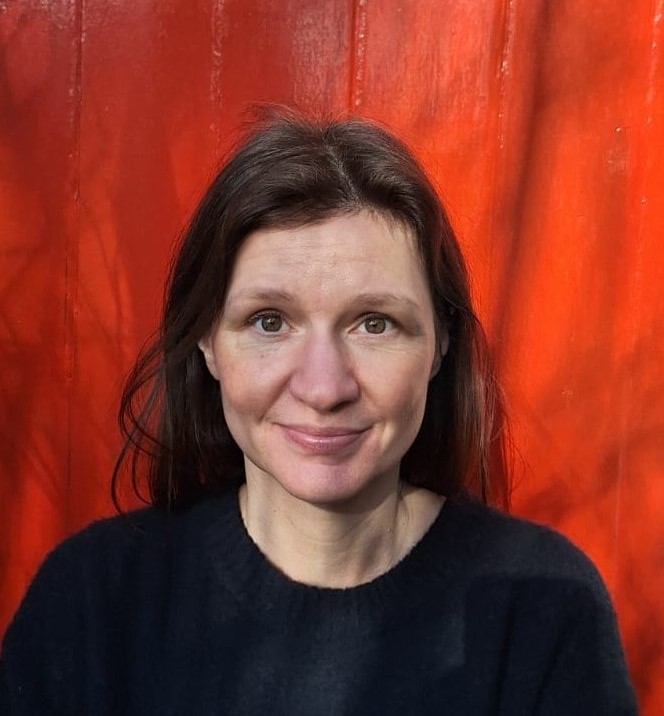
Lisa Barrett
French to UK English Translator
Specialisms: Arts and Culture, Travel and Tourism
Based in Edinburgh, UK.
K: Hello Lisa – thank you very much for agreeing to be my guinea pig! Could you start by telling us about your language combinations?
L: Hi Kirsty. Yes, of course, and thanks for inviting me to help kick off your new series of posts…
I’ve just got the one, French into UK English. I’m always impressed by linguists with multiple combinations. How do you keep all those second languages going?
K: Ah! Well in my case it involves lots of reading, television, and scheduled conversation sessions with native speakers! How did you learn your source language?
L: I did a degree in French and Spanish. My spoken Spanish has languished, unfortunately, though I can still read it.
K: What are your specialisms, and why?
L: Arts and Culture and Travel and Tourism
I worked for the cultural sector in Edinburgh for over 10 years before becoming a translator, mainly in museum and festival roles, so that was a no-brainer. Then, I studied tourism translation as part of my postgraduate qualification in Translation Studies at Glasgow Uni, as it seemed a fitting extension to arts and culture translation, I’m really interested in it, and it suited my translation style, which is creative.
K: When did you decide to become a translator, and why?
L: When I had my son, 7 years ago now, I knew I didn’t want to go back to working full-time for the Edinburgh festivals, which can involve some unsociable hours. One day, we were at a baby French class together (I know how this sounds, btw), and I had a lightbulb moment halfway though Frère Jacques. I wanted to make my living from my languages, English included. I’ve always loved to write, for work and pleasure, so it seemed the most sensible thing to do. I also wanted to be brave enough to focus on the skills I valued most about myself, and so be a good role model for my son.
K: Can you talk us through the courses and qualifications you have taken over the years, and which have been most beneficial for your translation career?
L: Sure. I have a Masters in Comparative and General Literature, which is a sister discipline to Translation Studies but doesn’t really count to clients. So I also have a PGCert in Translation Studies from Glasgow Uni, mentioned above, which I completed in 2022. I purposely didn’t do the full Masters degree that time, firstly, because I already had one, and secondly, because I heard about the Chartered Institute of Linguists’ professional qualifications from my tutor and decided to switch tracks and work towards getting one of them. I obtained the CIOL CertTrans in May this year. I now feel fully qualified, though I haven’t seen a difference in terms of responses from agencies yet. It’s not a golden ticket, at least for me, but more of a slow-release credential. It will help, I’m sure, in the long run.
K: I certainly agree with you regarding the CIOL qualification being a “slow-release” credential! What CPD activities do you undertake?
L: Oh loads, because I’m still a bit of a newbie… Courses on core skills like copywriting, transcreation, proofeading; CPD related to my specialisms, like webinars on translating for museums, for example; MT and AI courses, industry reading and business podcasts, and also maintaining my French skills, as I don’t live in France but Scotland. It’s exhausting.
K: Definitely exhausting! I also find it can be quite expensive – but worth it! How do you market yourself?
L: Ha! Well, I’m doing this for a start! I also love posting on LinkedIn, though I probably need to be more strategic about my connection-making there. I also attend in-person/virtual networking events, apply to lots of agencies (not direct clients yet), and I’ve just starting asking for recommendations through LinkedIn too. One thing I’m still to master is my portfolio, and I’m going to need some help with that. I just don’t know how to put together something impressive when I’m not allowed to include any of the work I’ve done because of NDA’s!
K: Which groups or organisations are you a member of, and which do you find most beneficial?
L: Both CIOL and ITI. CIOL is great for the qualifications they offer and the breadth of their events, and their magazine, though I haven’t done much networking through them. I’ve been a friend of the ITI Scottish Network for two years (and I’m now their Webmaster!), and I’ve met some great colleagues through that and learnt a lot from them. I finally joined ITI properly last month, and it feels like somebody has taken me by the hand and said, ‘Here, do you want some help?’ That’s a nice feeling.
K: How would you like your career to develop over the next five years?
L: I’d like to find some go-to agencies that regularly give me work, as it is still a bit random now. I’d like to develop skills in e-learning translation and do more marketing translation and transcreation too. I’d also like to branch out into content writing and editing, not just translation. Oh, and I’d like to be a literary translator on the side, of course!
K: Do you have any Dos or Don’t for new translators?
L: Don’t just apply to 5 agencies and then wait for them to get back to you.
Do play to your strengths for your business development/marketing.
K: What are your impressions of the industry as it is today?
L: My goodness, what a skilled, hardworking bunch of people linguists are! I don’t understand why we are obliged to charge less for our services than my hairdresser. I mean, he’s very good but so are we! I finished my PGCert a few months before ChatGPT appeared, so the AI weirdness is all I’ve ever known. It’s quite interesting to be part of such a fast-changing industry in a way, but it’s not great that my job description is constantly being rewritten somewhere out there. Makes it hard to know where you stand. I’m positive about navigating the changes though.
K: Do you have a message of hope for translators trying to break into the industry?
L: It takes some doing, that’s for sure, and I’m still trying to do it, so I’m not sure if I’m in a position to give a message of hope yet. I’ve learnt an awful lot in the two years I’ve been going, though, and I wouldn’t undo that for the world. Is that a bit Eeyore?
K: I’m not sure whether it could be considered Eeyore or not, but it makes perfect sense, and I wish you the very best going forward!
Lisa’s LinkedIn profile can be found by clicking here should you require her services, wish to connect with her or simply enjoy her interesting and insightful LinkedIn posts.
 Love Languages
Leave a comment