
A mere handful of years has past since I was accused of virtue signalling. My crime? Adopting a third rescue dog from Romania. My accuser had himself only ever purchased puppies from UK breeders, so possibly the comment was tinged with a slight undercurrent of undiagnosed guilt, but it was certainly not made in jest.
Disclaimer: I also grew up with breeder-sourced dogs: all-liver German pointer, all-liver German pointer, chocolate Labrador. In that order. We once took home a stray border collie puppy that wandered into our Welsh holiday accommodation after being dumped by a local farmer, but she tormented one of the aforementioned all-liver German pointers to the point he took almost permanent refuge in the middle of a large pond, and blotted her copy book yet further by breaking into some pheasant release pens on a murder-spree.
Thus the result of our first unintentional family foray into rescue was re-rehomed by a farmer in a nearby Northamptonshire village, where she was renamed Meg, and pampered for the rest of her days as a workfree collie.
My first rescue dog and I took ownership of each other in early 2001 when I was living in Southern Spain. (Interestingly, my accuser also ridiculed the word “rescue” – it is used for dramatic effect and yet more virtue signalling, apparently.)
Strauss was a Spanish podenco-cross and the love of my life. I “rehomed” him from a barn, halfway up an Andalusian mountainside, that stank of faeces and desperation. The volunteers, surviving only on scant donations, did what they could in a country that (at the time) had no interest in the plight of strays, and the barn was filled beyond capacity with puppies and dogs in various stages of urine-soaked mangy neglect. In one dark corner were those hunting dogs not lucky enough to be simply abandoned, but whose owners had instead tried to do away with them through burning, hanging or the breaking of limbs when they were no longer needed. Alive, yet not alive.
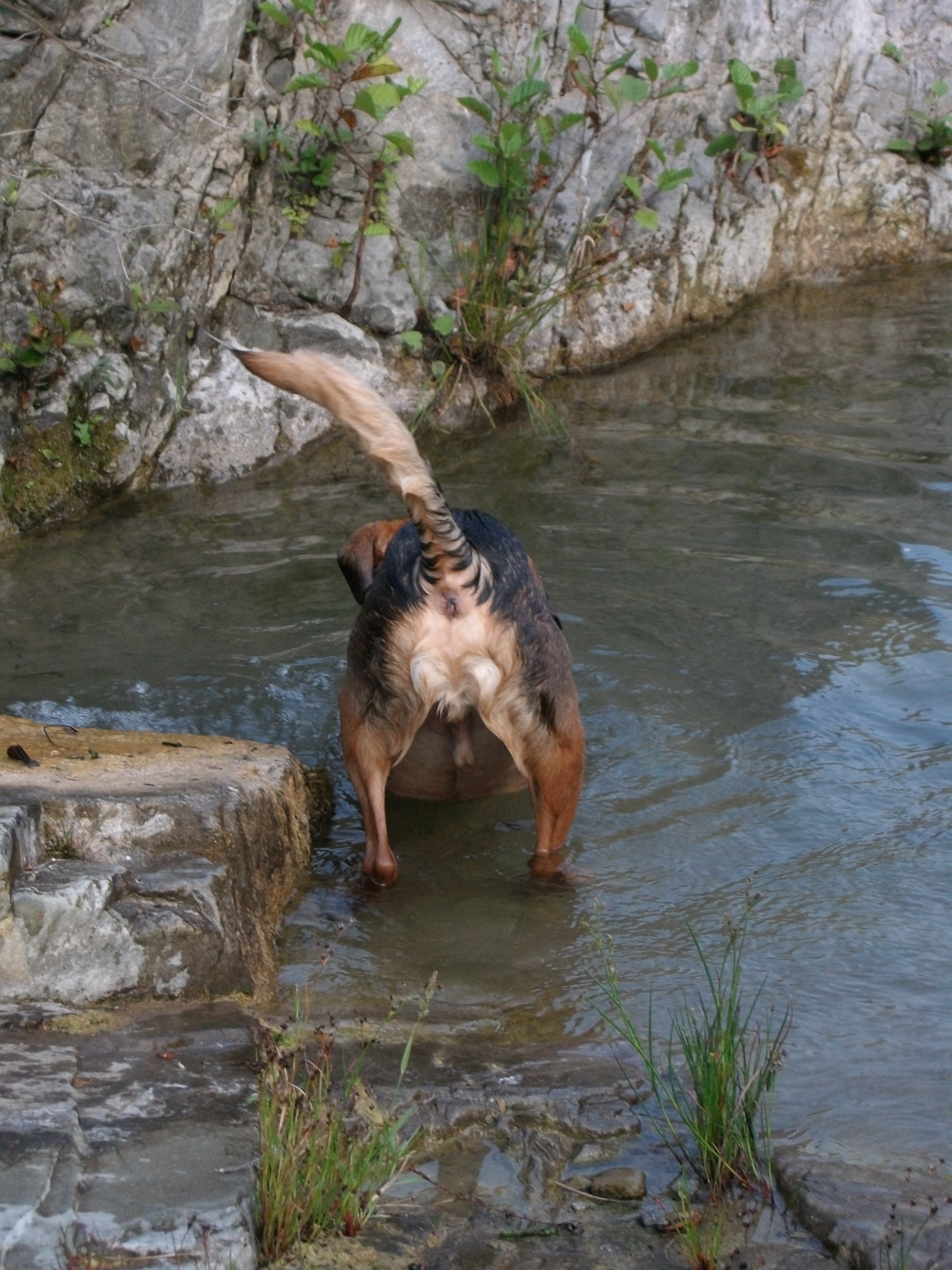
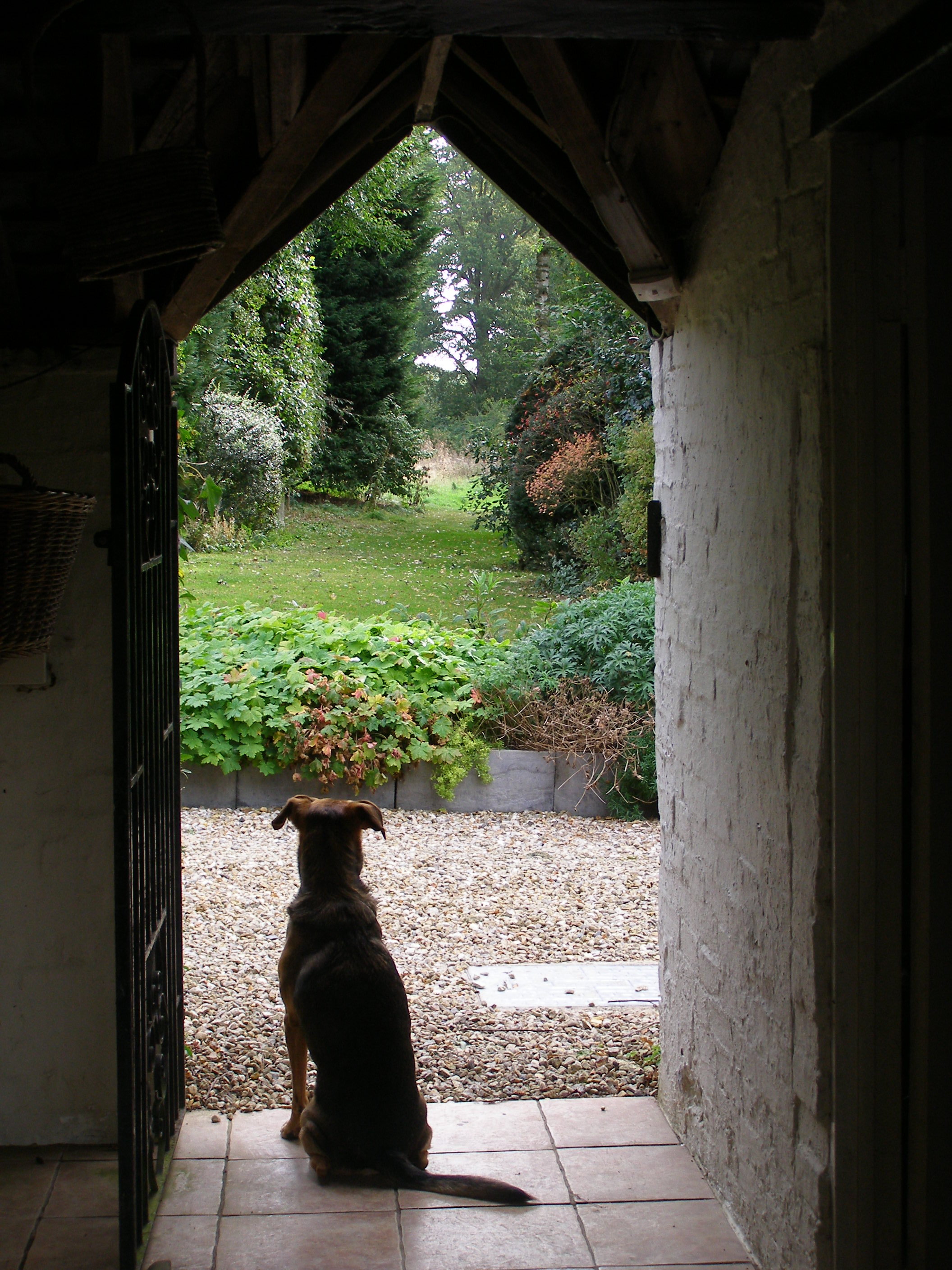
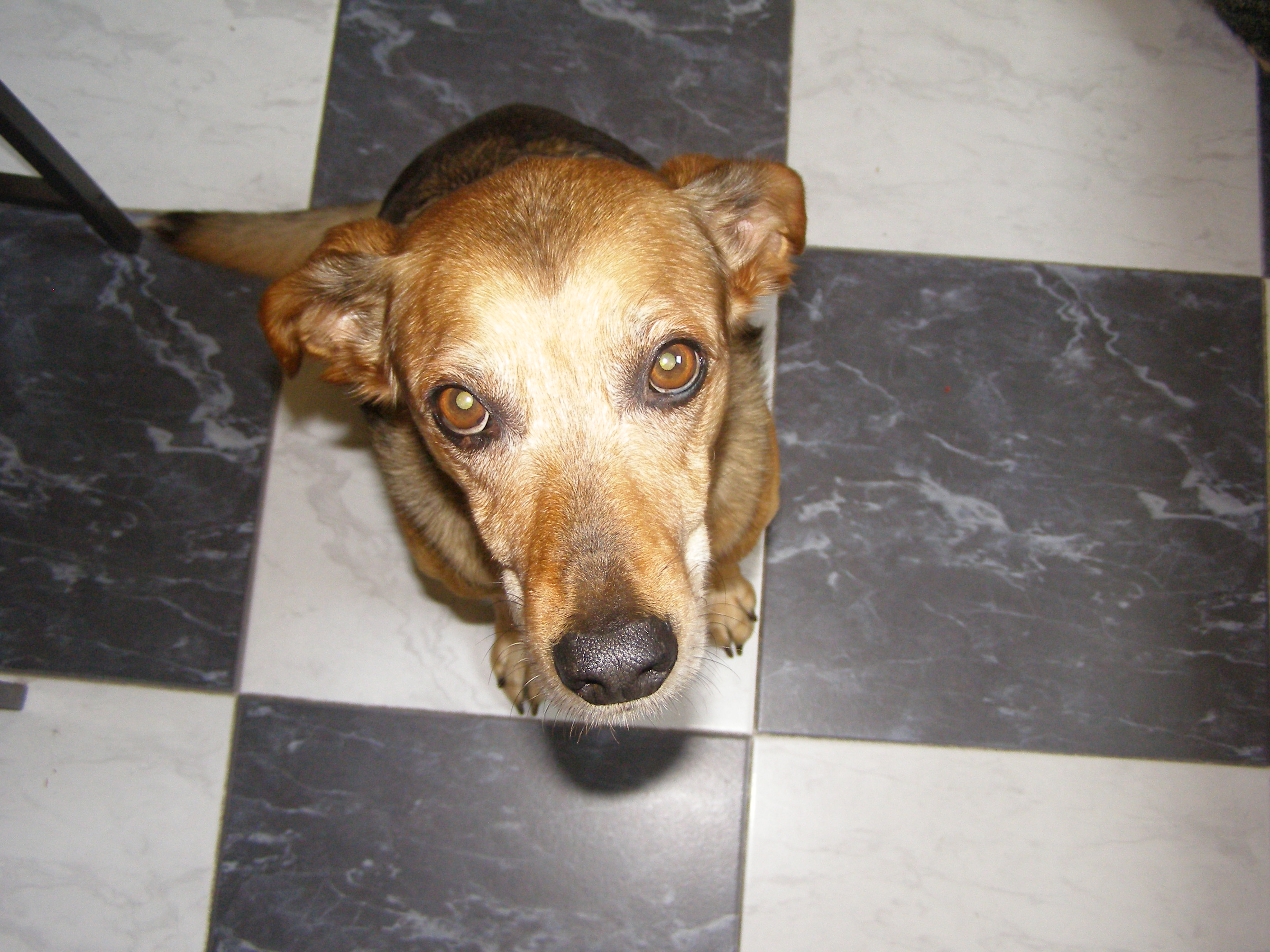
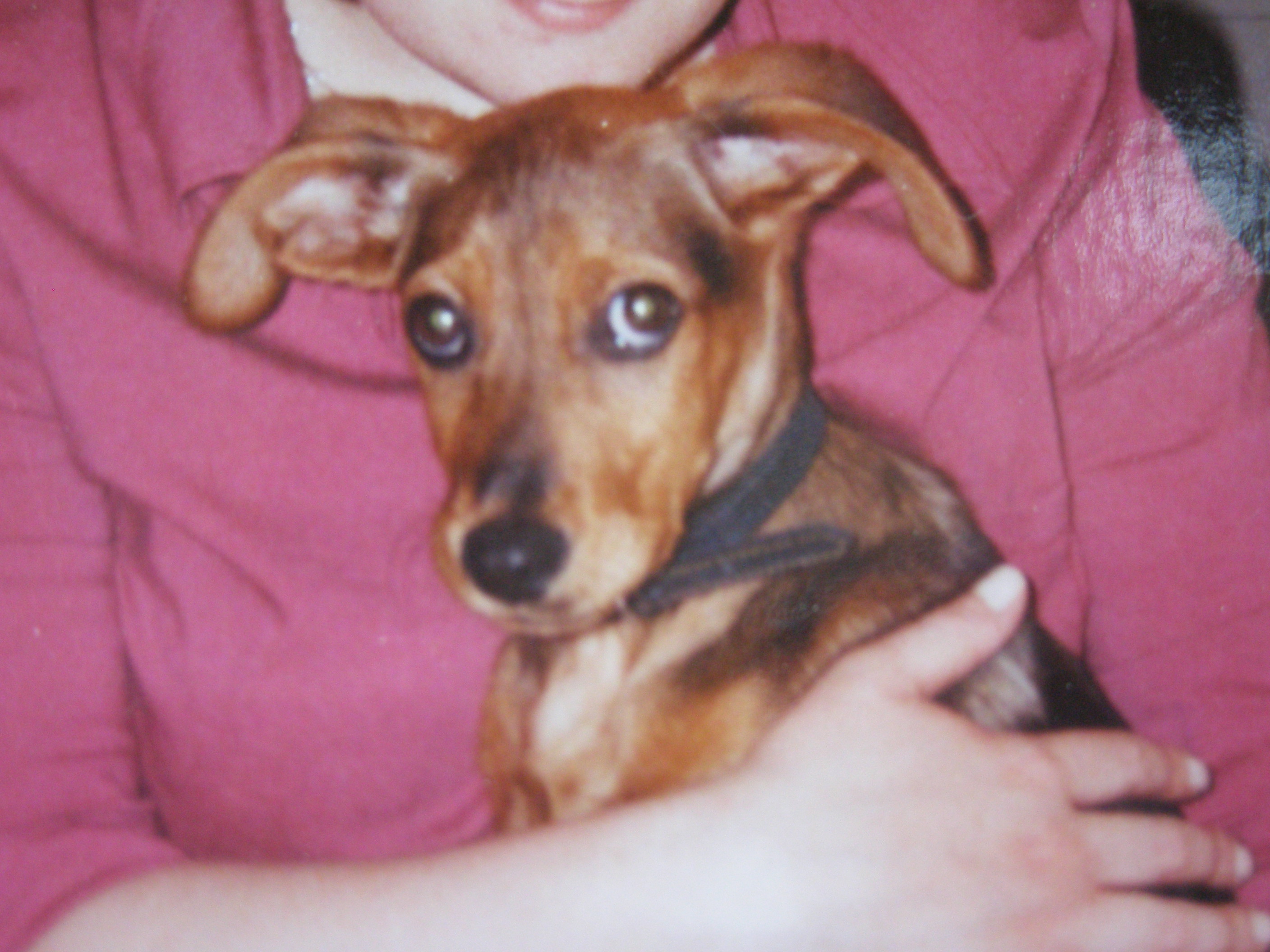
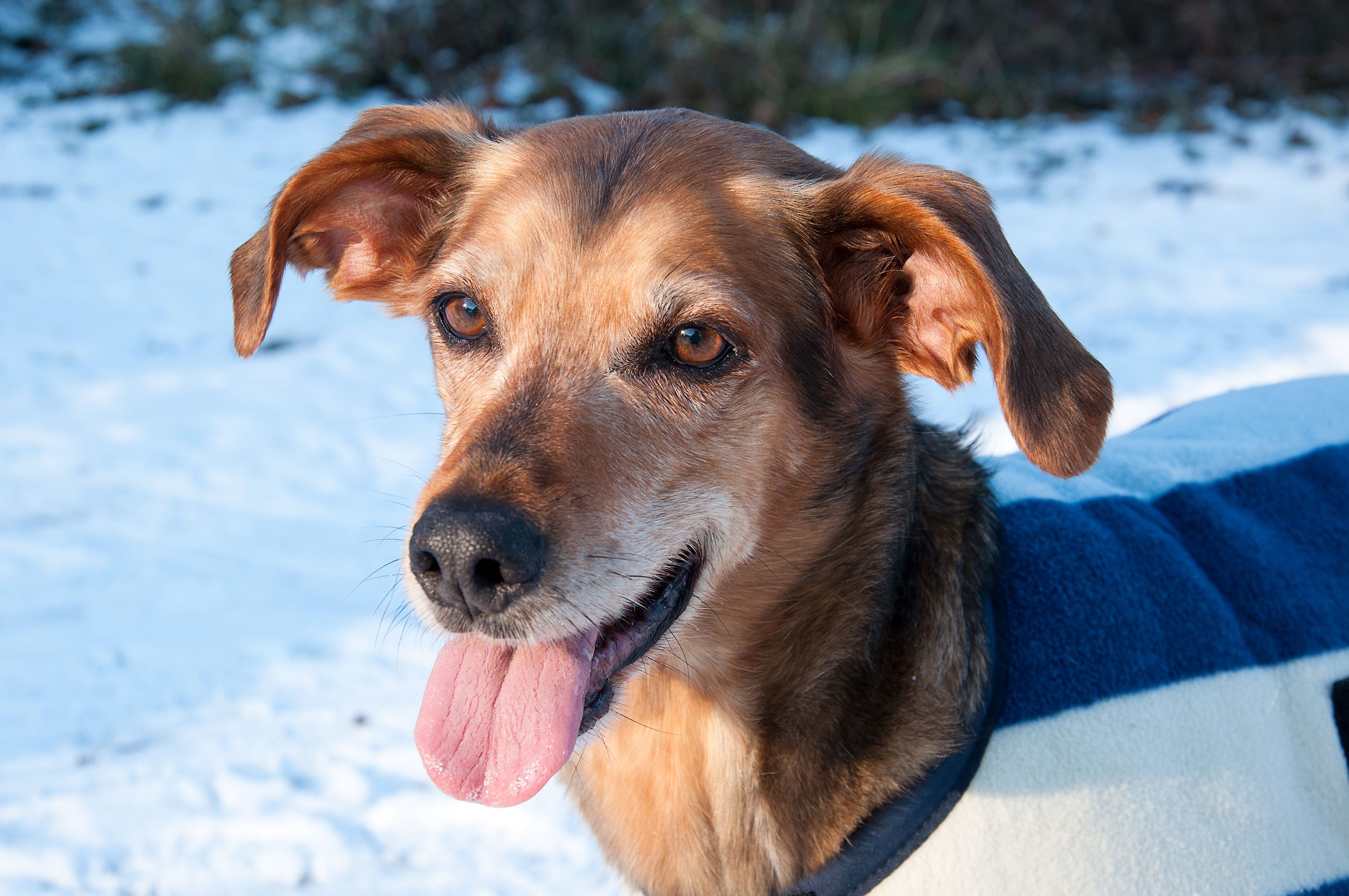
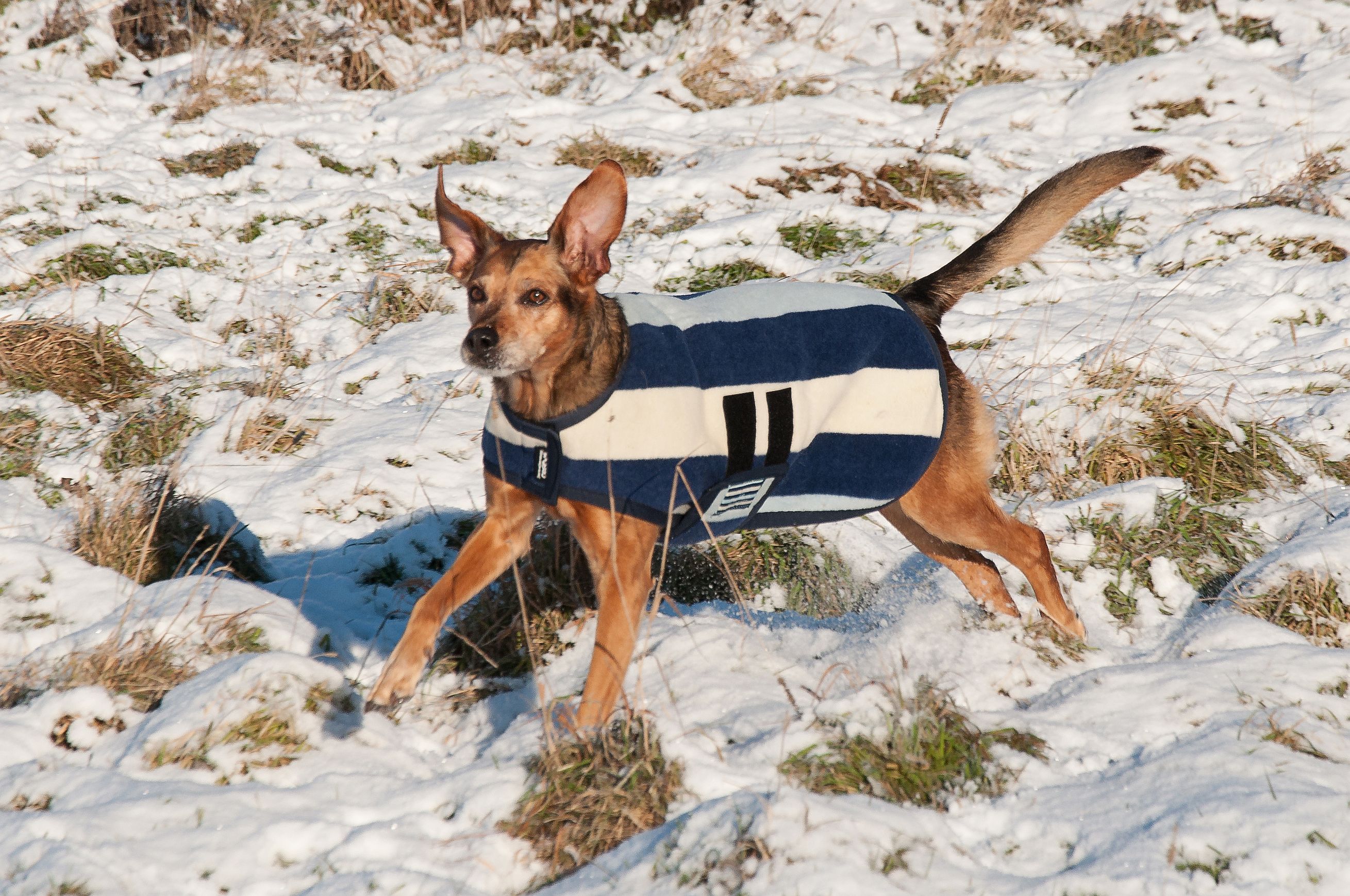
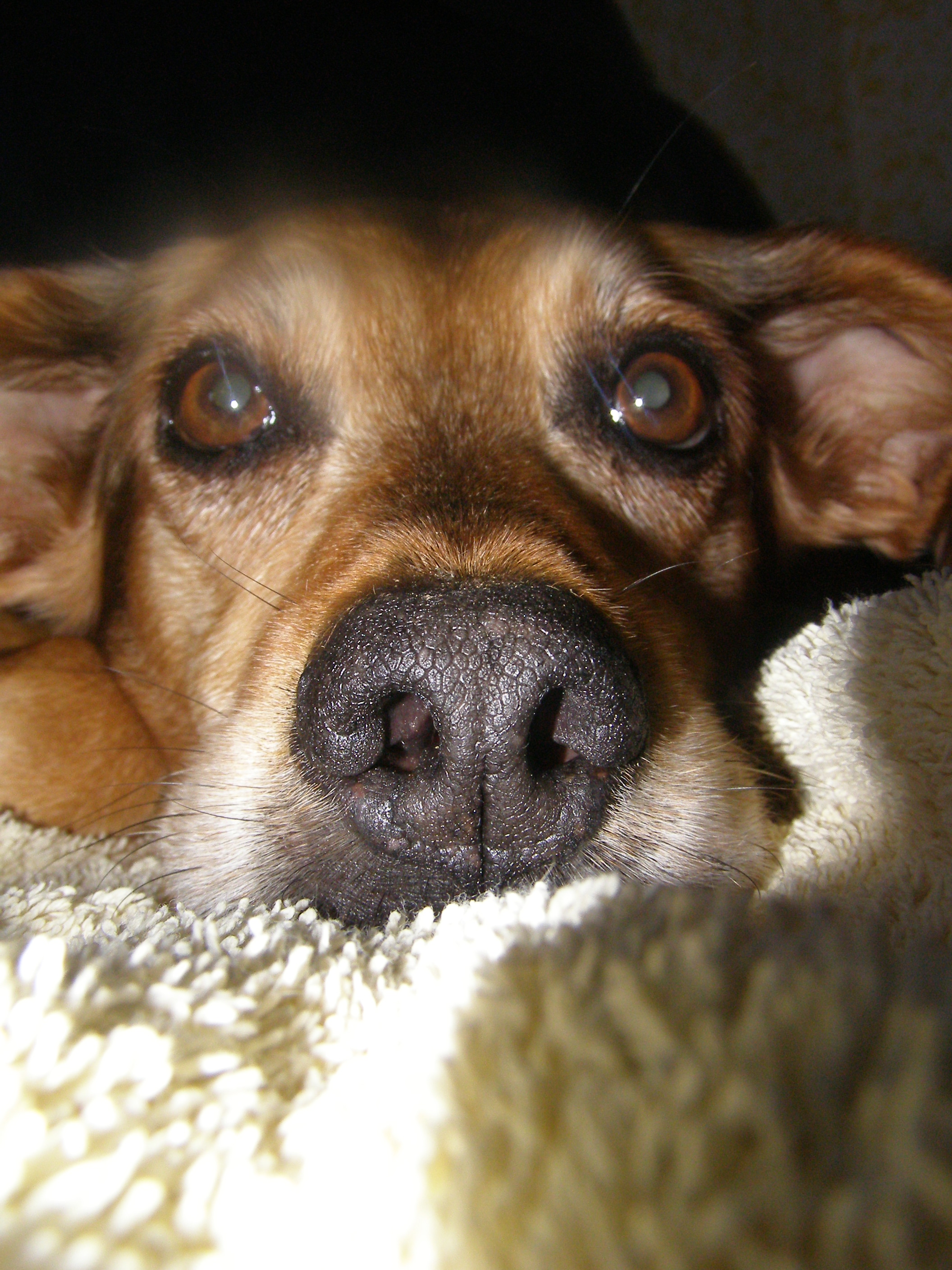
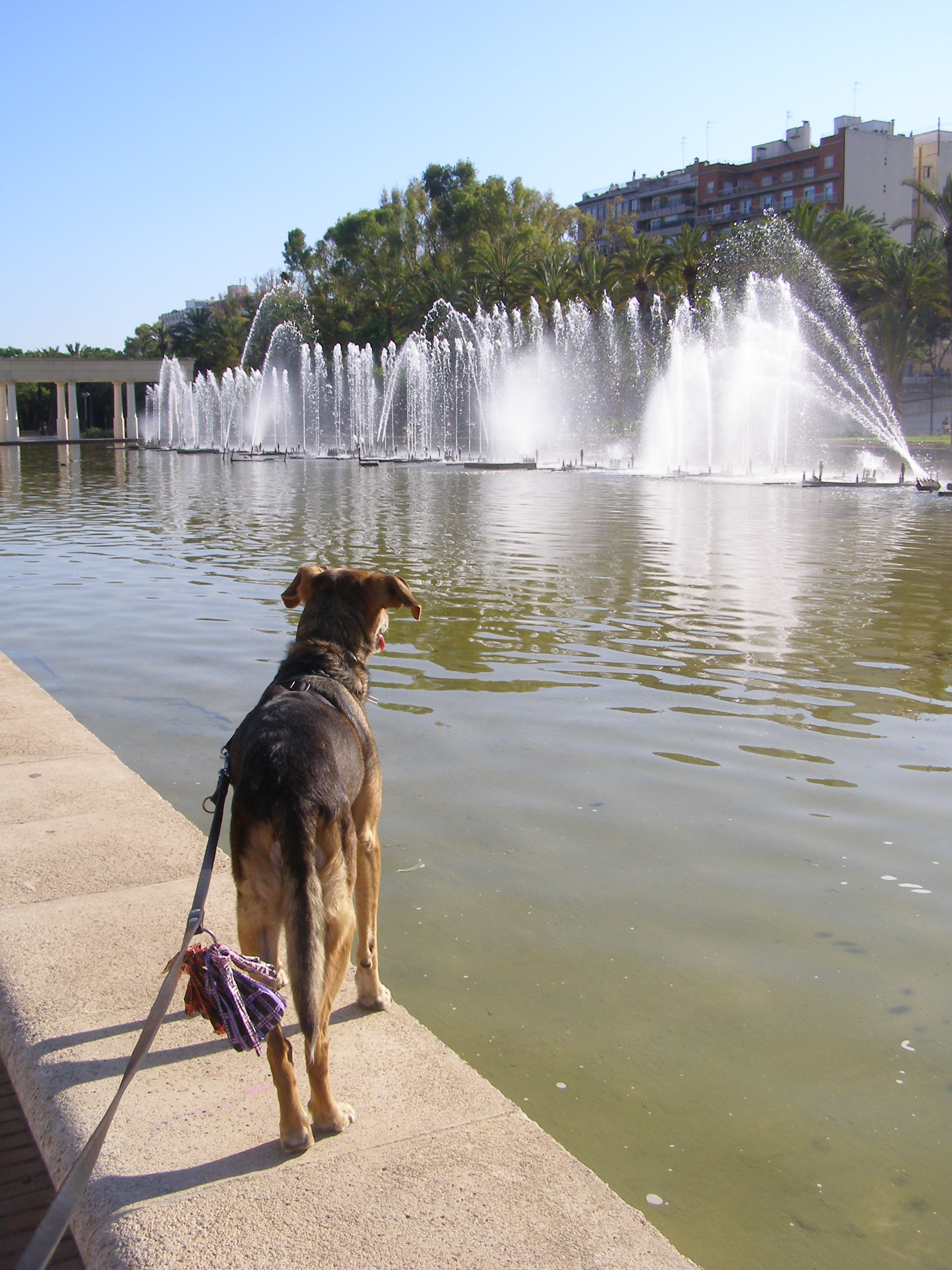
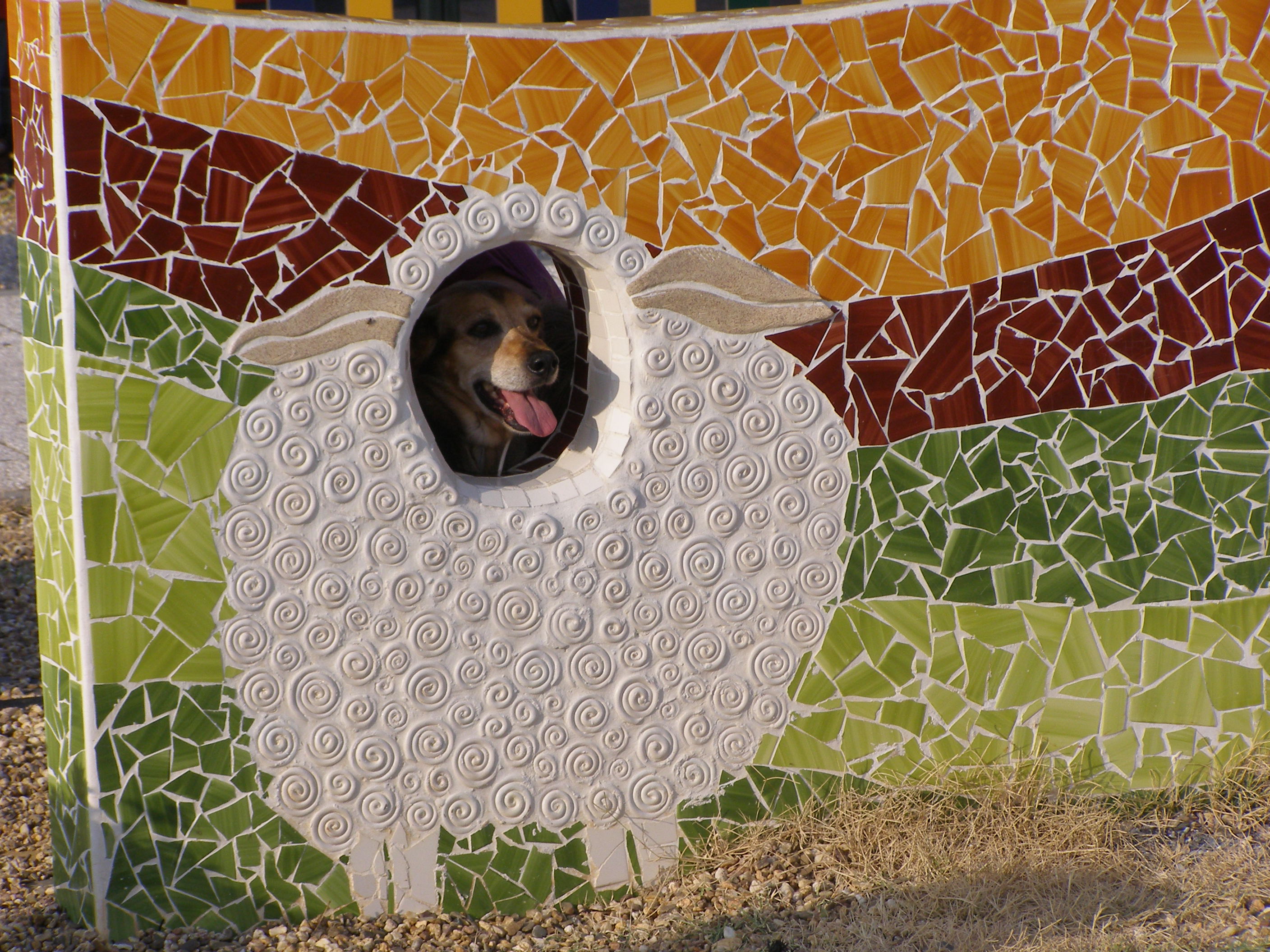
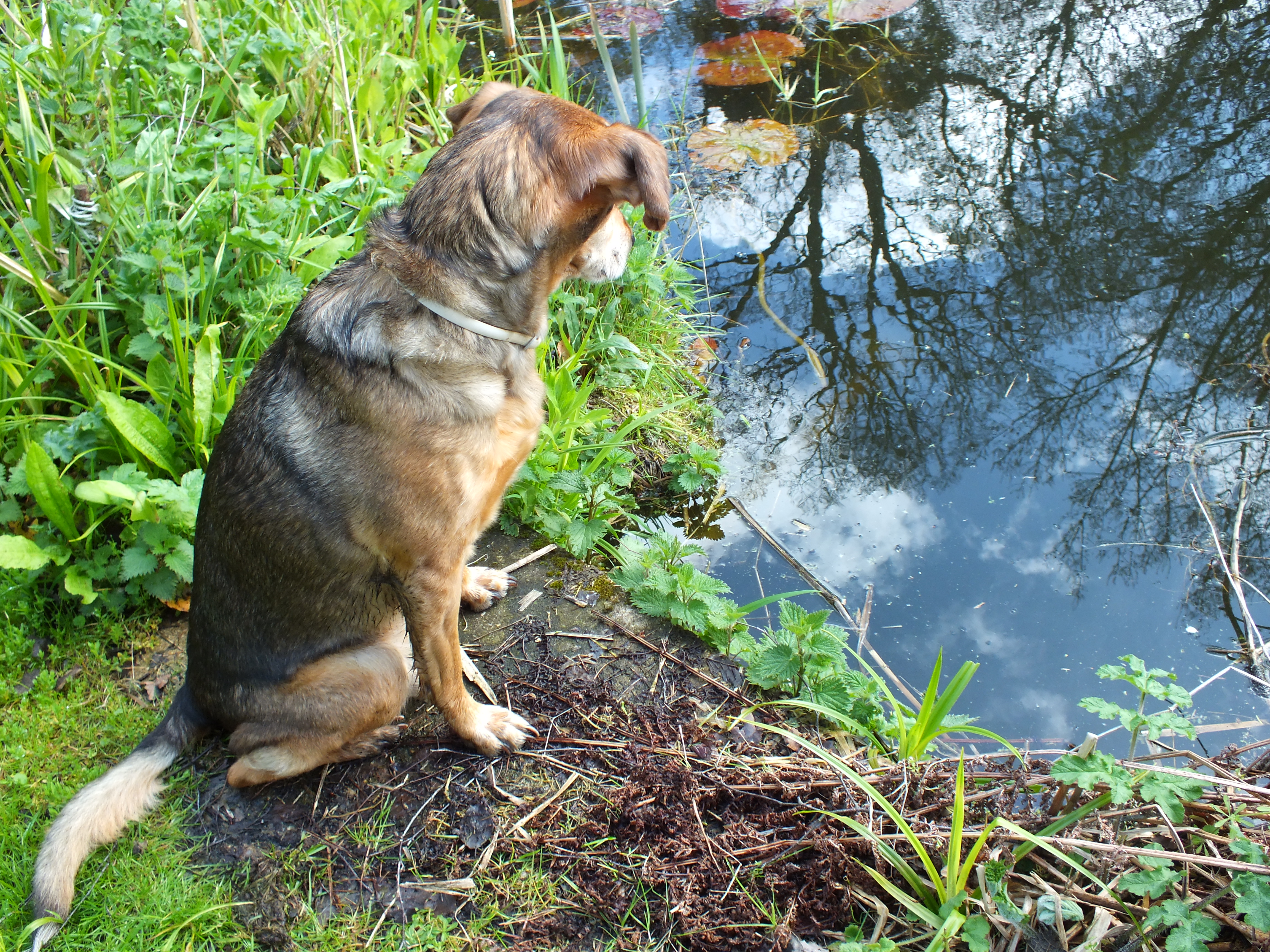
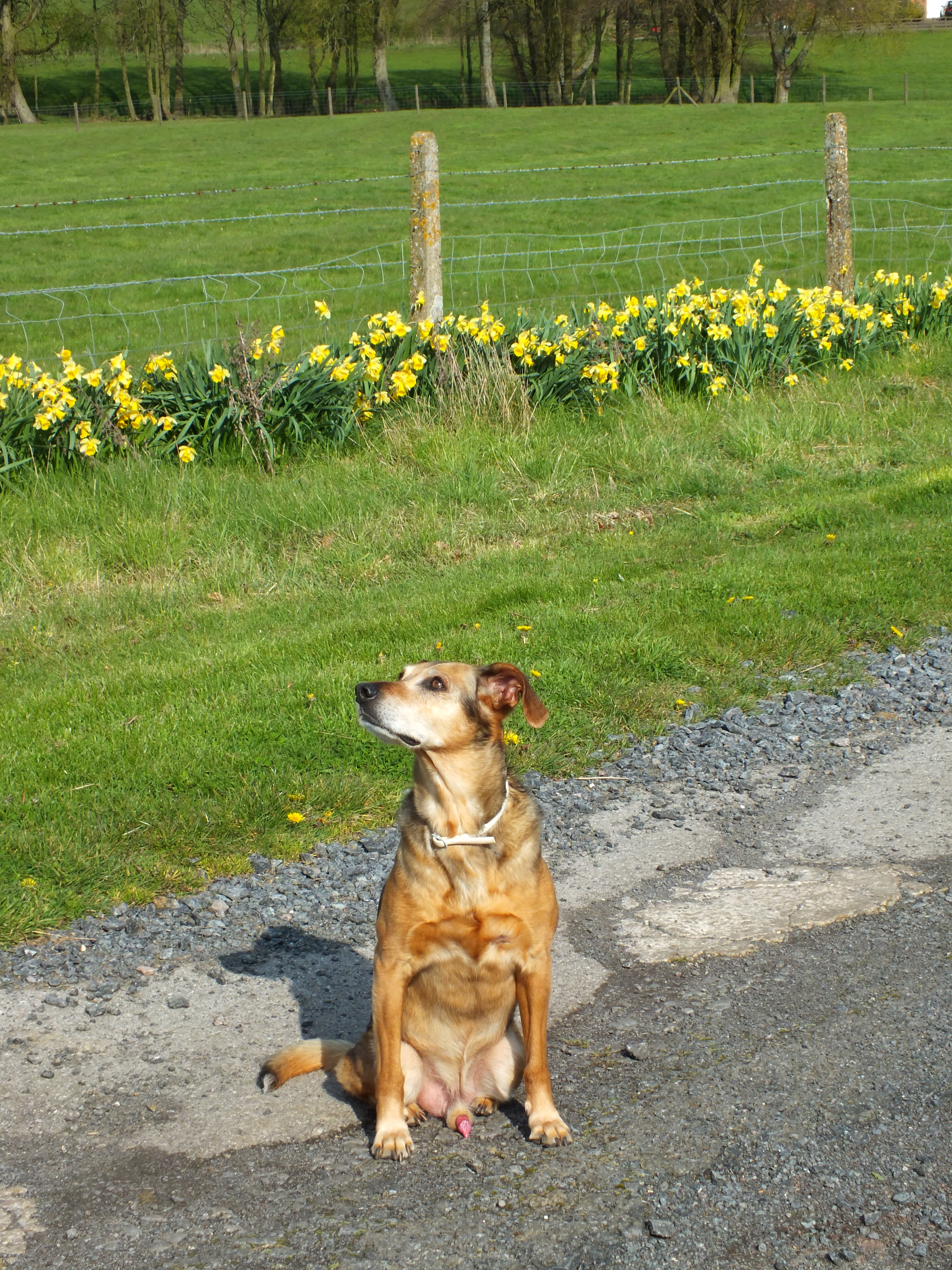
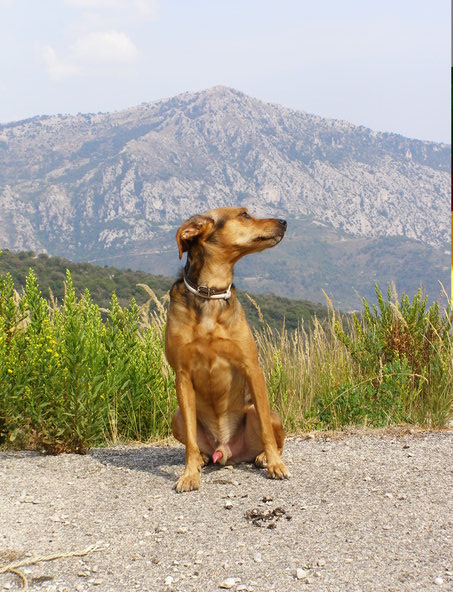
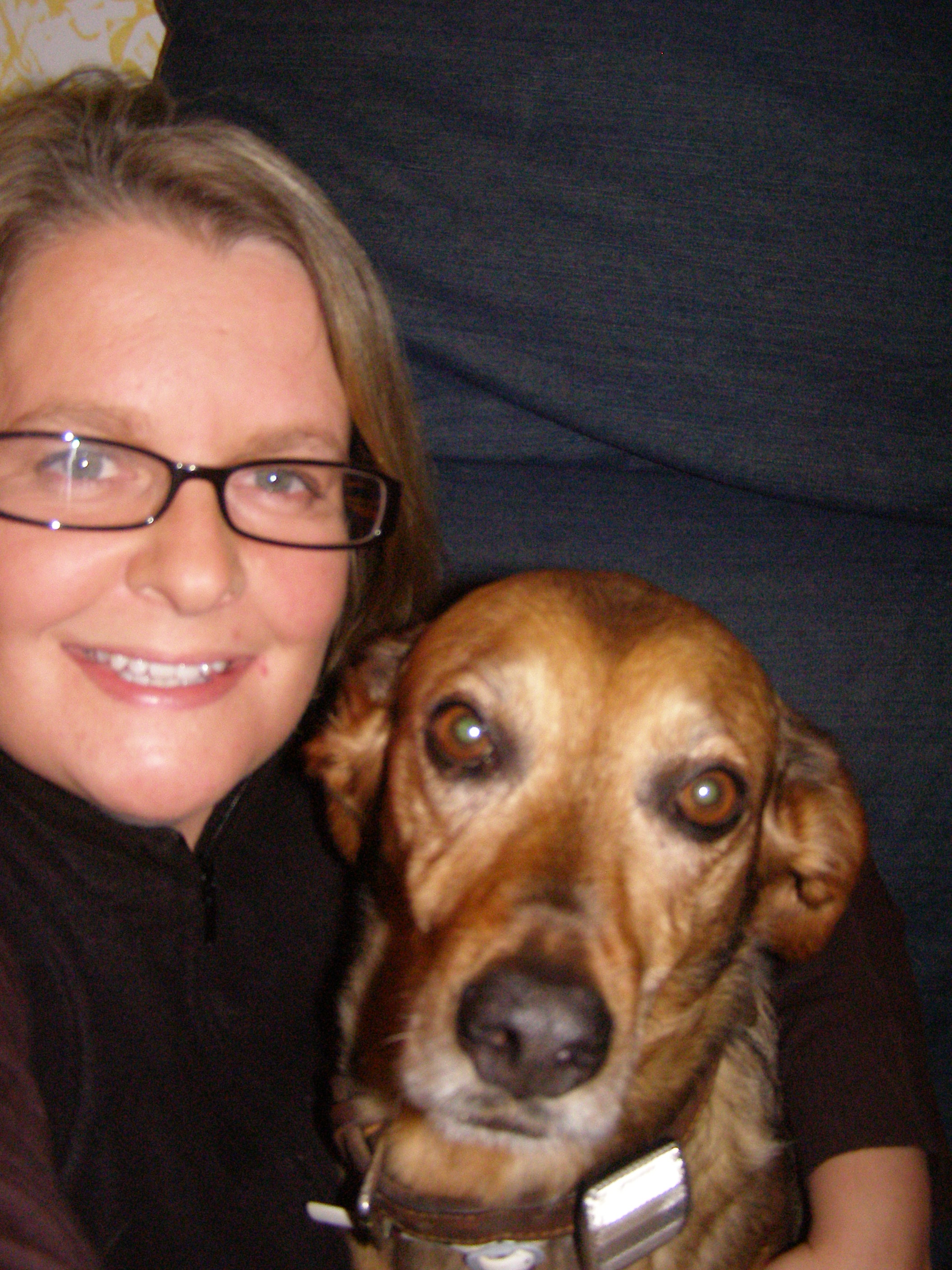
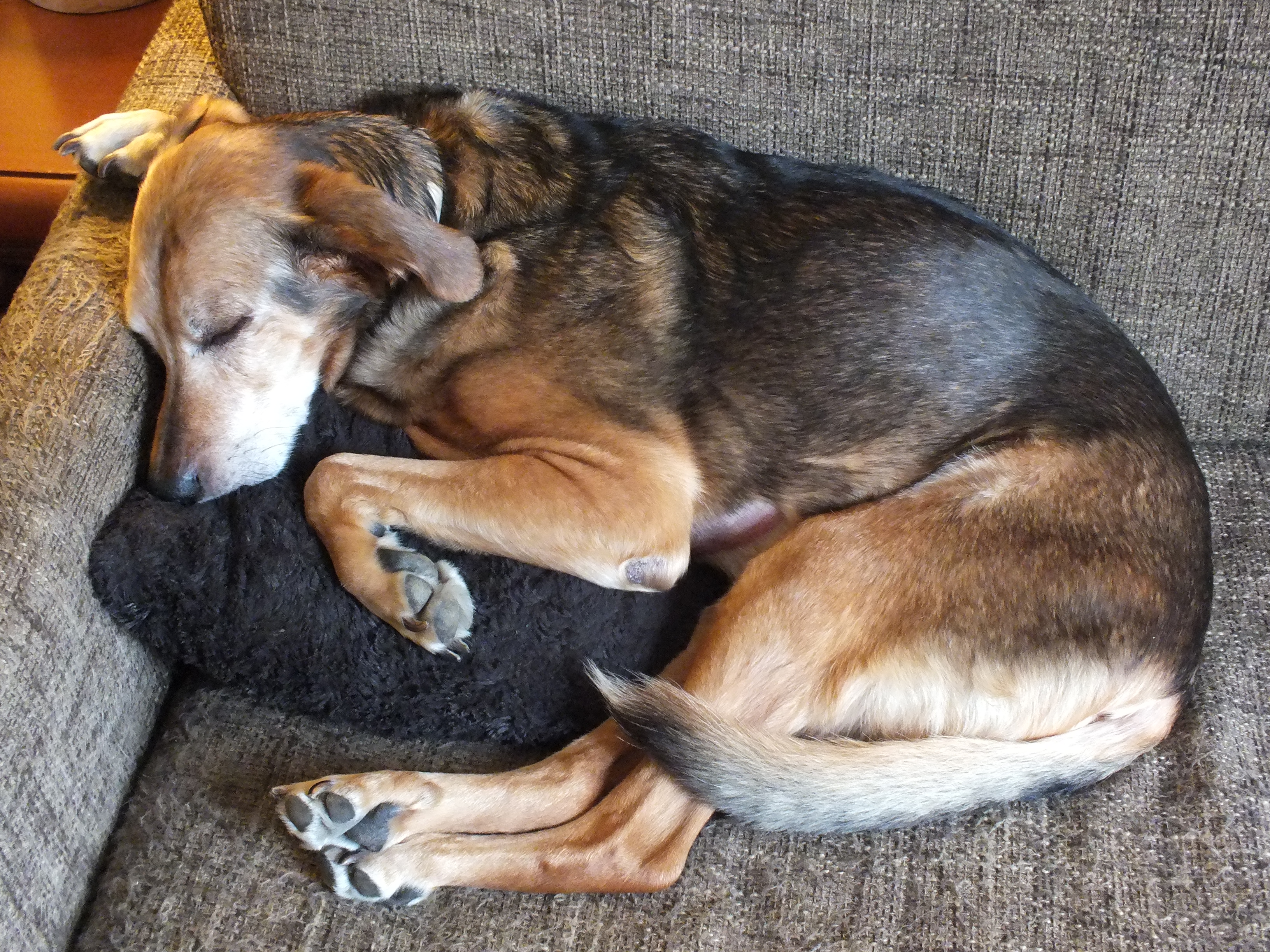
Strauss (Apologies for the lipstick shots…)
Strauss accompanied me through my final years in Spain, all my years in France and the first three years in Italy, with plenty of visits to the UK and elsewhere in between. He was my partner in crime, the unrivalled star of Status Viatoris blog, and the most goodest of good boys that ever did live. I have not cried as much, either before or since, as when I had to say my final goodbyes to that beautiful soul.
Four and a half years then passed, during which I produced a human puppy of my own (harder to house train, far more demanding and its love suspiciously conditional), visited Romania for the first time, and moved back to the UK. In that order.
I defy any visitor to Romania not to notice the dogs: they are perhaps one of the most pitifully visible relics of communism; Ceausescu having herded hundreds of thousands of home-owners out of their smallholdings into soulless grey tower blocks, another relic of communism, forcing them to abandon their animals in the process. And as even abandoned animals cannot control the instinct to reproduce, present-day Romania finds itself overrun with their descendants. Where we in the UK see badgers, hedgehogs and squirrels dead on our roads, in Romania you see dogs.
There are organisations battling to stem the tide with sterilisation programmes, such as Kola Kariola, and others that take dogs from the street and from the public shelters (also know as kill shelters) to rehome them in other countries. So when I decided I was ready to give my heart to a dog again, to me it made perfect sense to look to my husband’s country, Romania.
The charity I chose, and one I still support, was Romanian Rescue Appeal. Dogs are brought to health, vaccinated and sterilised before being popped on the Happy Bus (an air-conditioned mini-van with kennels) and bussed to fosterers or adopters. I looked at the puppies, who wouldn’t, but I couldn’t shake the feeling that enough people would choose a puppy over an older dog to ensure I didn’t need to worry overmuch about the fate of the puppies. No, I said, I will start with an older dog and treat myself to a puppy some other time.
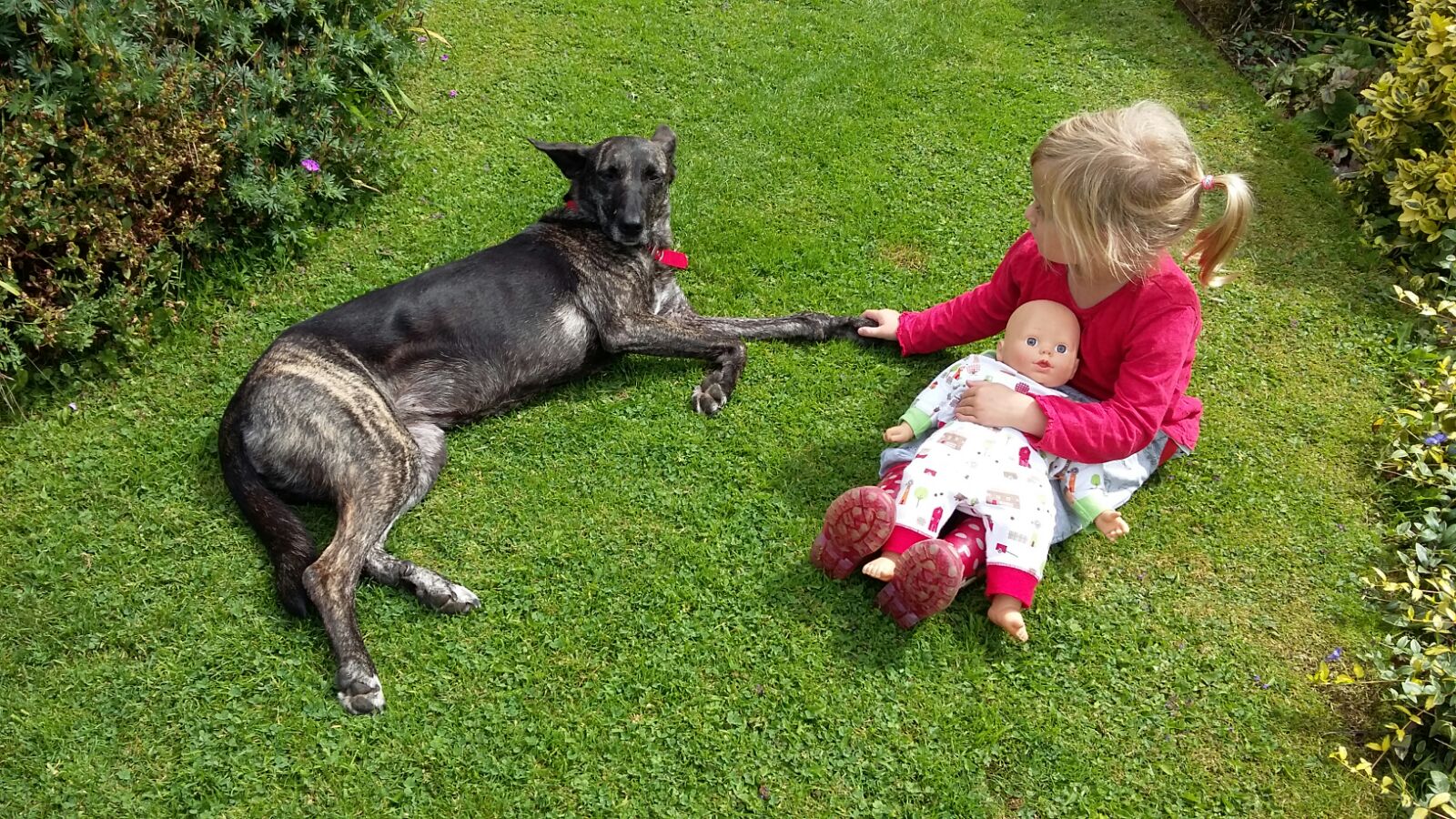
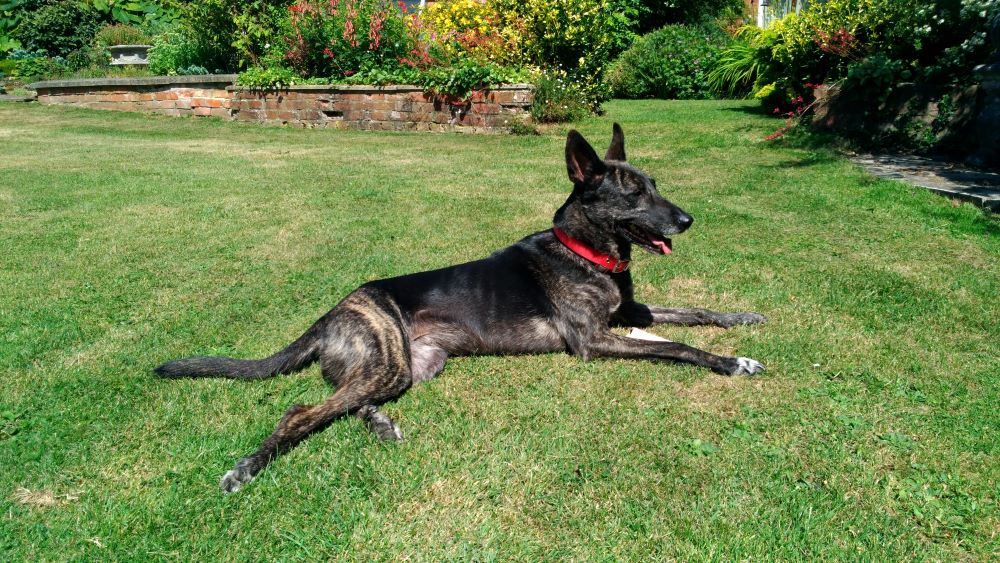
Ramona (and the human puppy)
Ramona, we were told, was eight years old. She had been with the rescue for a number of years having been taken by them from the local “kill” shelter where she had originally been brought in from the streets with her puppy (sadly since deceased) in tow. After one slightly disturbed night, Ramona settled in as if she had lived with us all her life.
Ramona is very independent, but very loving. She is the most elegant looking dog, except when scraping her anal glands along the ground. She resembles a short-haired brindle German shepherd, but runs like a greyhound. She is terrified of dogs she doesn’t know, but fond of most people. Even now she still enjoys playing, but her play is so brutally thuggish in nature other dogs simply refuse to participate. We have never successfully introduced her to the concept of obedience, but she is a worldly-wise soul we instinctively trust to make the right decisions, so she gets away with it.
About a month passed before I came to the conclusion that perhaps Ramona would like a friend – an affliction of accumulation that many dog “rehomers” seem to suffer from. I settled on Nora, previously known as Amalia. In her photos she resembled a pointer, in the flesh she resembled a compilation of dog parts from a number of startlingly different dog designs. As she grew, her head remained the same size, while the rest of her went through various stages of incongruousness before settling on a tightly muscled torso balanced on comically bandy legs.
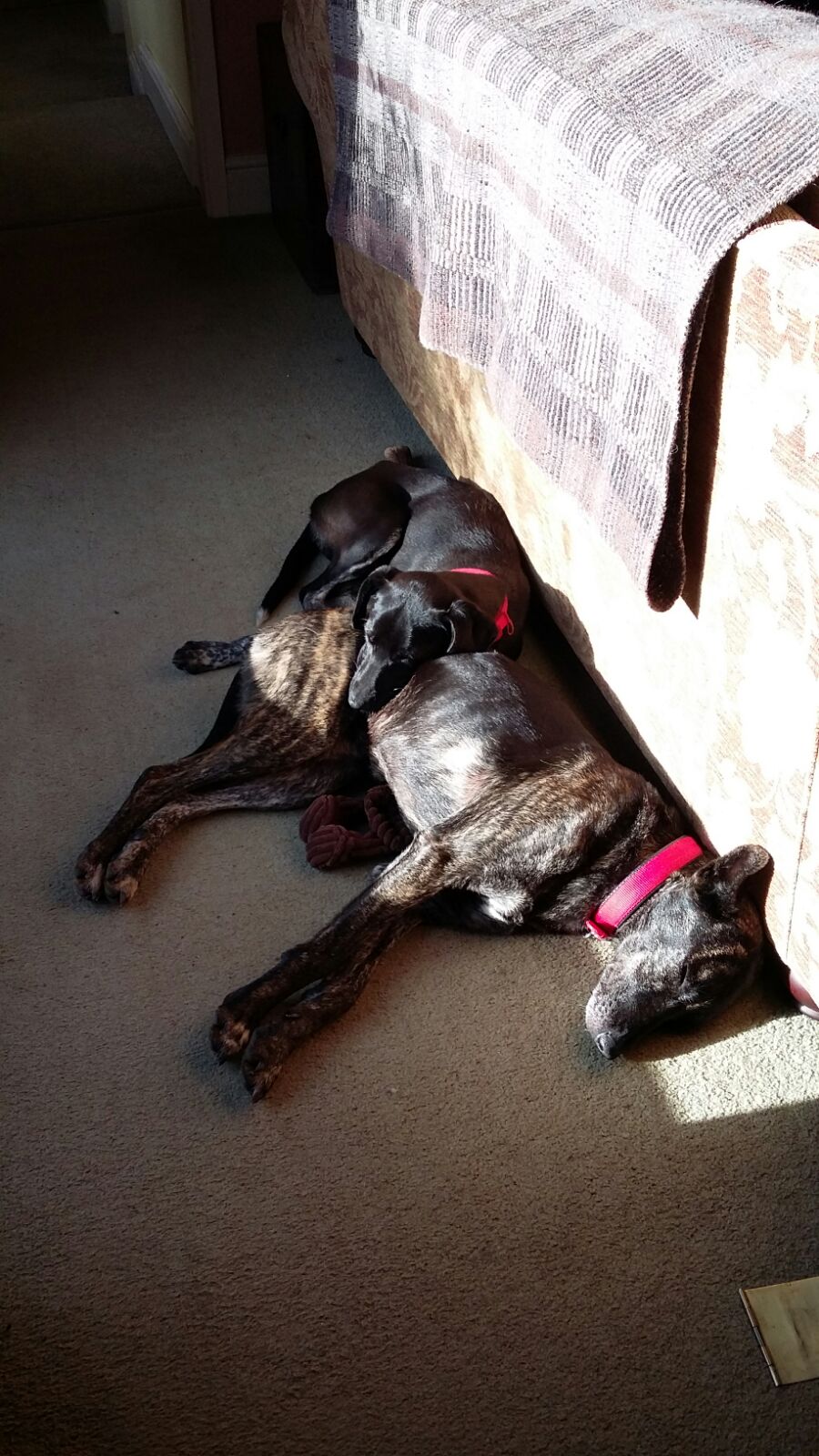
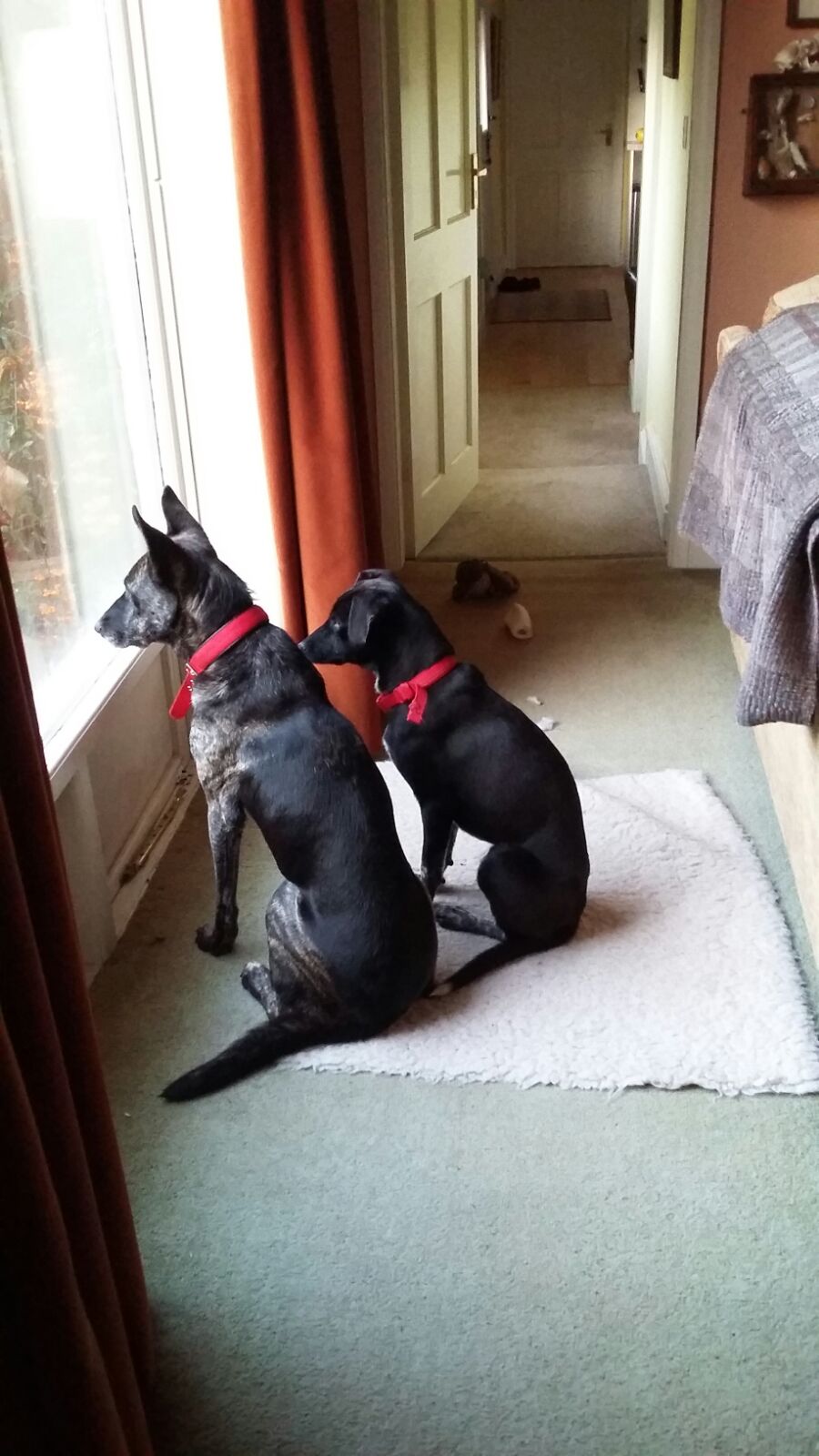
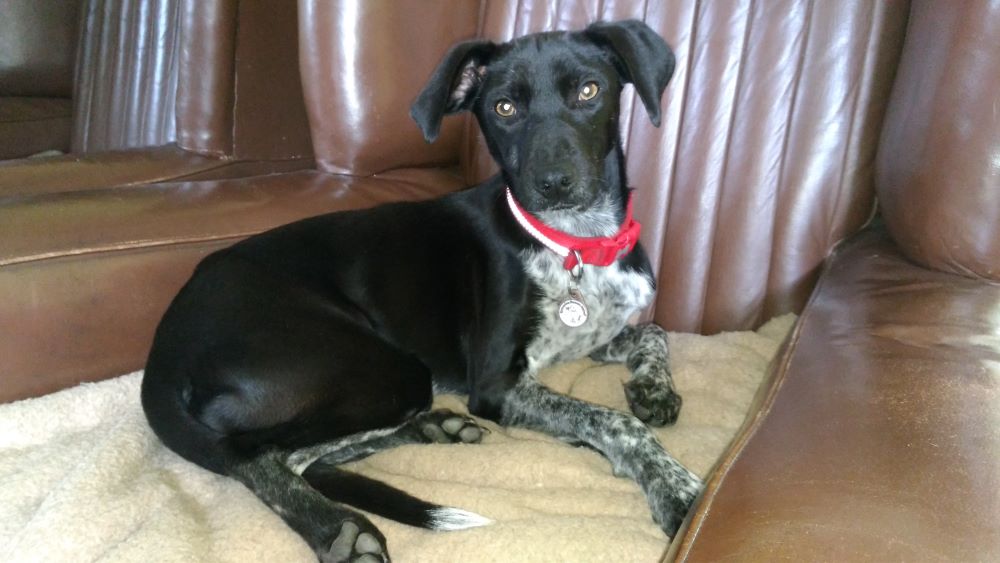
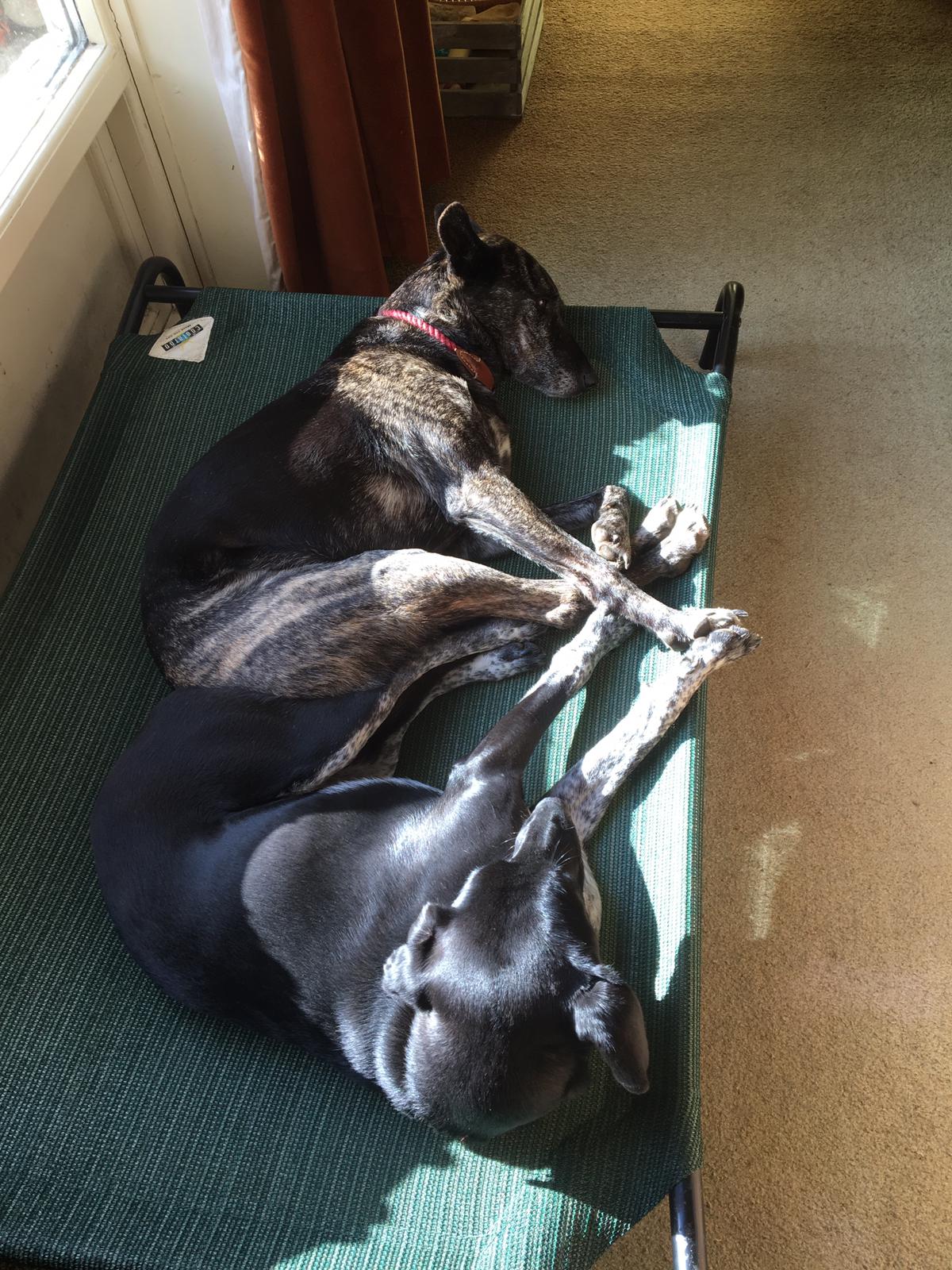
Nora (and Ramona)
Nora had just turned one when she arrived, two months after Ramona. She had been picked up by the charity when they found her for sale at a market as a guard dog. She is hopelessly neurotic, barking at every sound real or imagined. Whether her neuroses are due to her character or to her pre-market guard-dog training, I will never know. She was so utterly terrified for the first six months that only I could touch her, and even then I risked losing a finger every time I put on her harness.
Seven years on Nora has mellowed. She hasn’t tried to bite anyone for a while now, and we have even managed to dissuade her from killing every muntjac deer that wanders through the garden – although she still likes to keep them on their toes for old times’ sake when she thinks we’re not looking. She is extremely loving and affectionate with her human family – it was her desire to please us that eventually overrode her killer instincts despite all the articles on canine behaviour telling us there would never be anything stronger. Ramona has been the love of her life from the very first day, and nothing has changed other than her sense of self-preservation when Ramona suggests a game… Nora is the most obedient of all our dogs, as well as the most prone to misadventure usually by dint of sticking her nose in places it does not belong. Like wasps’ nests, for example.
A year after Nora arrived, my eye was caught by another dog, the dog that would lead to the aforementioned dressing down. The photos showed a long black face peering sadly out from between the bars of the cage she had been banished to for her own protection when the other dogs in the centre started behaving aggressively towards her. Frida (previously Lovely) was approximately three years old, and had appeared one day at the gate of the shelter. Had she been abandoned there? Had self-preservation led her in the right direction? We will never know.
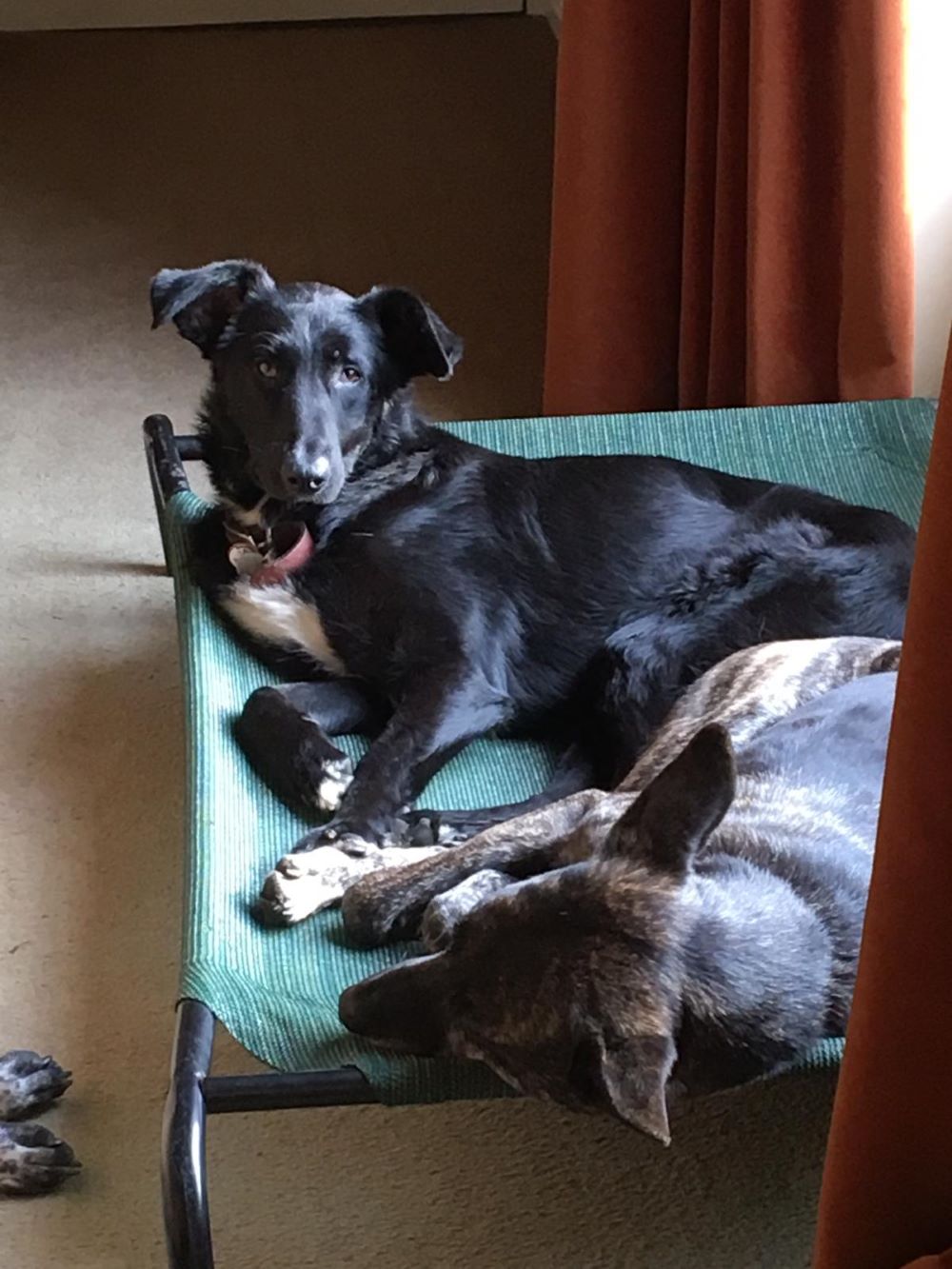
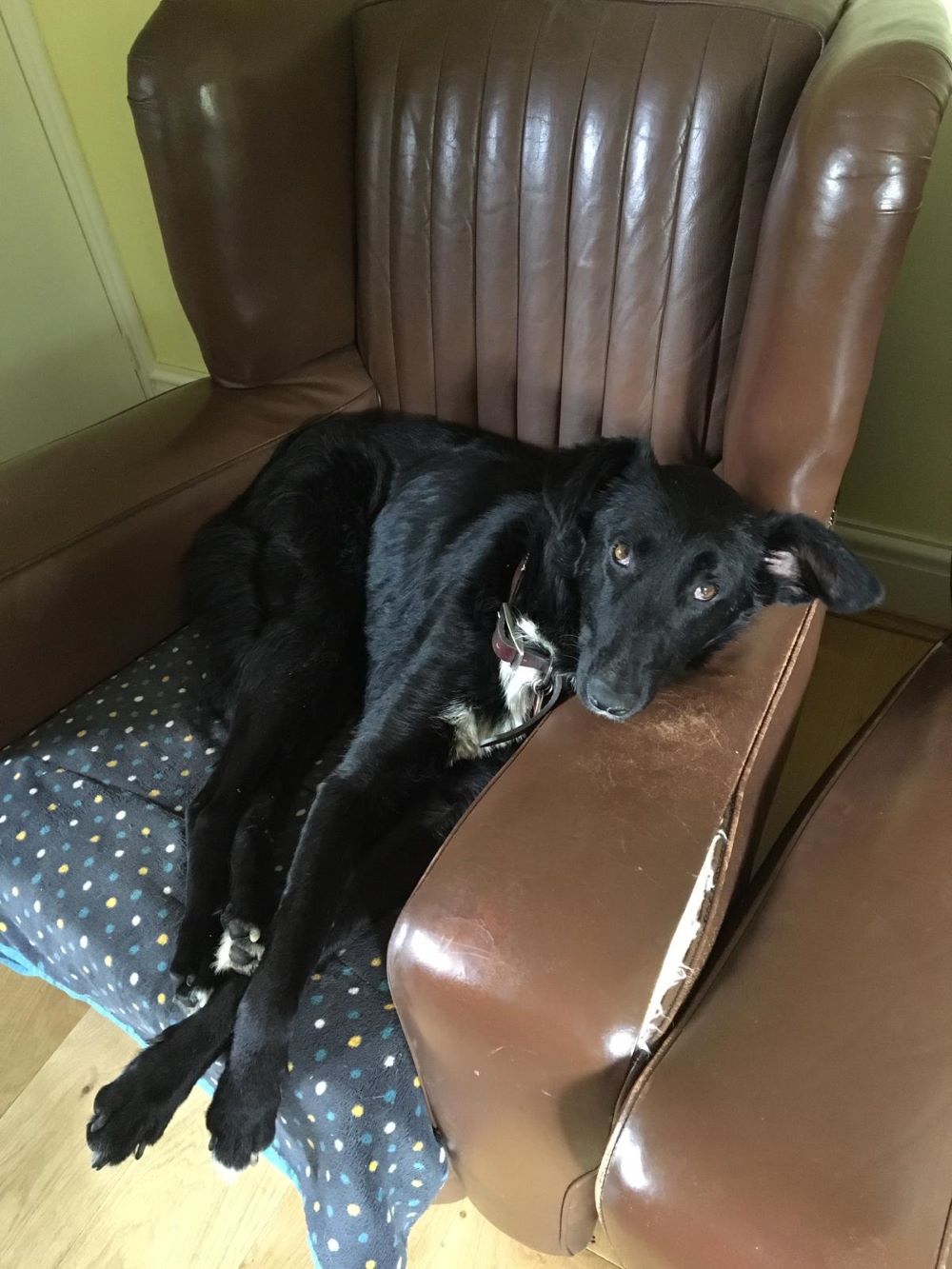
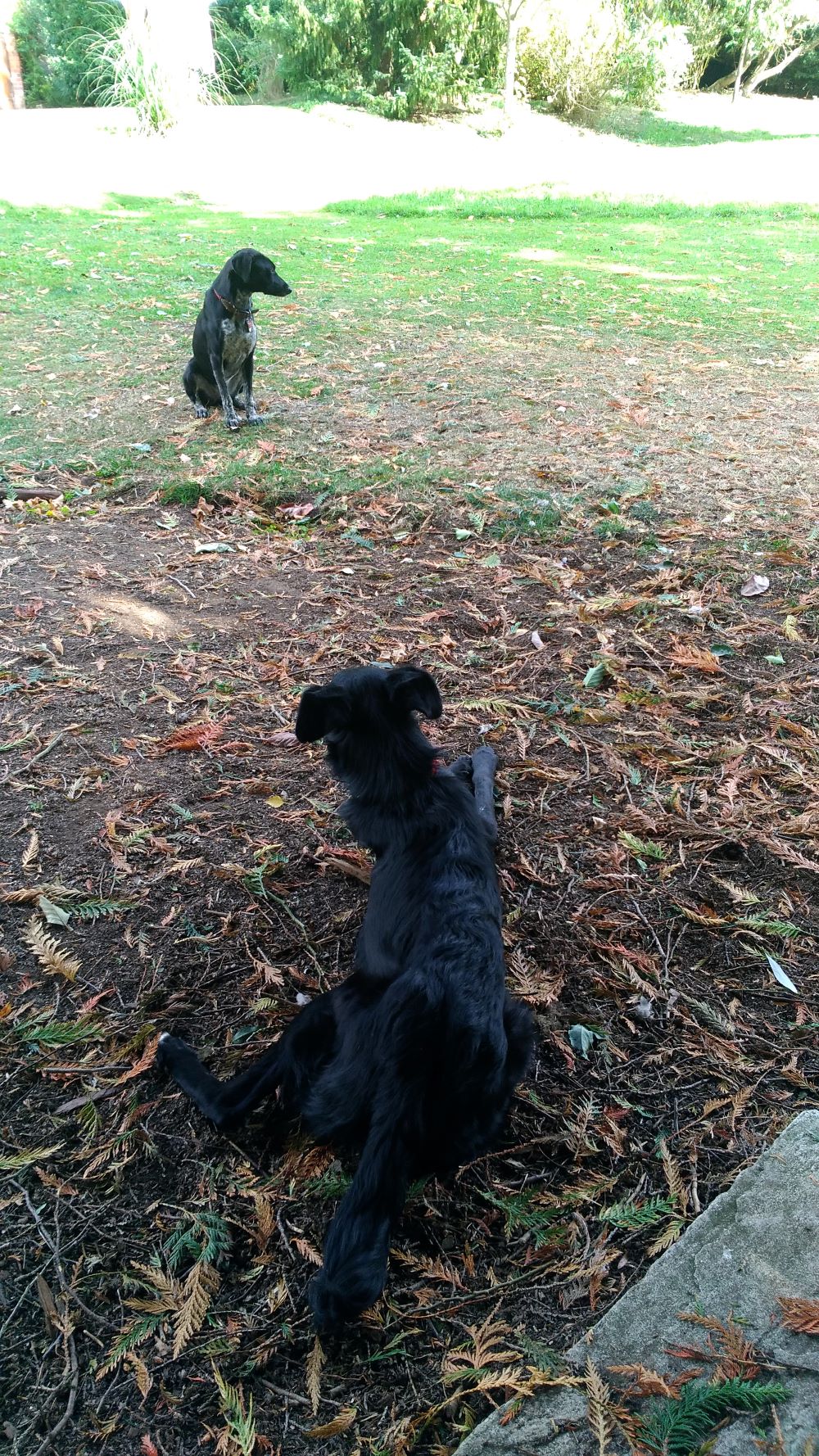
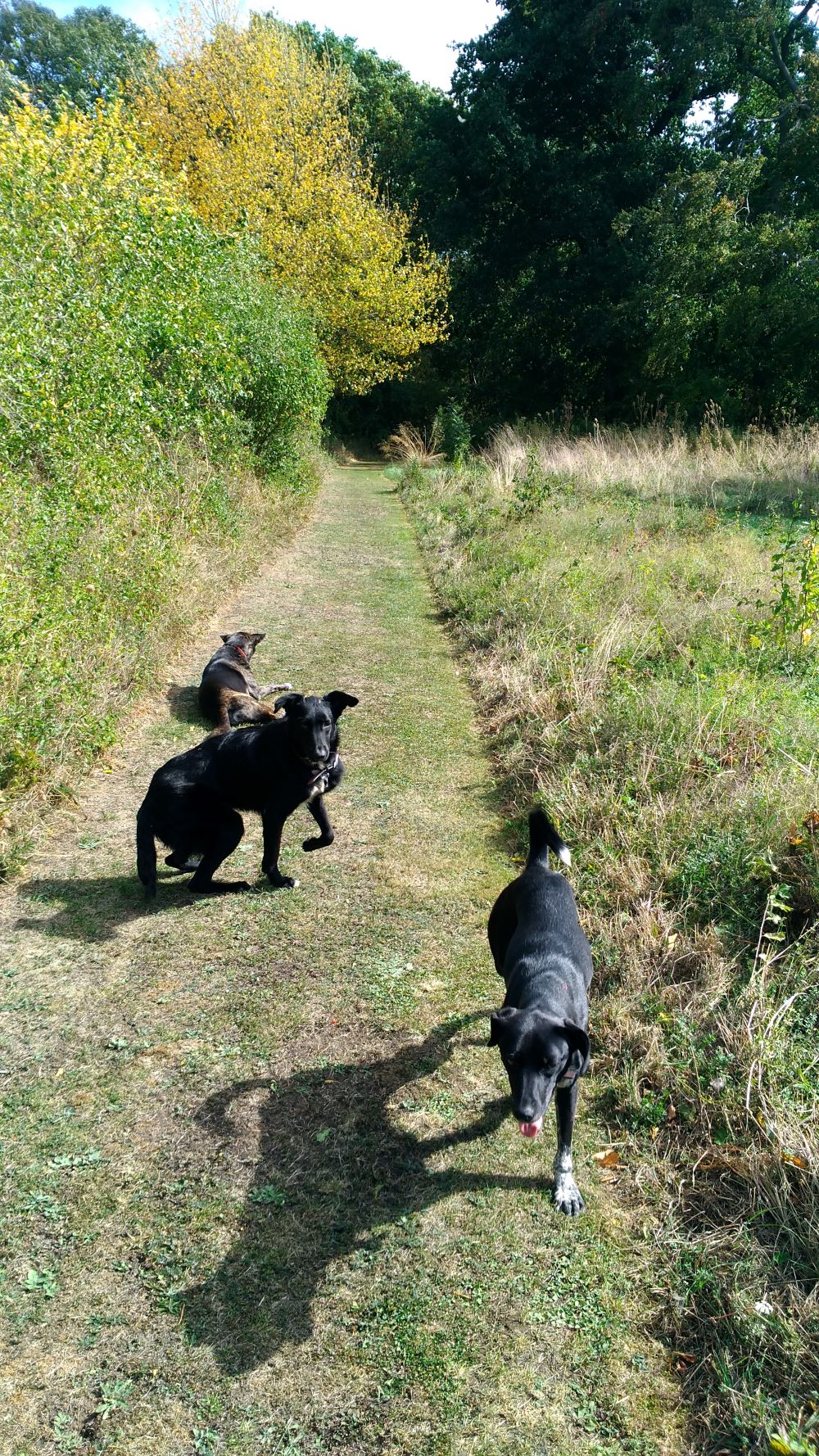
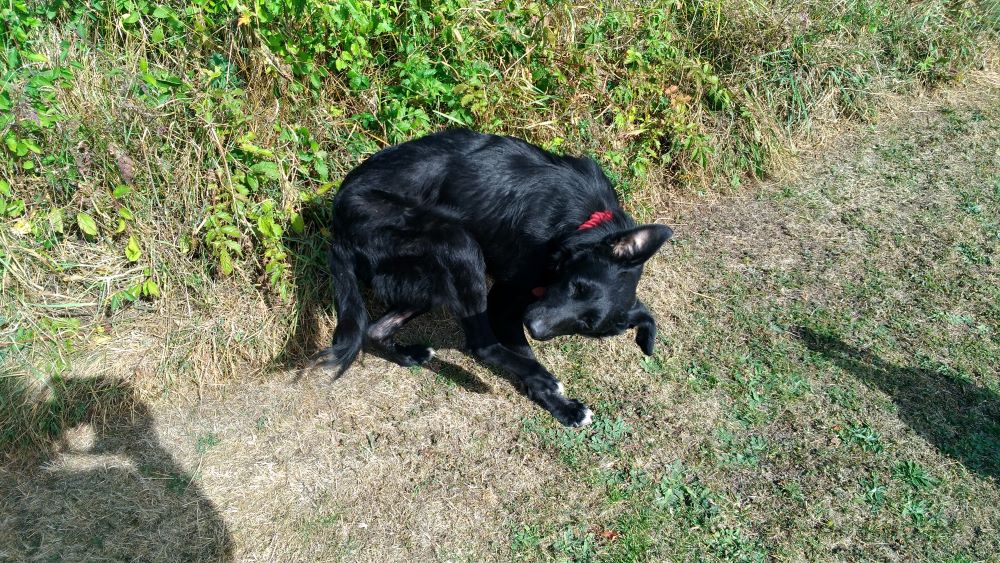
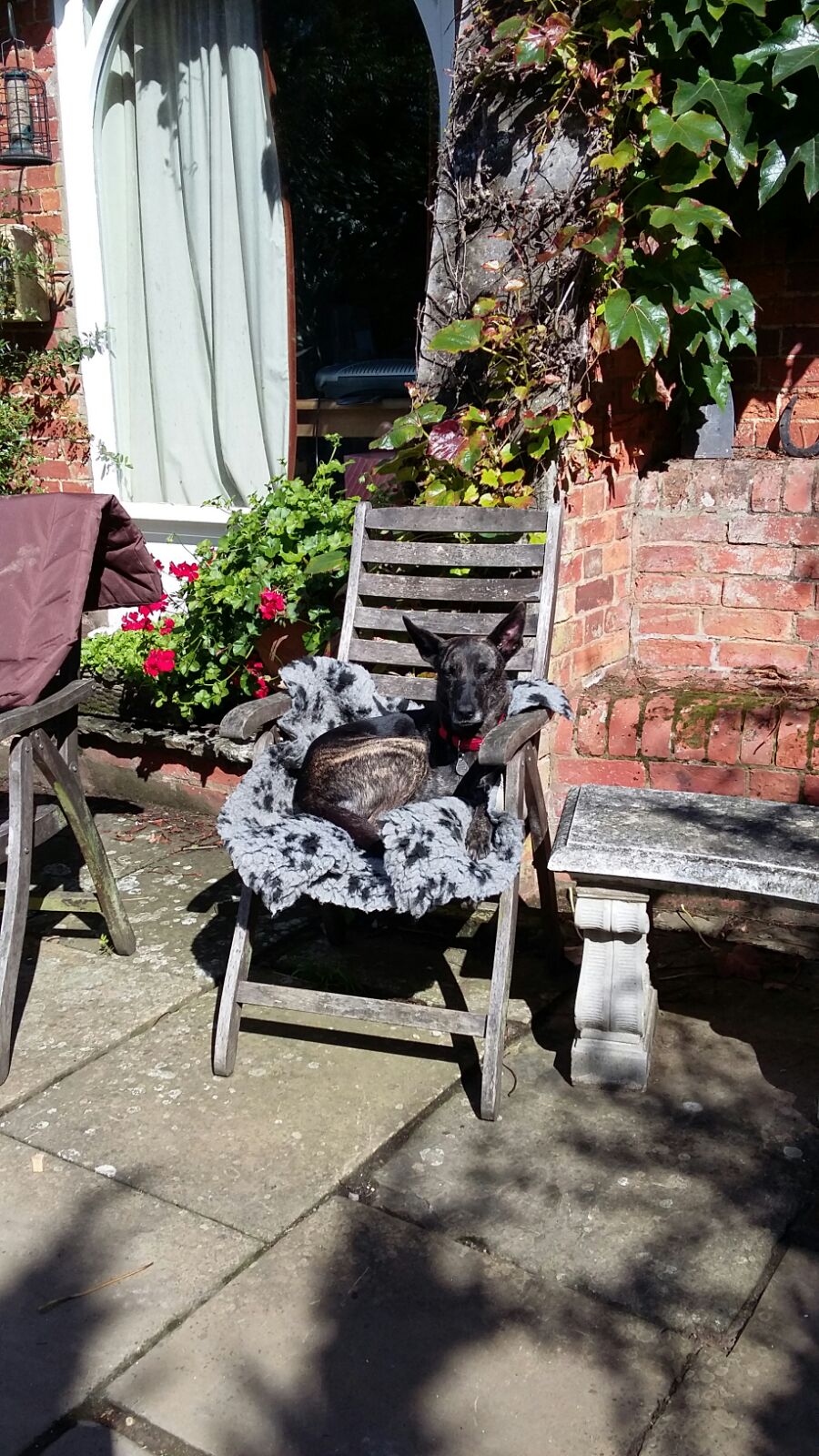
Frida (and Ramona and Nora)
Frida arrived one November day on the Happy Bus, and promptly redecorated the garden. She had been too frightened to either urinate or defecate during the 3-day trip. She was severely underweight and terrified of everything. Getting her to either enter or to leave the house required endless patience. She was far too jumpy to be off the lead outside, but had never been walked on a lead before, so the slightest tension on the cord provoked a flight reflex – there were a number of near misses before we found a harness she could not reverse out of. She is missing a third of her tail – your guess is as good as mine, and has an overlarge nictitating membrane which gives her an appearance as goofy as her personality and I’m sure does not help mitigate her over-sensitive startle reflexes.
Frida was irrationally terrified of my mother (with whom we live) for the first two or three years of her time with us. I can only imagine that some white-haired Romanian bunica once chased the starving dog away from her door, perhaps armed with a rolling pin. But again, we will never know. Frida is scared of loud noises, sudden movements, apples falling out of trees and going through kissing gates. She loves snoozes, walks, car rides, assisting me when I cook (especially if there is Grana Padano involved), barking at other dogs, being brushed and shepherding us. She regularly contorts herself into interesting shapes in an effort to scratch away her ever-present tickles. She is joyful and innocent, as well as being kind and respectful to her doggy sisters. Frida has no concept of personal space.
Last, but by no conceivable means least (according to her) is Mică, formerly knows as Minnie.
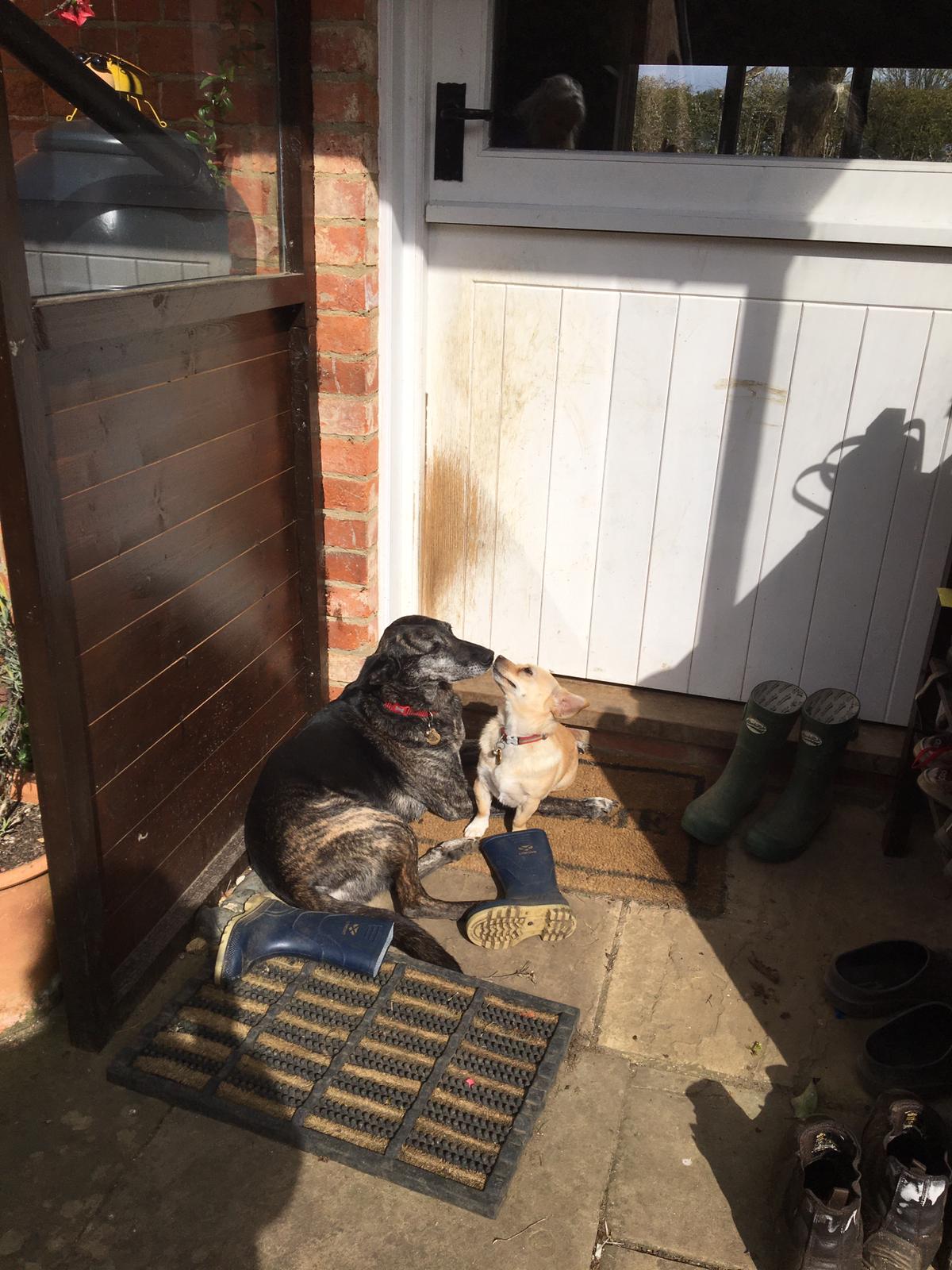
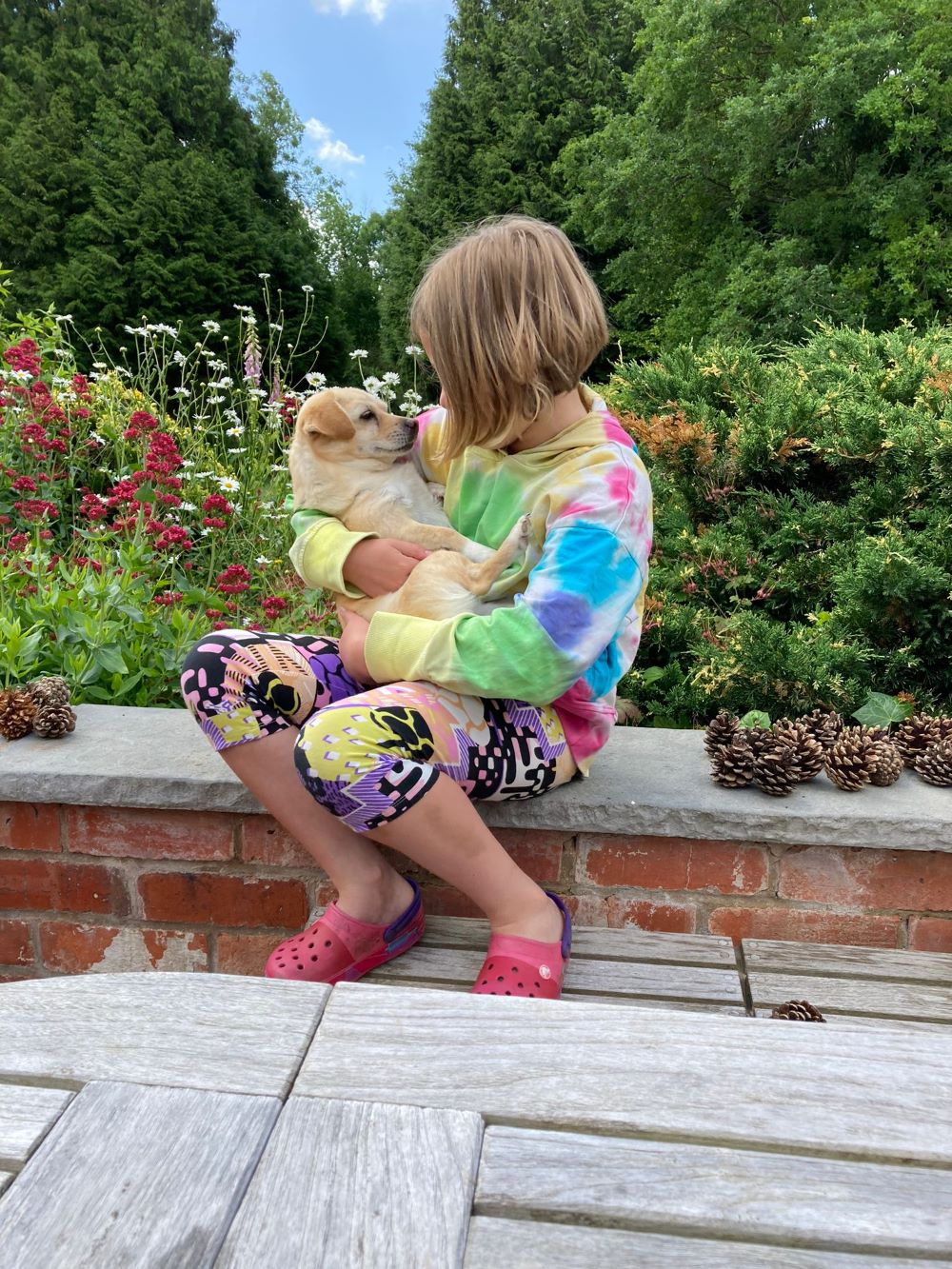
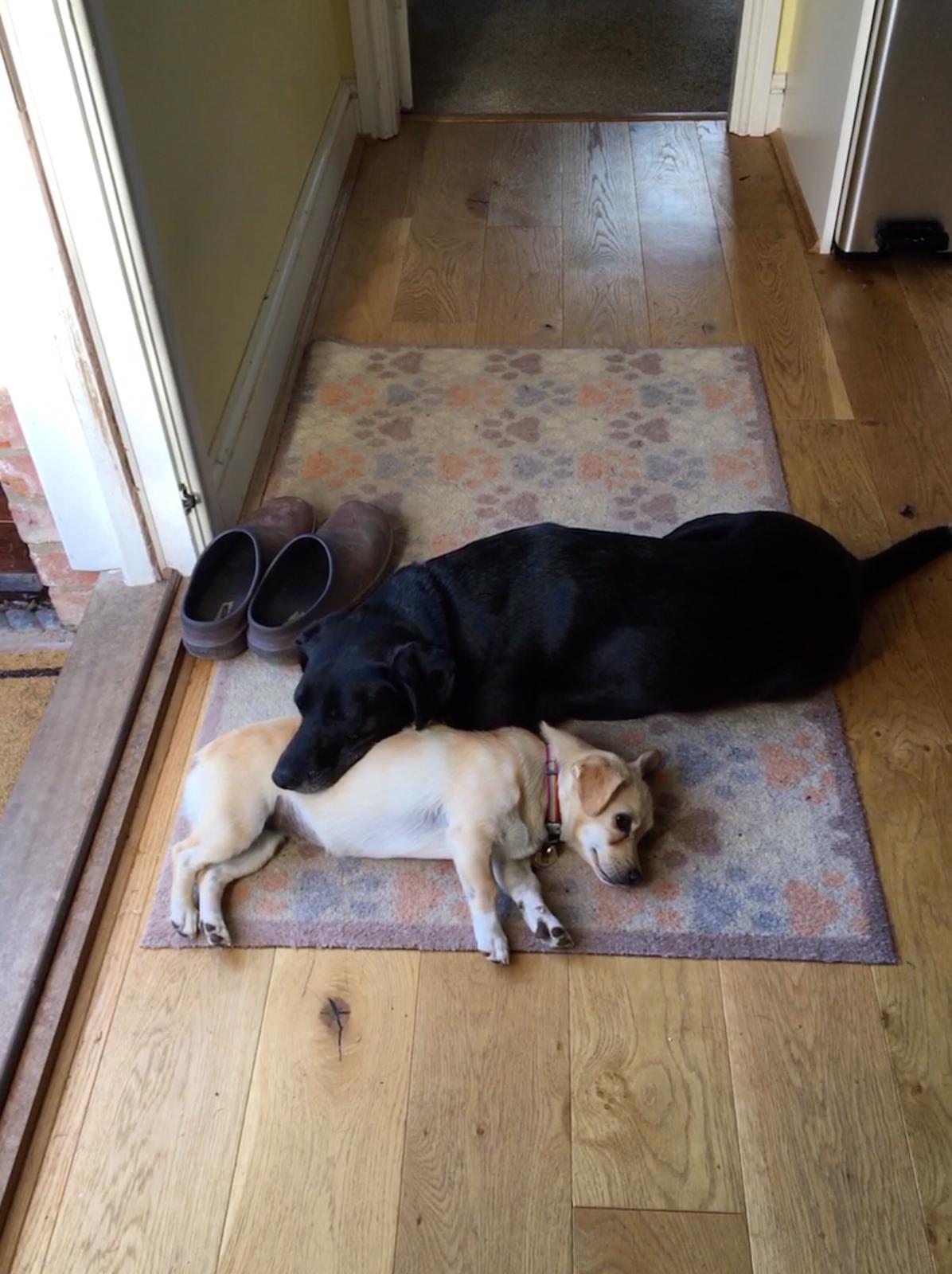
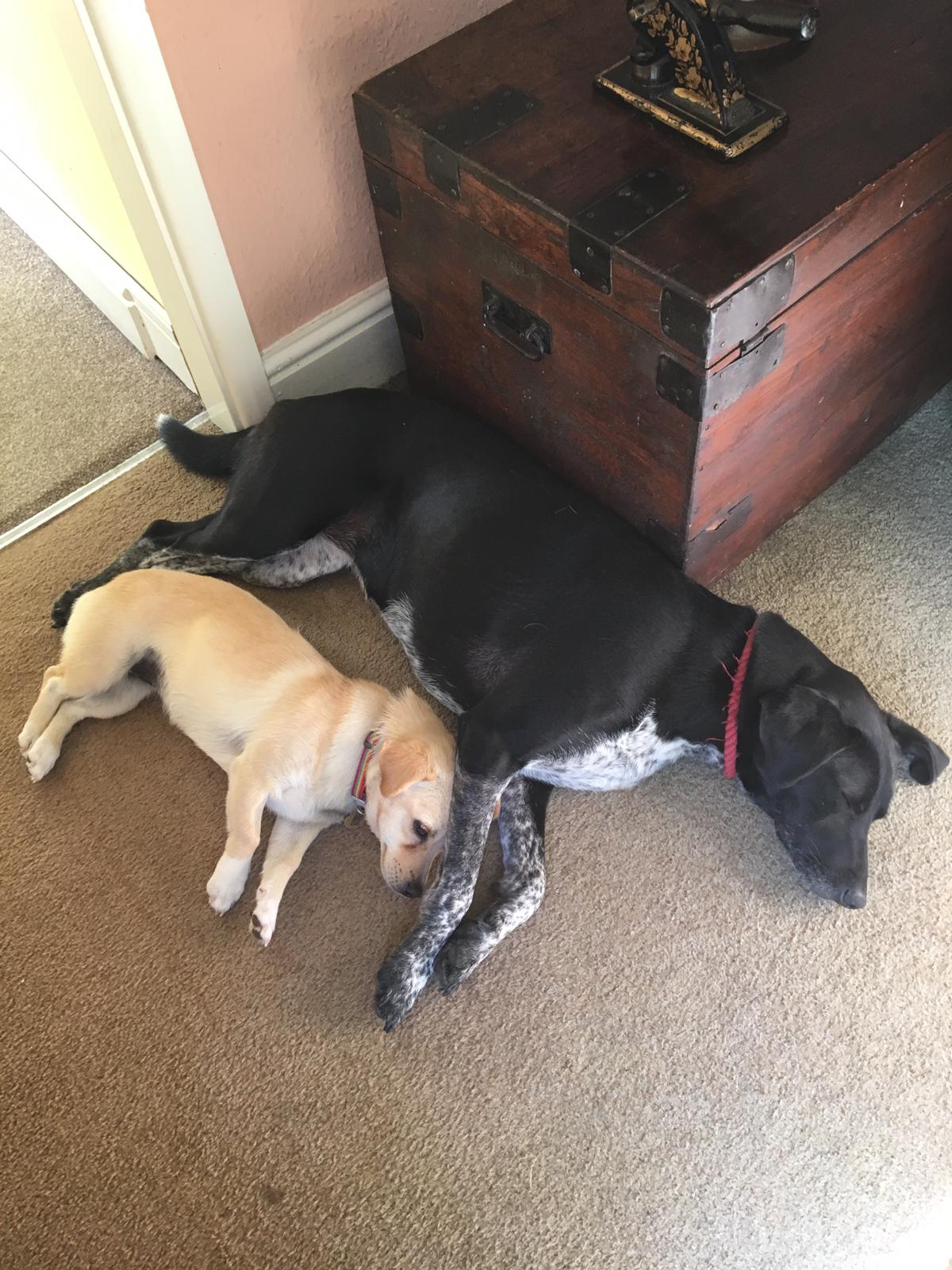
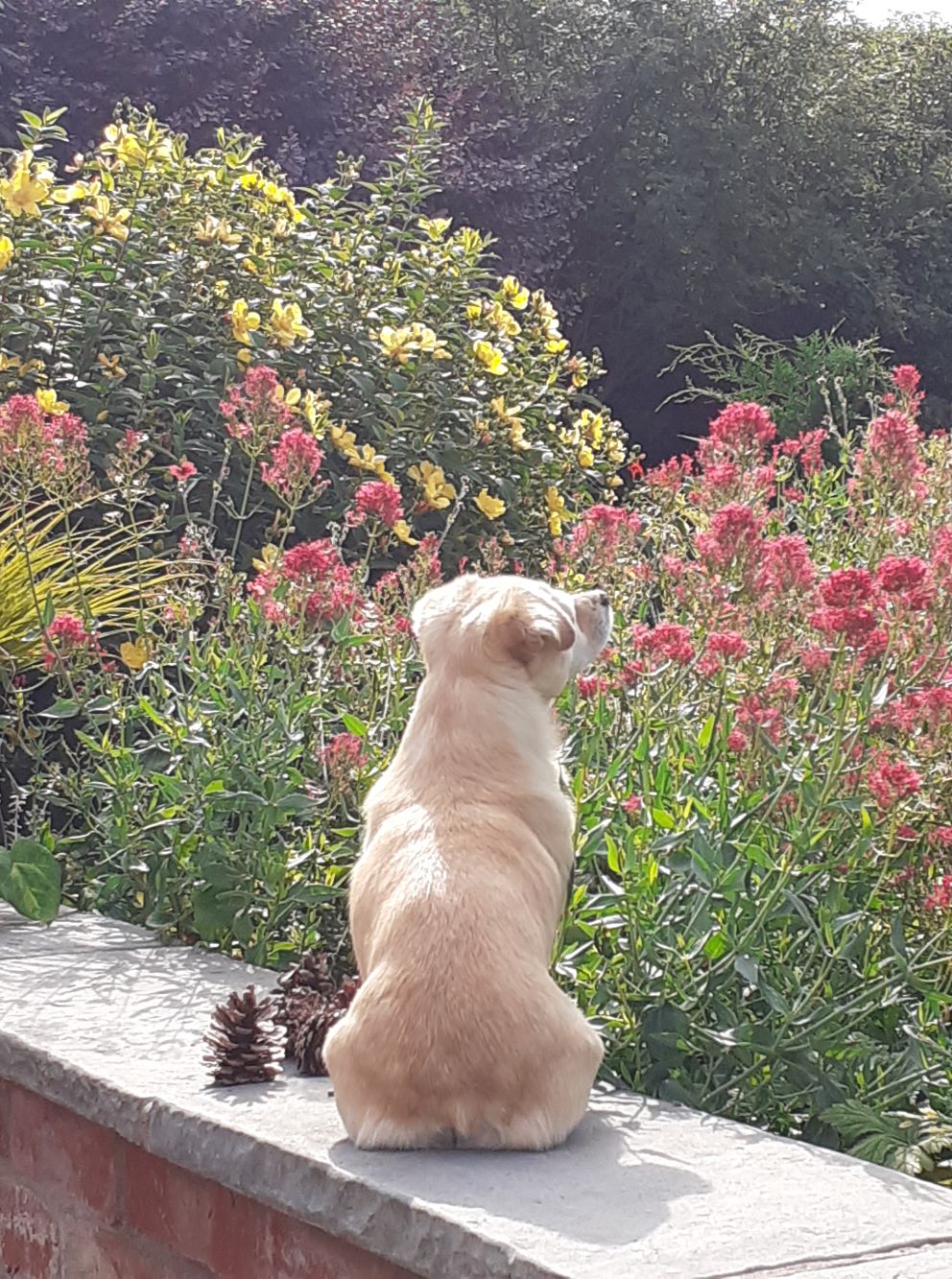
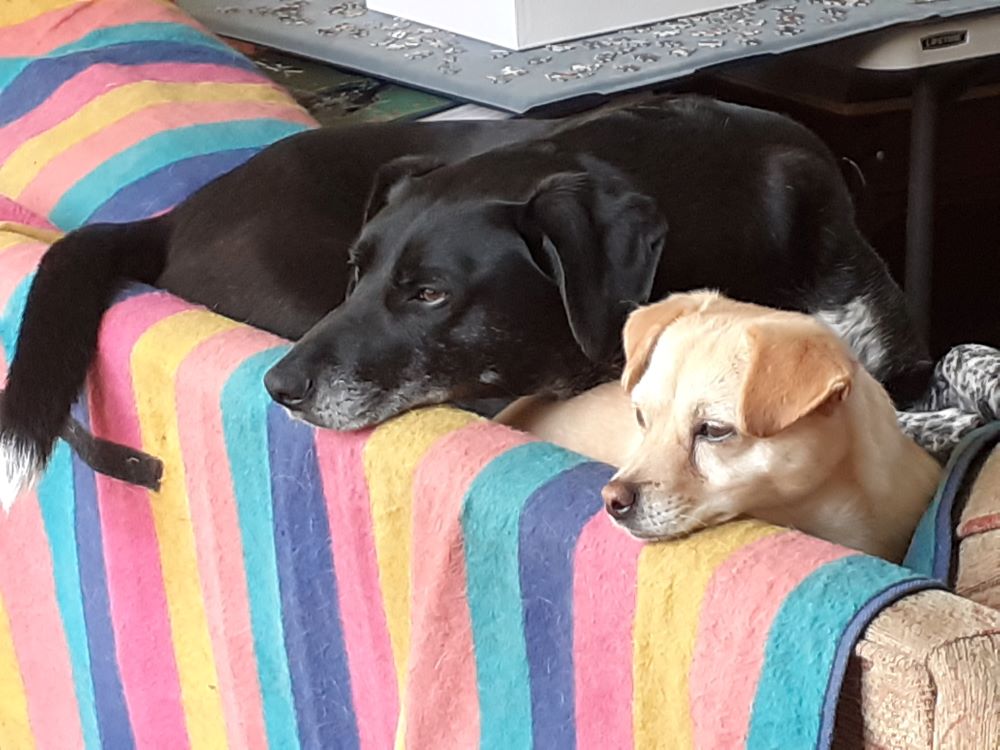
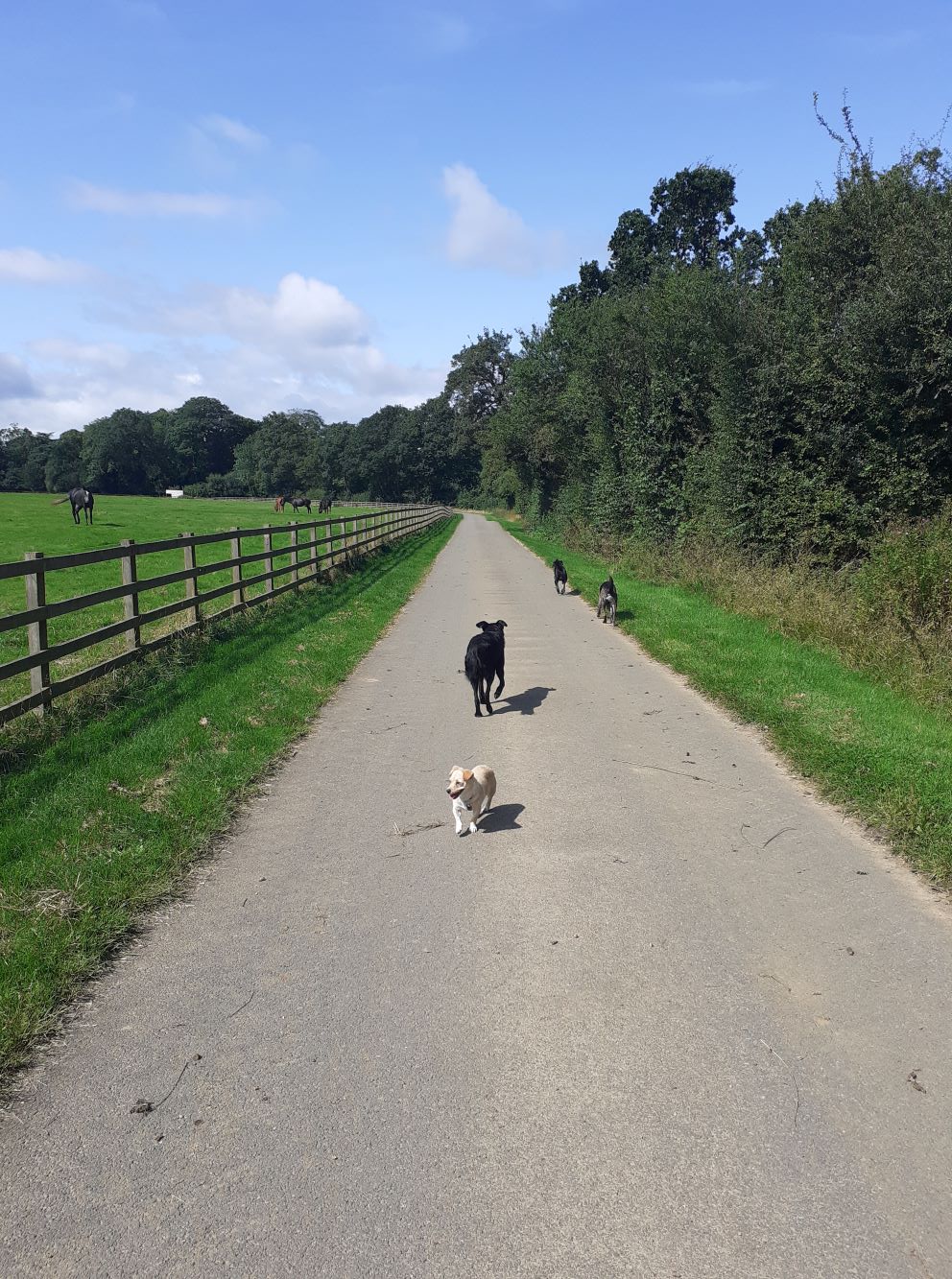
Mică (and Ramona and Nora and Frida and the human puppy)
Mică was a gift to my daughter, who at the time was rather small and craved a dog that did not smother her when it sat in her lap. Mică was three years old, if her pet passport was to be believed, and had followed one of the rescue workers back to the centre in the pouring rain. Some local checks to find her family were undertaken, to no avail, so she was vaccinated, spayed and put on the website to be rehomed.
From the front she looks like a plump chihuahua and from the back she looks like a corgi. She is intensely irritating in the manner of most small dogs, constantly snapping at the other dogs’ heels despite frequently getting bitten in return (mostly by Nora). Her yap sounds as if she smokes 40 a day, and she thoroughly enjoys the sound of both it and apparently also our constant cries of “Shut the **** up, Mică!” Any attention is good attention, but as her breath could kill a grown man and she sheds like a husky she does not get as much as she craves.
Other than yapping, Mică’s hobbies are looking for things to eat (she once vomited up an entire rat under my bed), annoying her sisters by invading their personal space, hunting for squirrels, digging for mice and getting under my feet when I’m trying to move at speed. Her bad habits are ever-so-slightly balanced out by the fact that she is occasionally very entertaining to watch, especially when in possession of a stick, a feather or an excess of energy in a wide open space. Plus the human puppy adores her.
So here we are. Unashamedly, unregretfully and unapologetically virtue-signalling to the power of four.
There are those who worry that adopting from abroad is encouraging puppy farming, to which I would say: don’t adopt a pure-breed puppy from a foreign rescue then.
There are others who worry about diseases and lack of checks, to which I would say: do plenty of background checks on the rescue association, and rely on the fact that the requirements for bringing animals into the UK are pretty stringent.
But really the main thing is just to adopt your pets, regardless if from UK rescues or foreign ones. And if you really cannot resist the craving for a pure-bred puppy from a responsible breeder, then why not adopt a less fortunate playmate for it in order to balance things out?
 Love Languages
Leave a comment